Tag Archives: good writing

Filter Words, and Why it Seems You Should Kill Them All

See what I did there?

If you don’t yet know, filter words are words that writers use when they are trying to describe what a character is experiencing. For example, these sentences below could be in any piece of prose (but they aren’t cuz I wrote them):

  • Mary saw that Joe drove his car too quickly for a residential street.
  • It seemed to Mary that Joe drove recklessly, too terribly for someone who ought to know how to drive.
  • Mary heard the tires screech. Mary watched the car swerve.
  • Mary wondered if she should call the cops.
  • She realized she would have to.

So now that we know what they are, why have I decided to devote an entire blog post to them?

Let me tell you a story. First and foremost, I am a writer. It is my dream for my novels to reach readers and for me to spend all my days crafting stories and developing characters and all around having a darn good time. But none of this happens without work. A writer who doesn’t take the time to hone their craft will end up just writing for themselves (which we all say we do, but don’t lie: there’s a *little* part of us that *wants* someone else to read along).

And what has been the best thing for me to hone my craft? It’s been editing other writers’ work. I did it informally for years, and now I work in editing at a publishing house. That work is what helped me name these hideous creatures that I bolded in the examples above and determine why they are so irritating.

Back to the example of Mary and Joe who may or may not have drank a little too much or had too little sleep or may have mixed up his prescription pills by accident. You’ll be happy to know that Mary called the cops, and they caught Joe, and no one was hurt, but the real tragedy wasn’t that Joe’s car got impounded, and he has to take the bus to work. No: it’s the amount of filter words that I used to describe the situation to you.

“Why?” you ask. “What’s so bad about filter words?”

Well, if the example above didn’t already come across to you as annoying, I’d like to point out that filter words create prose that is “filtered” through the eyes of the main character. It’s like hearing something from a friend of a friend of a friend of yours. The story starts to sound passive to the reader, and it doesn’t give the immediateness that readers need to feel involved and invested in a story. Filter words almost make the prose blunted and boring and just… bleh!

Further, most of the time they are unnecessary. For example, if I write “Joe drove his car too quickly for a residential street“, does the reader lose any crucial information if we already know Mary is in her front yard trimming her rose bushes and plotting the death of the neighbor who kept her up until 4 a.m. the night before with his bombastic rap music? No. We can assume that Mary notices Joe’s unsafe driving just by virtue of knowing that she’s outside.

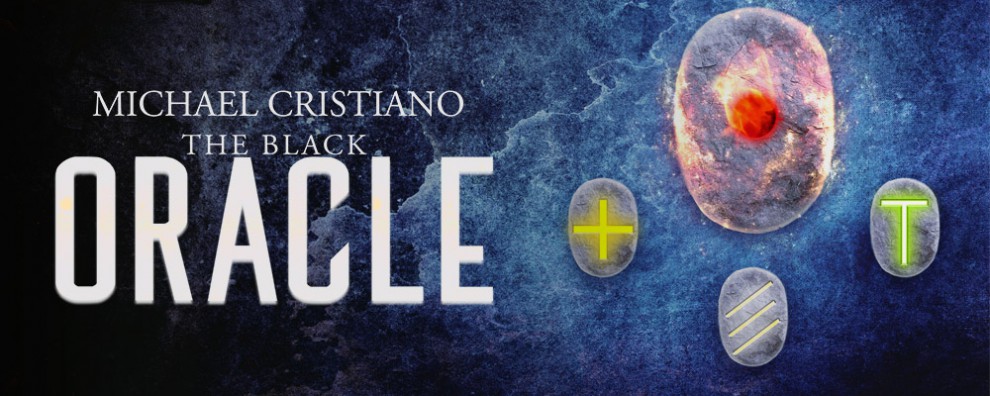
So, can you ever use filter words? Short answer: yes. Sometimes filter words can be essential to a scene or a sentence. Filter words only become a problem when they are part of every sentence. Maybe it’s because I edit professionally now, but I find that too many filter words make me cringe. And you’d be surprised how many get used in any given manuscript. You’d be surprised at how many I found in “The Black Oracle” prior to publication.

Do a ctrl +f in your WIP and look for these words NOW:

  • to see
  • to hear
  • to wonder
  • to realize
  • to watch
  • to look
  • to seem
  • to feel (or feel like)
  • can or to be able to
  • to decide
  • to sound (or sound like)
  • to notice
  • to experience

To finish: filter words should be to prose as garlic is to cooking. A delicate sprinkle is all that’s needed because too much will leave a sour taste in your reader’s mouth and have them wishing they’d bought something else off of Amazon.

How many filter words do you use in your work?
How to Write a Novel that Will ACTUALLY Be Worthy of Publishing

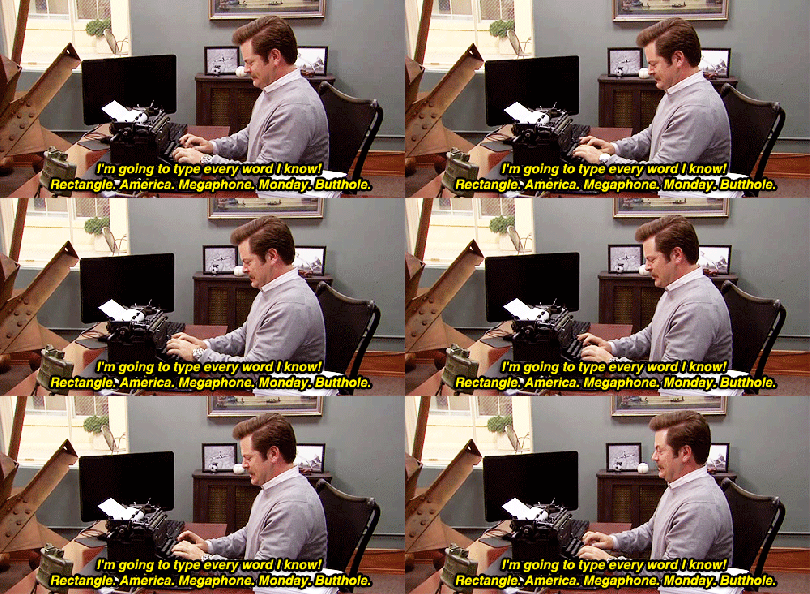
Ron-Swanson-Every-Word-I-Know

So, you say you have a dream, Mr. Martin Luther King Jr. of prospective fiction (or nonfiction) writer. Well, so do I, and so do millions of others around the world. That is to write a book, but not just any damn book: a book that will be good enough to publish.

Seems like a pretty simple goal, right? In today’s day and age, there are a billion ways to see your work published: paperback, hardcover, ebook, literary magazine, traditional publishing, self-publishing, hybrid publishing, serialization, writing your novel on your arm and reciting it in the subway (okay, maybe not that one…)

Since publishing a book is easier and more accessible than ever before, it’s important to know how to write a novel that’s worthy of being published.

Read Widely

“This is a given,” you say. This is what got you into wanting to write the most epic, mind-shattering, life-changing fiction in the world in the first place. It’s amazing though how quickly reading gets shut out of life after a 9-to-5 job, commuting, cooking, cleaning, sleeping, and meeting word counts consumes all your time.

Trust me, I’m guilty of putting reading at the bottom of my priority list. I find it hard to find time to read, but it really is necessary for a successful writing career. Reading allows writers to become fluent in their craft. It allows us to see what works for other authors, and what could work for us. It allows us to stay on top of what’s happening in the publishing industry and to analyze those happenings and apply them to our own career.

And you MUST read widely. Don’t only read the genre you write. It’s tempting to say, “Oh, well, I only write fantasy, so I’ll read myself silly with George R. R. Martin and J. R. R. Tolkien and Terry Pratchett”. Read everything. Read contemporary and young adult and romance and how-to manuals about square dancing and cat-sitting.

The classics are also a must — and believe me when I say that you won’t detest them as much as you did when you were forced to enjoy them in high school.

Learn How to Write & Edit Like Mad

Writing without knowing anything about the craft is like scuba diving without an air tank. It’s like running a marathon without proper shoes. It’s like driving a car with your eyes closed (which I do not recommend, to be clear).

You need to invest something into your writing, and I don’t mean that you have to toil and toil over plot points and character development and 100,000 cat videos on YouTube (though, that’s all included). You’re going to need to get control of your grammar and the conventions of your genre. You should invest in a style guide and maybe even read a few how-to‘s and don’t-do‘s. There are millions of resources online and at your local bookstore, and if your interested in improving your craft, I’ve already written a post with tips.

Even when you’ve mastered all those semi-colons and romance novel tropes and Oxford commas, you must still edit. All manuscripts go through a revision process, sometimes upwards of ten times, and if self-publishing is the right route for you, it is ESSENTIAL that you hire a professional editor to prepare your work for publication. There’s nothing more terrible than a novel that has grammar, spelling, and plotting issues (except maybe driving with your eyes closed).

Don’t Follow Trends

Are vampires and zombies cool anymore? No, it’s dystopian fiction and Fifty Shades of Too-Embarrassed-to-Be-Caught-Reading? Well, then.

Following trends doesn’t work. By the time you write something that follows a trend, polish it, and publish it, chances are that trend will be on the way out or already gone. Besides, it’s even worse when a writer writes something in order to try to capitalize on the bee’s-knees-du-jour, and it’s so blatantly obvious that they did that they write garbage. These novels lack originality and personality.

So, screw the trends. Write something that feels right for you, and maybe you’ll grandfather (or grandmother) your own trend. Talk about mind-shattering!

Know When It’s Crap

Ah, my USB. It’s a place where all the magic happens — and also the place where manuscripts go to DIE! Truth be told, not all of you work is meant to be published. Sometimes we write something full of cliches and plot holes and enough literary conventions to make Shakespeare hiss in territorial protection.

And that’s okay! You’re allowed to write crappy every once in a while. I did it. I have a manuscript that’s been edited multiple times but is now enjoying retirement in my “Nice Try” folder. I even have a nice disclaimer on the front page that says “In the event of my death, DO NOT publish posthumously”. It’s that crappy.

How do you know when it’s time to let go?

  • You’ve Lost Interest. That initial spark is gone, and writing the piece feels like drinking three-week-old urine with ground up ceramic. Yeah, that feeling.
  • You’ve Written Yourself into a Hole. This is the hardest time to let go. This happens when your plot is so mangled that it’s unrecognizable. It’s unfocused and messy, inconsistent and terrible. Sure, you could edit, but is it worth it? Maybe let it be for a while and come back later.
  • You’re Not Ready. We all need the opportunity to fail. Sometimes what you write is just the trial edition. You can’t run a marathon without training. You need some practice runs, so to speak. It’s important to know when you’re writing a practice run, especially if you’re just starting out and writing your first novel.

How do you know when something you’ve written is worthy of publication? Do we ever really know?

Why Write?

So, I read an interesting blog post yesterday by the fantastic Kristen Lamb (follow her. NOW!), and she addressed the idea that only 5% of prospective writers *actually* become successful authors. In her post, she argued that although this is a depressing statistic for those of us who aspire to be that elusive successful writer, 5% isn’t that bad. Check out her reasoning:

When I gave the 5% statistic earlier, many of you were probably discouraged. But let’s take a closer look at that number.

It’s been said that as much as 75% of the literate population would love to one day write a book. Out of hundreds of millions of possible authors, how many do you think actually take the idea seriously?

5%

And of the tens of millions left over, how many sit down and write and finish a first draft?

5%

Of the millions remaining, how many actually read craft books, get critique and keep revising that first draft until they have a polished draft?

5%

Of those who finish that first novel then realize they have a train wreck and not a novel, how many suck it up and start over to write a better book that’s more likely to engage with readers?

5%

Of those who finally write a decent book, how many take time to also build a brand and platform? How many learn to blog effectively in ways that reach and cultivate readers?

5%

How many get in the regular habit of writing, researching and revising? They don’t just stop with the one book and keep on writing more books?

5%

Of those who publish the first book and don’t instantly become zillionaires, how many keep writing and improving?

5%

This profession is really hard. Toss a few hundred million people with a dream into one large funnel and most will not shake out at the end. Yet, if we look at the individual pieces of becoming “successful” it is astonishing how much we control.

Others whine, we work.

At this point of my life, I found this to be pretty inspiring. I recently left my 9-to-5 (read: my contract didn’t get extended), and though I wasn’t completely against going out and finding another one, I’m *kinda* inspired to give this full-time writer thing a try. So, that’s what I’ve pledged to do. I have my novel coming out next month, and I’m working to secure some freelance work. Is this plan risky? Of course. Am I worried? Not really.

In light of these things, Kristen Lamb’s reasoning got me thinking. Yes, 5% may not be so bad when you consider that a lot of unsuccessful writers  are unsuccessful because they don’t put in the time, but the amount of commitment expected of a writer is nothing to laugh at. In fact, becoming a writer is often fruitless labor for the first while (10 years in my case), so with that seemingly unattainable dedication, why write at all?

I think the answer to that question is fairly simple. Anybody who is serious about writing already knows that answer, and I think it is those people who end up persevering and becoming the perceived unattainable successful writer. The fact is that writers write because they have to. They write because there isn’t anything else they’d rather be doing. They were “born this way”, so to speak (Thanks GaGa). And at the end of the day, a writer becomes one of the “lucky” 5% not because of luck at all but because they wanted to, and they worked their butt off to get there. I’ve always said that becoming a writer is like running a marathon: you don’t just wake up one day, show up at the starting line, and come in first place. There’s training. There’s failure. There are nasty blisters and early mornings and vomiting from overexertion (beautiful visual, Michael).

But writers like it this way. If becoming a successful writer were easy, it wouldn’t be worth it. How fulfilling would it be if you could just laser beam 80,000 words onto a computer screen and then sell it to the first publisher you pitched it to? Not very.

So, take comfort in the fact that determination does great things. Work your butt off, but enjoy the process. It’s not until years later that you appreciate all the time it took you to grow. Trust me, reading old material has become a nice pastime for me. It’s kind of inspiring.

Why do you write? Do you worry about becoming a successful writer?

You Can Only Write One Genre for the Rest of Your Writerly Life!

As a writer, the last thing I want to do is restrict myself. Yes, it’s true, there are genres that I will never write (erotica, true crime, nonfiction textbooks on astrophysics), but other than that, I’m open to pretty much anything. I love straddling the line between genres, often bridging fantasy, science fiction, and paranormal and then throwing in some literary flair.

So, imagine my surprise when I was told that I should pick and stick to one genre. My conversation went something like this:

Me: “My most recent work is a blend of fantasy and sci-fi, but I have ideas that venture into horror, paranormal, and even contemporary fiction.”

Acquaintance-With-Some-Writing-Experience: “Aren’t you worried?”

Me: “No. Why?”

Acquaintance-With-Some-Writing-Experience: “I learned in my creative writing courses that authors should stick to one genre. That way, they become really good at writing it, and they become specialized in that field.”

I’m not going to lie, I understand the logic, but I was taken aback. First of all, I haven’t taken many courses. I took a few in high school and one in university, but I didn’t major in creative writing (and I didn’t want to, but that’s for another post). Most of what I learned about writing was a trial and error of sorts: reading a lot, writing a lot (of crap, I might add), getting feedback from beta-readers.

But I was completely floored that a creative writing instructor would tell students that they had to pick one genre and only one genre, and any straying was literary suicide.

You must choose ONE pill that will seal your fate for all-- Oh, wrong post.

You must choose ONE pill that will seal your fate for all of — Oh, wrong post.

Needless to say, I disagreed with this conclusion vehemently. I didn’t really say what I was thinking, giving my acquaintance some response between apathy and “to each his own”. There’s nothing wrong with writing only one genre, but there are two fundamental problems with the argument my acquaintance presented. Observe.

Tastes Change

Writers, like all other human beings, are not static. If you had given me a salad 5 years ago, and you happened to put onions in it, I would have picked all of them out, avoiding them like they were hemlock or something. Now, however, I love onions. Put onions in EVERYTHING! I’m not even sorry for my stinky breath.

The same goes for writing. When I was younger, I loved Harry Potter. In fact, I loved it so much that I wanted to write a series about a school that taught the occult arts, and instead of wizards and witches, the students were known as little devils. Luckily, that idea didn’t last long, and as I read more, I grew to want to write more. Even now, I read more widely than ever: fantasy, science fiction, young adult, literary, horror. And ultimately, what kind of writer doesn’t get impacted by what they’re reading?

For me, diversifying is a form of improvement. By changing up what I read, I am exposed to different forms of writing, and trying them out helps me hone my craft. Is everything I produce good? Of course not, but if I’ve written something that I love and that I believe in, why should I deny it its chance to shine because it isn’t in the pre-determined genre I’ve chosen?

The Greats Don’t Always Stick with This Rule

After the Harry Potter series, JK Rowling wrote a contemporary drama and then a series of mystery novels under the name Robert Galbraith. Margaret Atwood is known for bending the rules and writing across genres, often spanning mystery, science fiction, and literary fiction. Do I think I’m on the same level as these greats? Well, no. But they’ve found success in multiple genres, so why can’t I?

Regardless of these two arguments, however, I think this solution to this issue comes down to one thing: where does your inspiration lie? There are many successful writers that stick to a single genre, and they do quite well. There are ALSO successful writers who write across genres. Do I think this has impacts on the quality of the writing itself? No. I think if a writer writes well enough, they can tackle any genre they’re passionate about.

What do you think? Are you a one genre kind of writer, or do you like traversing multiple ones?

Review: Slaughterhouse-Five by Kurt Vonnegut

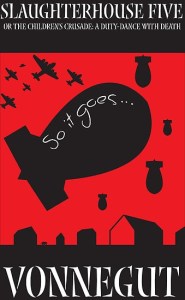
a6e224bbc4092e7222905bfdcd053ff1While I was on vacation in the Dominican Republic last month, I attempted to read two things. First, I relapsed and tried to struggle through A Clash of Kings after declaring that I didn’t want to read it anymore. I’m sad (happy?) to say that I’m still struggling through it today, and I actually don’t hate it. Second, I got through a book that I’ve wanted to read for a long time by an author I’ve heard amazing things about. I read Slaughterhouse-Five by Kurt Vonnegut. I have just one thing to say to sum up my experience:
I AM NOT WORTHY!

Needless to say, I loved it. I won’t lie, I didn’t understand it at first, especially with its quirky beginning and alien abduction scenes. But, *spoiler alert*, once I found out that the main character was suffering from post-traumatic stress disorder following the second world war, something clicked, and I understood the piece for what it was — and I wholeheartedly enjoyed it! And on top of that, it was hilarious.

A lot of criticism for this novel comes from Vonnegut’s disjointed and confusing storytelling, and for the first hundred pages, I would agree with the critics. I was confused as all hell for the first third of the book, and I found myself thinking that I had picked up another 300 pages of overrated crud, but once I understood why this was happening, it became easier to read somehow, and I thoroughly enjoyed it.

Besides the obvious great storytelling and the layers of symbolism, one question does come to mind, and it is often debated between readers once they’ve finished reading: Is Slaughterhouse-Five an anti-war novel? Sure, the main character fought in world war two, has obvious mental duress, and believes he had been abducted by aliens to live on a foreign planet and mate with a huge movie star, but is this a criticism of war?

To be honest, I’m not sure why this question is being asked. The answer is clear: of course it’s an anti-war novel! Yes, the main character takes a rather neutral stance in regards to his time in world war two, replacing deep sentiments with the phrase “so it goes“, but that in itself is anti-war. This man is irreversibly damaged, numbing himself to great pain and living in delusions in order to escape his horrific past. Sure, nothing Vonnegut writes says “WAR SUCKS” in bold red letters, but he doesn’t need to. The fact that this man is so broken speaks for itself.

All in all, this was a great introduction to Vonnegut’s work, and I am excited to read more. He might even make it up there with some of my favorite greats: Aldous Huxley, George Orwell, Margaret Atwood.

Have you read this book? What are your thoughts on the anti-war sentiment?

Review: Jazz by Cristian Mihai

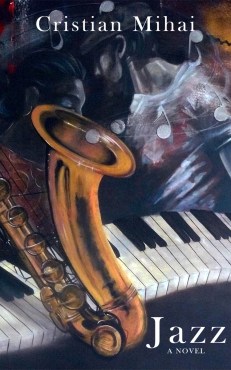
ebook_small Jazz by Cristian Mihai is a novel about a lovesick Chris Sommers who leaves his hometown of New York City to go to Paris in pursuit of Amber, the outrageously beautiful but always-falling-for-the-wrong-guy type. But when Chris arrives in Paris, he is dismayed to discover that he and Amber still cannot be together: she’s with Jacques, another “wrong guy” painter who holds Amber’s interest. The more Chris learns about Amber and the complicated, deceitful life she’s built in Paris, the more dismayed he becomes.
First impression: Mihai has some serious writing talent. Seriously. His writing style reminded me of Fitzgerald or Hemingway, not only in prowess but also in maturity. I love a piece that is multi-layered, and Jazz is just that. It’s a great story of love, heartbreak, and betrayal, but it’s also riddled with delectable metaphors and motifs. In fact, Mihai has Chris read The Great Gatsby at one point which I thought was not only a nod to a great, but also a little bit ironic considered Mihai’s writing style reminded me of that book.

I also loved the characters that Mihai created. Each was wonderfully flawed, and that’s refreshing to me. What’s even more refreshing is that Mihai doesn’t spend the entire novel trying to have his characters revamp themselves or fight their inner demons, so to speak. Amber is just as naive and deceitful at the end of the novel as she was at the beginning. Chris is constantly overly optimistic and easy-to-disappoint throughout the novel as well. But that last scene was a fantastic way to end.

In the final scene, Mihai gives almost nothing away. He paints the scene and then leaves it at the crucial moment between Chris and Amber, leaving it up to the reader to decide if the characters would actually change their ways or if they were fall back into their absurd, detrimental habits. He also doesn’t give away the resolution of their quasi-love affair and I think that’s awesome. I’m a little over novels that end with “…and they fell in love and lived happy together”. I’m glad Mihai ditched the cliche and gave us something new to enjoy.

Among the many highlights of this piece, though, there were a few places for improvement. First and foremost, the literary prowess was a little less impactful in spots because of blatant spelling or grammatical errors. To me, there’s nothing more distracting than tripping over a missing word or noticing that the grammar is wrong. It really breaks the flow. Secondly, I felt that sometimes Jazz was a little too close to The Great Gatsby in some places: Chris is almost an outsider and observer in the same way Nick Carraway is. The female love interest is ridiculously naive and willingly powerless against her perils in the same way Daisy is. I liked it, personally, but sometimes I feel that the allusions to Fitzgerald were a little too strong.

In any case, this is a definite buy! You can check out Cristian Mihai’s website and blog here. Also, buy yourself a copy of Jazz here.

4 Misconceptions About Writing a Novel

When it comes to writing, there is nothing more daunting than writing a novel. Okay, maybe attempting to write a saga of twelve novels is a little bit more daunting, but let’s stick to just one for now. In my opinion, writing a novel is a little more difficult than say a short story or a poem. That’s not to say it’s more difficult than writing a good short story or poem, that’s just to point out that short stories and poems don’t generally run 60,000+ words — unless you’re Homer and write two epic poems that come in at over 200,000.

Wrong Homer...

Wrong Homer…

In any case, the enormity of a novel is disillusioning enough on its own, so while we’re at it, let’s disillusion some more.

Everyone Has a Novel in Them

To me, this misconception is the equivalent of saying that everyone has a music album in them. Sure, everyone has the capacity to make music, but does everyone have the capacity to make good music? Anyone who answers yes to that question has obviously never heard Friday by Rebecca Black.

The same is true for writing a novel. Sure, everyone has the capacity to physically sit down and hammer out enough words to write a novel, but does everyone have the capacity to write a good one? Even still, is novel writing something that someone can just wake up and do, or it is a learning curve of trail and error, observation and failure? By saying that everyone has a novel in them, we trivialize the skill of people who write for a living and chalk down writing a novel to simply reaching a word count. But for anyone who has written a novel, you know it’s more than that: it’s plotting and characterization and tone and theme development and atmosphere and so much more.

One Draft and You’re Done

This misconception is particularly cringe-worthy. I really feel for writers who think that they can get away with writing a first draft and then doing zero revisions or editing. Not only it is extremely advisable to read over your work at least once to catch any spelling, grammar or continuity errors, but first drafts (in my opinion) are meant to be the bare bones of a piece. Think you have an amazing first draft? Think of how amazing the second draft will be! Still not convinced to write a second? Well, give it to a beta-reader and come back in two weeks or so. Perhaps your judgement will be a little less clouded when the first-draft-finished high wears off.

You’re Getting Published so It’s Time to Quit Your Job!

Haha, if only that were true. I hate to break it to the hopeful, but a publishing contract does not equate to financial security — with or without an agent who’s got your back. That’s just simply not how it works. There are hundreds of thousands of novels published every year. You better believe that not every one of them is making $100,000 a pop.

That’s not to discourage anyone from trying — write if that’s what you were meant to do. But don’t think that you’ll complete and publish one novel and you’ll never have to work another day in your life. In fact, a UK study found that British writers made an average of £4,000 ($6252 American Dollars or $7140 Canadian Dollars) and only 1 in 10 professional authors were able to support themselves solely off of their writing. Kinda depressing, right? Yeah, but by now, I hope you’re not writing for the money. There are easier ways to make money that don’t involve perfecting tens of thousands of words, becoming an anti-social hermit, and potentially getting rejected hundreds of times.

tumblr_lvcy3wVHwH1qldt8eo1_500

But wouldn’t it be nice to be the exception?

Novel Writing is Not Work at All

I once wrote an entire blog post about this, so I won’t rant and ramble again here. To those who think that novel writing doesn’t qualify as work, I have one word: No. Actually, make that two: f*ck no. Yes, don’t get me wrong, I have fun writing novels, but I wouldn’t say that it’s something I breeze through. It’s blood, sweat, and tears. Okay, maybe a little less blood, but there are sweat and tears. And yes, I write because I want to, but that doesn’t mean I’m not warranted in calling a spade a spade. There’s no reward without work, right? Well, think of writing as no different. 85,000 words don’t just arrive with a big gust of wind.

Got any misconceptions?

To Sequel or Not To Sequel

That is the question, isn’t it?

It seems to be the thing to do at this moment in the entertainment industry, particularly the film industry. In fact, the film industry does it so well that it takes sequels and breaks them into parts so as to make one sequel into three or four in a sequel-ception frenzy. Don’t get me wrong, I just saw Mockingjay Part 1 and I think it was pretty well done as with the rest of the film adaptations for the Hunger Games Trilogy, but this whole Part 1 / Part 2 nonsense is getting a little out of control. What next? Are they gonna release book adaptations in episodes and make full 24-installment seasons out of them?

Wait…

anigif_enhanced-buzz-10113-1382948371-0

The film industry aside, the desire for sequels has penetrated deep into the book industry too. Every book nowadays has some sequel or prequel or companion book or series or *gasp* trilogy attached to it. Do we really need three snail-paced, mediocre books when one perfectly-paced, awesome book will do? It seems to me that trilogies and sequels work well in some cases, but sometimes I’m reading book two or book five and all I’m doing is questioning why the content wasn’t just condensed and put into book one. What if writers just cut out some of the filler and whining and got to the point? Writers are supposed to be concise, aren’t they? If we answer yes to that question, why are some of our bestselling books full of such hot air?

And then it occurs to me: sequels sell. Trilogies sell. Trilogies make fantastic movie franchises. It’s easier to market a series of books than just a single book. And if a publisher gets a good momentum going, they can even have people buying more than one book at a time. Sure, there is some artistic choice on behalf of the author because they’re the ones doing majority of the writing after all, but how much of that inspiration is conflated to conform to this quantity over quality phenomenon?

So, the real question: Should I write a series or a trilogy because it has the potential to sell better than a stand-alone book or should I focus on the need for something more? To be honest, I have ideas and characters that can stretch three or more novels but when is enough enough? How do I know when I’ve struck writerly gold and when am I just grovelling? Maybe it’s just me, but sometimes I feel an odd pressure to write more than one book about a particular character or plot, but I’m not really sure if that pressure is coming from a story that’s not yet done being told. How do I know if that impulse is a genuine expression of inspiration and creative need or if I’m just eager to jump on the bandwagon of stories that would have been better told in a single installment?

The answer is quite ironic, really: I guess I’m just going to have to write and find out. I guess if I’m still invested in a character or an idea, I should strike the iron while it’s hot, right? And besides, what’s writing another two or three books? Some writers make it seem like child’s play. I even recall writers who churn out a couple of manuscripts every year. Not all of them can be alien robots.

What do you think? Do all stories have sequel potential or is it just the entrepreneur inside the writer that wants us to believe that this is the case?

Music and Writing

Writing without music is like swimming without a bathing suit on. Okay, maybe I don’t know where I’m going with that analogy. Let’s try again: writing without music is like driving without a seat belt. Yup, no. That’s a little dramatic. *Ahem* Writing without music is like missing that last invisible step in the dark.

Whatever. You get what I’m trying to say. Maybe I should just plug in my headphones and get on with it.

Music has always been a big part of my life — almost as big as writing. I took vocal and guitar lessons as a kid and there may have even been a period of time where I *thought* I was part of a band. I say thought because we didn’t really make much music and we didn’t play any live shows. We just sat around and dreamed about how great it would be to be rock stars. Needless to say, we never got a recording contract or had the chance to appear on MTV.

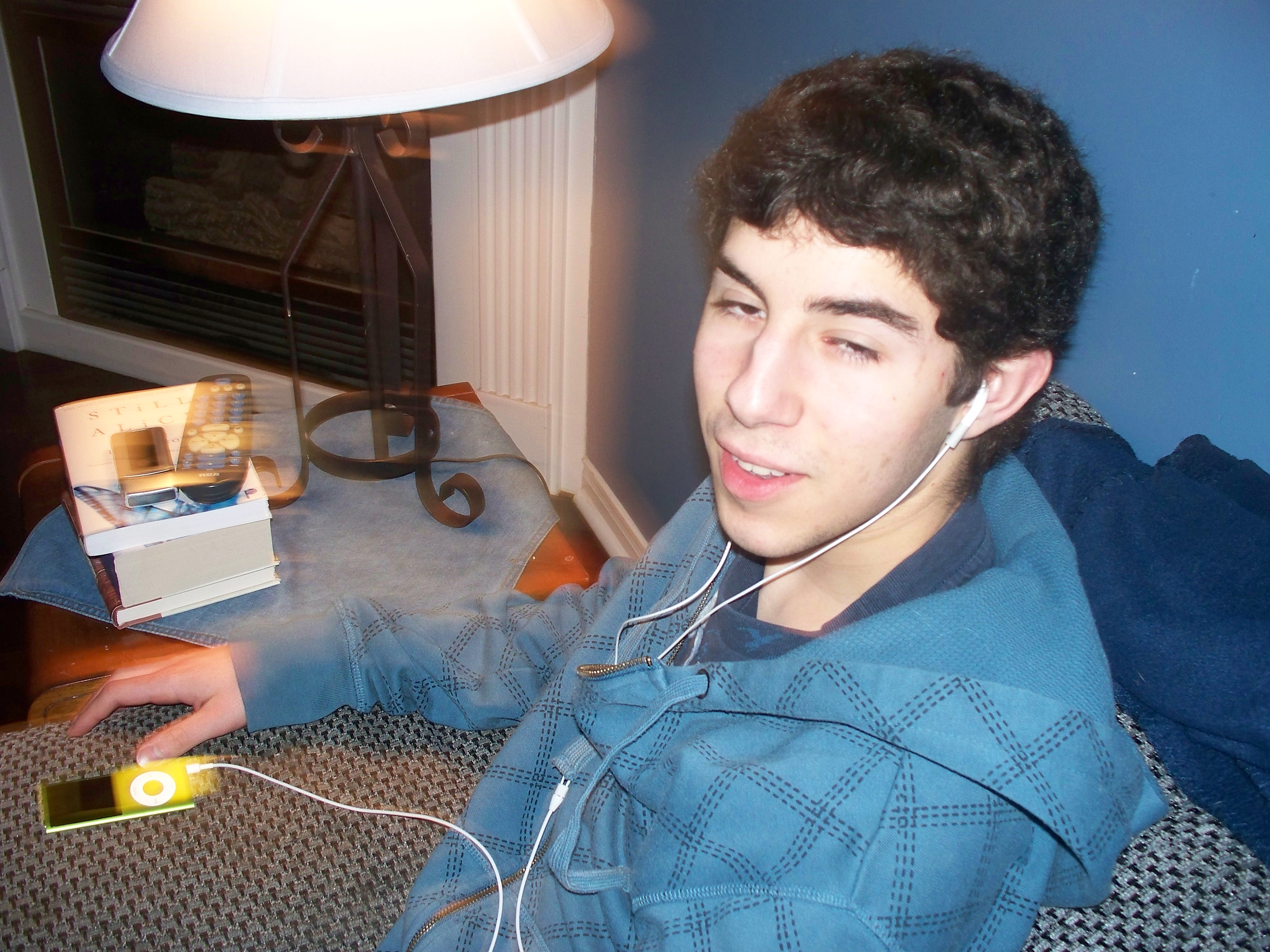
Me, circa 2010. May not be writing, but still plugged in. And apparently not ready for a photo...

Me, circa 2010. May not be writing, but still plugged in. Oh, and why did no one force me to get a haircut?!

Despite no longer being part of a band or wanting to be on MTV, my love for music didn’t go away. In fact, what took place was a marriage of sorts between my love for music and my desire to create and to write. Whenever I wanted to get into the zone, I would just plug in my headphones and find a good album or two. Without much effort at all, I found that the music helped guide what I was writing. It helped shape the atmosphere of the story and the feel of the words. Think of it like mood music, but without the rose petals and scented candles. Or maybe add in those scented candles. They always make me want baked goods.

In any case, if I wanted to write something sad, I listened to a sad song. If I wanted anger, an aggressive song would do. My eclectic music taste helps too: I listen to everything from Nine Inch Nails to Björk, from the neo-classical stylings of Olafur Arnalds to house music and dubstep. I wrote the entirety of my first novel to Nine Inch Nails and other Industrial Music. I was working on another manuscript last year that I wrote to Kanye West’s Yeezus.

In fact, I find now that when I listen to certain albums or songs, I am reminded of the stories or scenes I wrote to them. It’s like the songs have a new meaning that extends beyond the music itself. And worse, I find it nearly impossible to write until I find the perfect song or album to write to. That’s happening a bit to me right now, actually. I haven’t been able to pinpoint a mood or atmosphere for my novel-in-progress because I haven’t been able to find music that puts me in the right mood. I sometimes spend so much time looking for musical inspiration for the things I want to write that I even overlook the actual writing. But honestly, it’s worth it. If I get the right music with the right feel, BAM! I feel like I could write something on par with Shakespeare or JK Rowling.

Okay, maybe not, but that’s how I feel…

Do you listen to music when you write? What are you writing to currently? I’m open to suggestions :p

Confession: Twilight Inspired Me! (10 Books that Have Stuck With Me)

So, I’m a little late, but I’ve decided not to do this challenge on Facebook. Instead, I’ll make it into a blog post! It may take me a little longer than a few minutes, but yolo, right? Thanks to my mom and brother for tagging me! Instructions:

“Don’t take more than a few minutes and don’t think too hard – they don’t have to be the “right” books or great works of literature, just the ones that have affected you in some way.”
Why no sequels?

Why no sequels?

A Series of Unfortunate Events by Lemony Snicket

Yeah, there are 13 books… I know. In any case, these books were my favourite for a long time, even more so than Harry Potter (until book 7, of course). I remember reading the first book in this series, The Bad Beginning, in a single evening after elementary school. For me, that was when my love for books and writing really started.

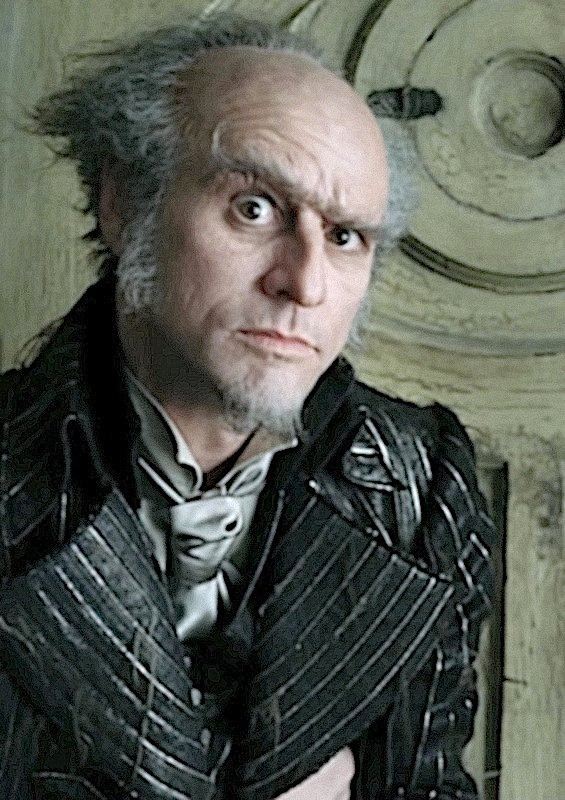
And besides, have you seen the movie with Jim Carrey? The fact that there were never any sequels produced is one of the great human atrocities.

Harry Potter and the Whole Goddamn Series (Obviously)

Another series, but how could I not? I have such admiration for JK Rowling as a writer and for the world she created. I really love how all-encompassing it is for people and how all-encompassing it was for me. I remember staying up all night to read these bad boys and I distinctly remember crying when some of the characters died… Okay, I cried almost every time.

Oryx and Crake by Margaret Atwood

I have never once been so riled up by a book. Oryx and Crake follows a man who has survived a global pandemic who recalls the details of his life, his dead lover, and his best friend who was responsible for it all. This book made me many things: sad, angry, and even disgusted — only Margaret Atwood could pull off a child pornography scene (you read correctly). In fact, the feeling of being disturbed is why I think this book was so powerful to me. Margaret Atwood has always been one of my favourite authors, but this book is her best in my opinion. If you’re a fan of speculative fiction with a literary flair intertwined with a healthy dose of cynicism, then this book is right for you.

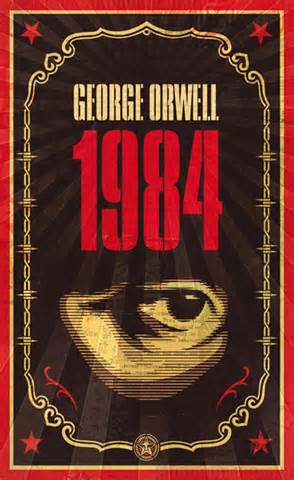
Big Brother is watching.

Big Brother is watching.

1984 and Brave New World

I’ll group book four and five together, mostly because their content is related. For the longest time, 1984 by George Orwell was my favourite book… And then I read Brave New World by Aldous Huxley. If you haven’t heard of either, I implore you to surface from under your rock and read them. THIS INSTANT. For me as a young reader and writer, these two novels were one of the biggest influences for my debut novel coming out in 2015. Dystopia is just so interesting!

Intrigued? Stay tuned.

The Great Gatsby and This Side of Paradise by F. Scott Fitzgerald

The Great Gatsby? Amazing. It was one of those novels I appreciated as I got older and I became kind of obsessed with the Jazz Age and the I-don’t-care attitude for a while there.

This Side of Paradise? Even better. Maybe it’s because I can relate so much to the main character. Yeah, he’s whiny and entitled and cynical, but he would fit right in in this age of millennial disappointment and a general distaste for real life. If you haven’t read it but adore Fitzgerald as much as I do, this is a must!

The Wise Man’s Fear by Patrick Rothfuss

Mr. Rothfuss gets a bad rep for taking such a long time between installations of his trilogy The Kingkiller Chronicle, but this second book was well worth the four years I had to wait for it. He has such a way with words and his world-building skills remind me of Tolkien. Yeah, he may not have mentioned anything about his third book for this trilogy lately, but he has a new companion book coming out in October. I can’t wait!

Wizard’s First Rule by Terry Goodkind

I’m not gonna lie, I kind of fell off the bandwagon after book four of The Sword of Truth series, but I did love this book. This was the first book I read post-Harry Potter that was in the fantasy genre and it definitely piqued my interest… enough to write a whole manuscript in the genre. Yes, that manuscript sucked and will never be published (EVER), but the initial inspiration was there thanks to Mr. Goodkind.

And the moment you’ve all been waiting for… Twilight

It’s not what you think. Really. I didn’t even read all of the first one. In fact the Twilight Saga didn’t stick with me because I enjoyed the story or because it was well-written. Instead, it instilled in me a critical eye. I just wanted to understand. Why was it so successful even though I thought it was lacking in both story and style? Why were people freaking out over it? I gave it a try, really I did, but I just couldn’t do it.

The real Twilight, my friends. Notice the lack of sparkling.

The real Twilight, my friends. Notice the lack of sparkling.

The Twilight Saga impacted me for one reason: I didn’t like it but it was popular and successful nonetheless. It sent me on a crusade to *not* do all the things that made me cringe in the book. Frankly, it made me want to write something that wasn’t terrible. It also gave me hope that my own work could be published. I’m not saying I’m an amazing author or anything, but there’s definitely no Bella Swan in my work.