Tag Archives: Book Reviews

Wednesday Writerly Update #6

Good morning!

Just a short update today of my writing progress for Writerly Wednesdays, and an early post at that too because I have a pretty busy day today.

The Inception-meets-The-City-Trilogy NA speculative fiction novel is still in limbo, not quite ready for pre-publication but getting there. I got notes back from a lovely critique partner (check Jessica out! She has a novel coming out soon too, and it’s gonna ROCK!), and her notes have been very helpful.

I’ve started editing my YA horror novel. I’m 20%-ish through a second draft, but there’s a whole lot of work to go. There’s a bunch of plot holes/cliches in the second half of the novel that I need to get rid of, so I’m kind of dreading that. And even then, draft three is going to be just as trying: the tone of the novel isn’t right. I don’t know what will make it right just yet, but it’ll be a process.

OH, and remember that free write from last week? The speculative fiction novel with a Middle Eastern setting? Well, let’s just say it’s been plotted, and an additional 3000 words have been added. Still not sure how I feel about it, but it’s set to be a novelette (around 12,000 words), and there’s a publication I’ve been eyeing if finish the piece and deem it publish-worthy.

So, goals for next week: keep editing the YA horror and maybe even move on to draft three; finish Middle Eastern speculative fiction (I can dream, right?).

As for “The Black Oracle“, there isn’t a whole lot of news to report. I’m still working on some promotion and marketing efforts that will *hopefully* kick off in July. If you’ve read it, though, leave a review on Amazon or Goodreads. I’d love to know what you think!

Until next time!

Review: Jazz by Cristian Mihai

ebook_small Jazz by Cristian Mihai is a novel about a lovesick Chris Sommers who leaves his hometown of New York City to go to Paris in pursuit of Amber, the outrageously beautiful but always-falling-for-the-wrong-guy type. But when Chris arrives in Paris, he is dismayed to discover that he and Amber still cannot be together: she’s with Jacques, another “wrong guy” painter who holds Amber’s interest. The more Chris learns about Amber and the complicated, deceitful life she’s built in Paris, the more dismayed he becomes.

First impression: Mihai has some serious writing talent. Seriously. His writing style reminded me of Fitzgerald or Hemingway, not only in prowess but also in maturity. I love a piece that is multi-layered, and Jazz is just that. It’s a great story of love, heartbreak, and betrayal, but it’s also riddled with delectable metaphors and motifs. In fact, Mihai has Chris read The Great Gatsby at one point which I thought was not only a nod to a great, but also a little bit ironic considered Mihai’s writing style reminded me of that book.

I also loved the characters that Mihai created. Each was wonderfully flawed, and that’s refreshing to me. What’s even more refreshing is that Mihai doesn’t spend the entire novel trying to have his characters revamp themselves or fight their inner demons, so to speak. Amber is just as naive and deceitful at the end of the novel as she was at the beginning. Chris is constantly overly optimistic and easy-to-disappoint throughout the novel as well. But that last scene was a fantastic way to end.

In the final scene, Mihai gives almost nothing away. He paints the scene and then leaves it at the crucial moment between Chris and Amber, leaving it up to the reader to decide if the characters would actually change their ways or if they were fall back into their absurd, detrimental habits. He also doesn’t give away the resolution of their quasi-love affair and I think that’s awesome. I’m a little over novels that end with “…and they fell in love and lived happy together”. I’m glad Mihai ditched the cliche and gave us something new to enjoy.

Among the many highlights of this piece, though, there were a few places for improvement. First and foremost, the literary prowess was a little less impactful in spots because of blatant spelling or grammatical errors. To me, there’s nothing more distracting than tripping over a missing word or noticing that the grammar is wrong. It really breaks the flow. Secondly, I felt that sometimes Jazz was a little too close to The Great Gatsby in some places: Chris is almost an outsider and observer in the same way Nick Carraway is. The female love interest is ridiculously naive and willingly powerless against her perils in the same way Daisy is. I liked it, personally, but sometimes I feel that the allusions to Fitzgerald were a little too strong.

In any case, this is a definite buy! You can check out Cristian Mihai’s website and blog here. Also, buy yourself a copy of Jazz here.

Review: The Gateway Through Which They Came by Heather Marie

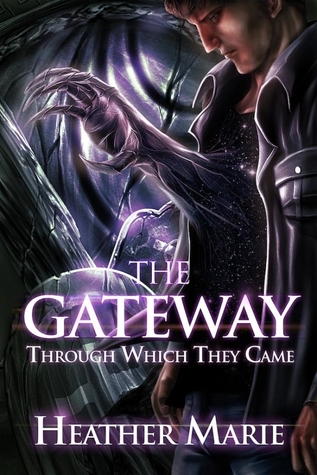
19089172Aiden Ortiz is a gateway who allows the souls of the dead to pass through him on their journey to finding peace in the afterlife. His job is inconvenient enough and it becomes even more so when the Dark Priest returns and threatens to use Aiden’s power to bring back souls that are better left dead. Throw in a long-lost lover who mysteriously resurfaces without an explanation (or a home) and this quickly becomes a recipe for a young adult masterpiece.

I was drawn to this book for multiple reasons. Primarily, I was really excited for the concept. The horror geek in me loves this idea: souls having to cross over into the afterlife by physically walking through a person. And better yet, that person was a young adult. Unless you’ve been asleep for the past couple years, it’s evident that some of the most popular books have been in the young adult genre. Secondly, the hype around this book is massive. Heather Marie, a fellow Curiosity Quills author, is an all-out rock star with TV and radio spots as well as features in the Huffington Post and Cosmopolitan and a slew of good reviews to back her up. Oh, and that book cover? Let’s just say I went into this one with high expectations.

Well, I was not disappointed. Marie does a great job of developing Aiden as a character and really allows the reader to get into his head. I enjoyed the relationship between Aiden and Koren, the long-lost lover. Their backstories were so intertwined and riddled with intricacies that it made for well thought out characterization, something that I feel the YA genre lacks at times. Also, the story almost had a neo-gothic feel to it: the paranormal, eerie churches and passageways, lovers who cannot be. We need more books like this. I miss this!

Further, I liked the themes presented in the novel. With subject matter such as this, it’s hard not to overemphasize the battle between good and evil, but Marie handles it with grace and doesn’t jam it down the reader’s throat. I think it’s easy to inadvertently do so, especially with a primary setting being a church, but I liked how Marie left it up to the reader to make those good-vs.-evil distinctions. Also, I love how Marie touched on Latin and LGBTQ+ themes in this novel. These are things that are prevalent in our real world society, so I like when current books reflect that. I only hope she develops these further in her later work.

My only criticism of this novel is that my expectations were sky-high. Don’t get me wrong, Marie does a great job with this debut and I am excited for the second (and third, I think) installments, but I was a little less blown away with the writing. It was a little too young feeling for me and used a few too many cliches. The pacing was also a little slow and even though the action scenes were good, Aiden only ever seemed to black out in the peak of them — though, I can’t say I blame him.

That aside, I can honestly say I enjoyed this book and look forward to reading Heather Marie’s subsequent work — and following her sure-to-be rock star career!

All in all, I suggest buying a copy.

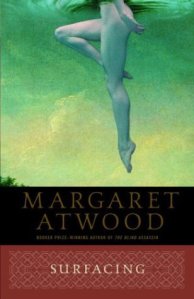
Surfacing by Margaret Atwood: Too Much Literature, Not Enough Storytelling

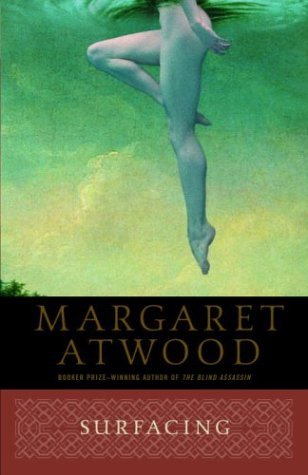
46755Surfacing is Margaret Atwood’s second novel about a woman who returns to her isolated hometown in the middle of nowhere, northern Quebec, after her father goes missing. Once there, the unnamed main character falls apart as she confronts her past and present failures in love, loss, and family.

To start, I love Margaret Atwood. She is by far one of my favourite authors, and my favourite Canadian author at that. I’m a huge fan of the Maddaddam Trilogy, The Handmaid’s Tale, and The Robber Bride.

I have to admit, though, Surfacing is my least favourite novel by Margaret Atwood.

The Good

Surfacing is typical Atwood in one very good way: the prose is on point. In my opinion, Atwood always has a fresh, unique, and tantalising way of writing. Her voice is so well-developed and effective that I’ve used it as an inspiration to develop my own voice as a writer. This book is no exception. The voice is strong and the atmosphere she creates is admirable.

I also love Atwood’s exploration of themes. I get a little angsty when books go skimpy on theme exploration, but that it is something Atwood never overlooks. I enjoyed her exploration of isolation, especially the frantic, devolutionary descent into barbarianism that the main character experiences at the end of the novel. As usual, this novel also features commentary on the objectification and alienation of women, a theme that Atwood frequently explores in her work. Considering this novel was published in the 70s, the commentary on the social expectations of women is still very applicable to today, especially in the wake of the recent resurgence of Feminism in the mainstream media and the iCloud photo leak scandal.

The Bad

I hate to say it, but this novel features very little plot. I understand the idea of creating a novel that is a character study, but the revelations that the main character has at the end of the novel seem to come from nowhere. The main character spends a lot of time reliving her past, being bitter about her failed marriage, and isolating herself from the world around her that when she has her all-you-need-is-love epiphany in the final scene of the novel, it seems out of place and unnatural.

Further, Atwood’s prose is so layered and meaningful that it almost brings the book down. Now, I am a big fan of literary fiction, but holy cow. Atwood’s prose was so layered and so meaningful that at times it seemed to lack even that: real meaning! The metaphors were a bit much and they left me confused and feeling like I had misunderstood what the novel was even about.

The Boring

I hate to say it, but at some spots, this novel was just boring. I feel like I as a reader couldn’t see the storytelling forest through the literary trees. That is to say that Atwood was so caught up on creating smart, impactful, metaphoric prose that she lost sight of creating an actual story — and I love Atwood for her storytelling. She has a knack for it, but at the end of reading this novel, I realized that Surfacing wasn’t really about telling a story at all.

I guess I’m just a little disappointed, I have to admit. But I guess she’s allowed one book that isn’t my absolute favourite, right? If you’re new to Margaret Atwood though, I’d suggest starting with something else. Perhaps Oryx and Crake or The Handmaid’s Tale.

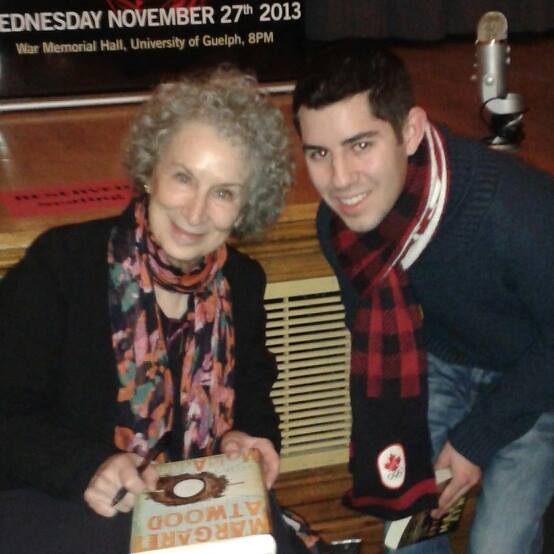
PS. Here’s a photo of me and Margaret Atwood to make me feel better. I met her at a reading and signing in Guelph, Ontario. Despite my lack of admiration for Surfacing, she is a great inspiration to me and my writing. She’s actually my hero.
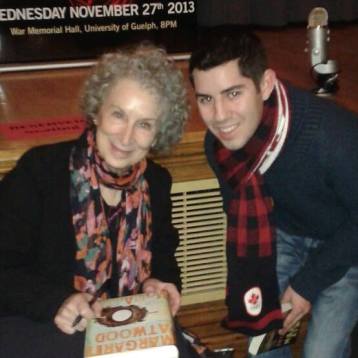
One of the happiest days of my life!

One of the happiest days of my life!

Shaman: Too Long, Didn’t Read

Kill it! Kill it with fire!

Kill it! Kill it with fire!

I always finish a book. Always. I’m the kind of person who can’t just leave one on my bookshelf without having read it — all of it. I do it because I’m a believer in books. Besides, what if the best part is at the end? What if something awesome is just around the corner.

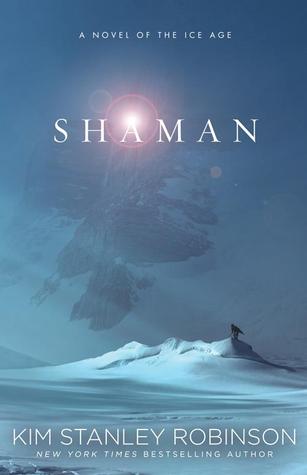
But I failed. I couldn’t do it. Shaman by Kim Stanley Robinson is my kryptonite.

You can check out my full review here, but in a nutshell, I just couldn’t bring myself to finish the book. This is my first read from this author and I had high hopes. I’d heard about other books he’d written and I was really excited. His Mars Trilogy has been met with acclaim and I’d been eyeing 2312 for a while. When I saw Shaman, I thought I’d give it a try.

I should have known when I couldn’t find a plot description on the cover and when I found even less of one on the internet. THE INTERNET! The all-knowing, all-consuming, information hub of the world had nothing to say about this book besides everyone claiming it was the best (Marina Abramovic, you tricked me!) And you know why I couldn’t find a plot description?

Because there was no plot. Spoiler alert.

Okay, maybe there was. In the book’s defense, I only made it to page 250. But in MY defense, I made it to page 250! I was so bored I thought I should swallow it for some entertainment. The characters were boring and the prose was dry and the concept had promise but it ultimately felt like a BBC documentary about the Ice Age… And I like BBC documentaries.

Maybe I just don’t get it. I have read books with little to no plot before, and I can honestly say I don’t mind them. Heck, a few of the best written books out there are nearly plotless. But at least those books had other elements that made them worthwhile: exhilarating prose, great characters, interesting ideas.

This just wasn’t one of them. In the words of my mother, life is too short to read a book you don’t like. If I died tomorrow, I don’t want my last literary memories to be of me struggling to pay attention, all while contemplating throwing the book out of my window on the highway so I wouldn’t feel guilty about keeping a book half-read on my bookshelf.

Maybe next time, Kim Stanley Robinson.

What makes you stop reading a book?