Tag Archives: F. Scott Fitzgerald

Review: Jazz by Cristian Mihai

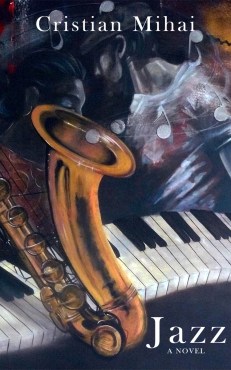
ebook_small Jazz by Cristian Mihai is a novel about a lovesick Chris Sommers who leaves his hometown of New York City to go to Paris in pursuit of Amber, the outrageously beautiful but always-falling-for-the-wrong-guy type. But when Chris arrives in Paris, he is dismayed to discover that he and Amber still cannot be together: she’s with Jacques, another “wrong guy” painter who holds Amber’s interest. The more Chris learns about Amber and the complicated, deceitful life she’s built in Paris, the more dismayed he becomes.

First impression: Mihai has some serious writing talent. Seriously. His writing style reminded me of Fitzgerald or Hemingway, not only in prowess but also in maturity. I love a piece that is multi-layered, and Jazz is just that. It’s a great story of love, heartbreak, and betrayal, but it’s also riddled with delectable metaphors and motifs. In fact, Mihai has Chris read The Great Gatsby at one point which I thought was not only a nod to a great, but also a little bit ironic considered Mihai’s writing style reminded me of that book.

I also loved the characters that Mihai created. Each was wonderfully flawed, and that’s refreshing to me. What’s even more refreshing is that Mihai doesn’t spend the entire novel trying to have his characters revamp themselves or fight their inner demons, so to speak. Amber is just as naive and deceitful at the end of the novel as she was at the beginning. Chris is constantly overly optimistic and easy-to-disappoint throughout the novel as well. But that last scene was a fantastic way to end.

In the final scene, Mihai gives almost nothing away. He paints the scene and then leaves it at the crucial moment between Chris and Amber, leaving it up to the reader to decide if the characters would actually change their ways or if they were fall back into their absurd, detrimental habits. He also doesn’t give away the resolution of their quasi-love affair and I think that’s awesome. I’m a little over novels that end with “…and they fell in love and lived happy together”. I’m glad Mihai ditched the cliche and gave us something new to enjoy.

Among the many highlights of this piece, though, there were a few places for improvement. First and foremost, the literary prowess was a little less impactful in spots because of blatant spelling or grammatical errors. To me, there’s nothing more distracting than tripping over a missing word or noticing that the grammar is wrong. It really breaks the flow. Secondly, I felt that sometimes Jazz was a little too close to The Great Gatsby in some places: Chris is almost an outsider and observer in the same way Nick Carraway is. The female love interest is ridiculously naive and willingly powerless against her perils in the same way Daisy is. I liked it, personally, but sometimes I feel that the allusions to Fitzgerald were a little too strong.

In any case, this is a definite buy! You can check out Cristian Mihai’s website and blog here. Also, buy yourself a copy of Jazz here.
8 Rules for Writing Fiction and Why You Should Break Them

I always find it funny that writers and editors always seem to have a billion sometimes-contradictory dos and don’ts when it comes to writing “good” fiction. But what is “good” fiction? I don’t want to start a philosophical debate, but one person’s Shakespeare is another’s Rebecca Black, you know? So instead of giving you a list of things that I think make good writing, I’ve decided to look at the rules, whether they come from professionals or amateurs, and I’ve taken the liberty of refuting some of them.

3__It_feels_good_to_break_the_rules_gif

8. No Prologues

Listen, I can’t say I’m a particular fan of prologues, but honestly, a lot of successful writers have used them and their work has been just that: successful. I would suggest that writers stop agonizing over this rule and focus on what’s important. Get back to the writing. Get back to the story and the characters that will carry you beyond that prologue. If it’s essential to the story, it will stick.

7. No Adverbs

I read somewhere that using adverbs is a mortal sin. Mortal sin? Really? Even worse than a flawed plot line or boring characters? I militantly disagree. A couple adverbs here and there aren’t going to ruin a piece. In fact, sometimes I like them. It’s like drinking wine: a few adverbs may heighten your experience, but a lot of them can be draining and induce headaches.

Are they really that bad?

Are they really that bad?

6. Never Use A Dialogue Tag Besides “Said”

I was on this boat once, and then I got an editor and she pointed out how dry this made my writing after paragraphs and paragraphs of he said, she said. I’m not saying writers should go wild, I’m just suggesting that perhaps spicing it up a bit may actually enhance your writing.

5. No Present Tense

Don’t get me wrong: when done poorly, this can be disastrous, but mindless copies of the same old third person narrative can be terrible too. When done well, first person has an almost fast-paced, immediate feeling to it. It also feels more personal and more artistic, kind of like the primitive storytelling that humans were good at for THOUSANDS OF YEARS. So, give it a try. If it works, perhaps your story is meant to be told that way.

true-story_1413

4. Use Only Complete Sentences

If you’re writing academically, then sure. Fiction? It can have positive effects.

See what I did there?

3. Write Every Day

It’s not that I disagree with this rule, it’s just that it’s unrealistic and puts a lot of pressure on aspiring writers who ultimately fail at this and then feel inferior for not reaching this goal. Myself included. If I could rewrite this rule, I would say Write a lot.

Life happens. People have day jobs. And school. And children. And lives. If writing every day doesn’t happen, that’s okay. But don’t doubt the need for time. Writing won’t happen when you’re asleep. Just remember, sometimes quality trumps quantity. You may find that writing every day for ten minutes may not be as productive or as enjoyable as writing for 2 hours every couple days.

2. Write What you Know

I don’t necessarily disagree with this, but I disagree with the misinterpretation this rule carries. I read somewhere once that young people made for bad writers because they were too inexperienced. The argument was that young people should go out and experience the world before attempting writing. I even heard that young writers shouldn’t even try until they had a master’s degree in creative writing. In other words, young writers don’t have enough in the “know” category yet.

Pride-and-Prejudice

I say, to hell with that, write away! Forget about what you know and what you don’t. Write something that comes from the heart. 9 times out of 10, what comes from the heart isn’t just something you know, it’s what is meaningful to the soul. Besides, F. Scott Fitzgerald’s This Side of Paradise was published when he was in his twenties and he dropped out of his undergrad at Princeton without completing. That’s not to say that a writer shouldn’t explore the world around them and get new experiences, I just caution against waiting. Strike the iron while it’s hot, if you can pardon the cliché.

1. There are no Rules

There is perhaps no rule I can disagree with more. Rules are meant to be broken, yes, but that doesn’t mean that there are no rules. Writers still have to adhere to grammar and spelling rules. Failyure to do sow results in sentenses that look like this.

So, don’t listen to those who say that there are no rules. There are. Editors judge pieces based on rules. Publishers judge pieces based on rules. READERS judge pieces based on rules. What this rule means to say is that some rules can and should be broken. Others can even add an element of artistic flair if broken in the right way. Ultimately, you decide, but know that getting an opinion from an editor or trusted reader is always valuable.

Got any rules that plain just don’t make sense?