Tag Archives: creative writing

Travel & Writing

It’s that time again! This Saturday, I will be leaving on a jet plane and heading on a month-long backpacking trip to South Africa and Spain. Not to worry, friends, while I am not the greatest at following a blogging schedule (read: I suck pretty hard), I am planning on uploading a few photo journal posts throughout my trip. Minimal effort for me, good travel photos for you!

But now: the point. Traveling so soon has me in a travel mood. Consequently, being in a travel mood puts me in a writing mood. Why, you ask? Shouldn’t I be YouTube spiraling and watching every video I can find on my backpacking destinations?

Yes, I should, but instead, I feel so inspired. For me, traveling has a huge impact on my writing and is definitely the pick-me-up I need when I feel uninspired. In fact, there are huge benefits for writers who travel, even if it’s only for a couple days away.
IMGP0768

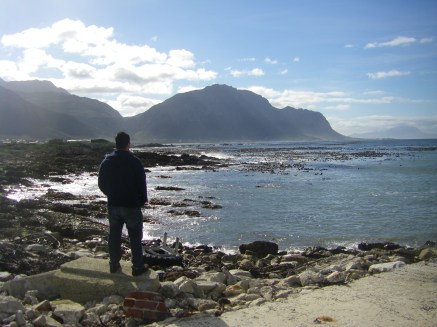
African Sun, here I come!

Traveling Calms You

While this may not be the case for everyone, traveling can be calming. For me, it’s waiting in an airport and people watching. It’s sitting on a beach with a book and having absolutely no plan for the day. It’s waking up on any random day and asking a travel companion “what are we doing today?” knowing that we could do anything we like or nothing at all.

Travel has a way of relaxing people, even on the busiest of city streets. And guess what? Being relaxed is a great way to write. Ideas form easier, the words come smoother, and writing seems less like a chore and more like a spa massage.

Besides, have you ever tried writing while stressed out? Yeah, I’ve gone on DELETE-EVERYTHING rampages too…

IMGP0476.JPG

So beach. Much calming.

Traveling Exposes You to New People & Different Cultures

My absolute favorite part of traveling is the new people I meet and the interesting cultures I experience. Living in Canada, sometimes it’s easy to forget that people all around the world live in a completely different way than I do. Beliefs, traditions, and existences vastly different from our own occur EVERYWHERE, and it’s a pity not to experience them.

But why is this beneficial for our writing? Two reasons. Number One: characters are the soul of our writing, and what better way to create interesting characters than to meet interesting people? Number Two: a huge aspect of the fiction industry is the Science Fiction and Fantasy genre, and while it may be hard to travel to the moon or Westeros for inspiration for your next novel, a quick flight to a foreign country could inspire the location of your next piece.

IMGP1282.JPG

Oh, what’s that? The scene of your next novel?

Traveling Enhances Your Prose

Speaking of locations, traveling allows you to better describe the setting of your story. Novel set in a windswept, mountain town? Time to see the Rockies or the Alps. Medieval, seafaring city on the ocean? Round trip to Croatia. What about the desert? Egypt it is.

I find it way easier to more accurately describe the setting of my novel if I’ve actually been to a place that has a similar landscape. Besides, that’s why I take so many photos. When I get home and I’m working on setting in my prose, I can look at the photos and remember not just how a place looked, but also how a place smelled and felt.

IMG_20150518_150942.jpg

A great setting for a novel… Or just a good place to write it!

Traveling Puts Life (and Writing) in Perspective

One of the best feelings traveling gives is the feeling of being small and insignificant.

Sounds depressing, right? Well, hear me out.

In our everyday lives, it’s really easy to get wrapped up on everyday things: wake, eat, drive to work, do work, eat lunch, do work, come home, make dinner, watch Netflix, drink wine, sleep… The cycle goes on and on. Worse: we toil over the news, toil over social media, toil over whatever drama Sassy Sally or Donald Downer is conjuring up.

But when you travel, that cycle gets interrupted. You experience new and exciting things. Best of all, traveling helps you put your whole life into perspective: you realize that there are billions of other people on this Earth, and their lives can be extremely different than yours. Further, these people exist without being influenced by your life (or Sassy Sally’s drama) whatsoever. To me, that’s really humbling, and when I’m in a writing rut, it comforts me to think that somewhere out there, there are people facing life in all its forms, and suddenly, my life doesn’t seem so overwhelming, and I can get back to what I find important.
IMG_20150516_103259.jpg

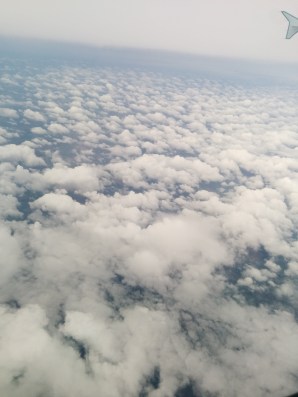
Oh, how small we really are.

Story Ideas Can Strike at Any Time!

This one is self-explanatory. With travel opening up the world to you, it also opens your mind to new story ideas. These can come while people watching at the airport, overhearing a discussion at a restaurant in Bangkok, or in the bush in Mozambique, waiting for a lioness to show her face.

In a world of 8 billion people, there are at least 8 billion stories, and by traveling, you give yourself the opportunity to one you may not have heard before.

20150208_131020.jpg

So, get out there, writer! Experience something new! Where are your favorite places to travel for writing inspiration?

 

15 Thoughts Every Writer Has When They Aren’t Writing

Not being able to write is a sad fact of life for a writer. There’s laundry to do, there’s food to cook, there’s sleep to be had. Worse, I have this pesky illness that eats up a lot of my time. I toil day in and day out to keep it at bay and under control. Sometimes, it creeps into my evenings, just when I think I’ve escaped. Worse, the horror of it all often keeps me awake at night and the dread fills my dreams with terror and sadness.

Oh, I’m not sick… I have a 9-to-5 job.

In any case, the truth is that my job isn’t that bad. I love the people I work with and to be honest, the job in and of itself is mostly an enjoyable and painless experience. But what I’m getting at is that I often feel like I don’t have a lot of time or energy at the end of the day to do what I really love: writing! Instead, I’m left repeating the same thoughts over and over again in my head as I toil through things that I would rather not do if it meant I had more time to write.

Here are a few of those thoughts:

1. “Today is the day. I’m in the mood to write, I’m excited for where story is taking me. I just have something to do first. But if I get through it quickly, maybe I can squeeze in a half-hour of writing.”

2. “And I’ll have to remember to work in this new development I’ve just thought up. It’ll completely change everything and set the story on the right track!”

MB002

3. “Ahhh! This task is going to take longer than I thought it would. Guess I should write this idea down before I forget it.”

4. “Okay, I have no pen. I guess I’ll just have to remember. Repeat something three times and it becomes a long-term memory, right?”

5. “And I’ve forgotten this life-changing development…”

6. “Task done. Time to sit down and write. Oh, wait, I should probably do this other time-consuming task while I have a little free time.”

7. “It’s okay. No need to get stressed out. Just relax. You can finish this quickly and then get to writing.”

8. “I think I just did this task wrong. Ughh.”

fml

9. “Okay, seriously. Just relax. On-the-ball Olivia said it wouldn’t take long. Just focus and get it done and then all the leisure time shall be MINE!”

10. “Wait. I think I’ll watch some Netflix first. There’s that new movie I’ve been so excited to see. It’ll get me back in the creative mood.”

11. “Time to download some new music. I can’t write without some fresh inspiration to get the juices flowing.”

12. “And I’ve just received the email I’ve been dreading. Writing. Delayed. AGAIN.”

13. “Done. Now I’ll creep a little Facebook to calm me down. That email got me a little worked up.”

14.

"Such a cute kitty. Whose little cute kitty are you?"

“Such a cute kitty. Whose little cute kitty are you?”

15. “Okay, plug in the USB, open the manuscript I’m working on, and…

I don’t even feel like writing any more.”

How I Kept the Fire Burning

This is a response to my previous blog post about getting in the mood.

Well, let’s just say I got in the mood. I tried to push myself to keep up with a manuscript that just wasn’t coming. I was getting frustrated and a tad depressed that I was making time for writing and then feeling like I was wasting it because nothing was coming out. And if I did write something, I didn’t like it. I just couldn’t get the mood right.

But then it hit me. I was in the shower one morning and I was tormenting over another writing “session” where I managed a whopping word count of 110 in three hours when I had a stroke of inspiration: a new story idea waltzed into my head. Angels starting singing and music started playing and I couldn’t get dressed fast enough so that I could get back to my damned laptop and write some of the stuff down.

So, humans of the planet Earth, I have a confess that I’m excited to share but I’m also a little ashamed of: I kept the fire burning by, in essence, having an affair. Yes, I have started a second manuscript: a young adult paranormal novel. Now, I know that is a touchy field. Young adult has been a little over-saturated lately and any mention of young adult paranormal automatically screams Twilight (bleh!) but I can assure you, I have something that I am happy with and I am excited to be writing it. In fact, I managed to hammer out a little over 8000 words in two weeks. How’s that for a fiery romance?!

2 hawt.

2 hawt.

Now, I have no intention of abandoning the first manuscript, partially because I have 15,000 words there and also because I really do like the story. But I’ll be honest, I’m okay to put it on the back burner for a bit and take a break while I work on something else. It’s not you, it’s me, right?

No, it really is me…

I am somewhat of a planner, and by that I mean that I do a lot of romanticizing about ideas before I get the chance to write them. Needless to say, this is the first time I’ve been so struck by an idea that I’m willing to abandon another one mid-first draft so I can work on it. And to be honest, I kind of like it. It’s a kind of exhilaration I’ve been missing in my writing lately because I haven’t given myself the freedom to just go with the flow and write what feels right to me at the moment. I guess the motto strike the iron while it’s hot has some merit to it after all, huh?

But there is one downside that I didn’t anticipate: the worry. Since I’ve now left one project to work on another, I essentially have two projects on the go. I guess my fear is that if this second manuscript fizzles out like the first one did, I have two work-in-progresses that are not completed. I understand the notion of going where the wind takes me, but I’m also paranoid I won’t get either of them done. Publishers work with full manuscripts after all.

But I guess I can relax: with The Black Oracle coming out next year and a second book (hopefully) to commence the publishing process soon after, having two projects that are not yet completed isn’t so bad. The publishing process has so far proved to be a long one (though, definitely enjoyable) so I guess I do have quite a bit of time.

Have you ever left one project unfinished to pursue another?

Getting in the Mood

Excuse me for being a little forthcoming, but lately I’ve had a little trouble getting in the mood. I dim the lighting, put on the music, and get into something comfortable. I tidy the room and I make sure I’ve eaten (but not too much). If I really want to get into it, I may go for a glass of wine or two. I sometimes even even light a scented candle and disconnect my phone to maximize my focus.

Oh… no, that’s not what I meant. I’m talking about setting the mood for writing.

Getting in the mood, huh? Well, this is awkward...

Getting in the mood, huh? Well, this is awkward…

And in spite of all these aforementioned things, I’m having trouble. Legit. I get home from work or home from errands on the weekends and I’m just not in the mood. I sit myself down after dinner, open up the work-in-progress I’ve decided to focus on (I have two  manuscripts that are in a first draft stage and two in a revising/editing stage), and I just can’t do it. I just can’t.

If I try to write, it feels forced and unfocused. I’m lucky if I’m able to get down more than a couple hundred words at a time. If I try to revise or edit, it feels like everything I’m editing is crap and I should just toss it all and start over. I’m bitter and bored and the writing seems uninspired and bland. And it’s weird, I’ve never had that problem before. Sure, I go through ups and downs throughout the editing process, but I never reach a point where something feels hopeless or unsalvageable. And frankly, I know it’s not because when I’ve read through it before, I’ve had the complete opposite reaction.

And then it hits me: I’m having trouble getting in the mood in a much bigger sense. Sure, I’m able to set up my writing space for a couple hours devoted to writing, but I’m having trouble setting up my head space. I’ve recently started working full time and although I like it, it’s hard work and I come home tired and groggy and sometimes just downright grumpy. And even on weekends if I’m not grocery shopping, I’m getting car work done; if I’m not visiting family and friends, I’m running one of the 300 errands that I should have run last weekend (read: three weekends ago). And don’t even get me started on reading. I’m not gonna lie, I’m normally a slow reader, but hell, I’m like astronomically slow at this point.

So, that brings me to my present predicament: what should I do? I can’t quit my job. It’s a nice thought, but as a 20-something who JUST started working, I’m not quite at writing-as-a-full-time job just yet. I can’t ignore my relationships and groceries and errands either: I already tried and that resulted in having to replace my entire gas tank (if only I started taking that check engine light seriously!).

So, I guess it comes down to state of mind. I think I have to be a bit more focused and start making more time to write (and read). On the flip side, I think I have to remove some of the pressure and let myself just enjoy the process again. Writing shouldn’t be a chore but I have to admit that it’s starting to feel like one. Ultimately, I also think that I just have to go with the flow for a bit. I know this is a period of change for me, what with the new job and moving out and having my first novel published next year. Maybe I just need to step back and focus on letting the mood set me.

If that makes any sense…

Any thoughts? What do you do to get in the mood? 😉

4 Misconceptions About Writing a Novel

When it comes to writing, there is nothing more daunting than writing a novel. Okay, maybe attempting to write a saga of twelve novels is a little bit more daunting, but let’s stick to just one for now. In my opinion, writing a novel is a little more difficult than say a short story or a poem. That’s not to say it’s more difficult than writing a good short story or poem, that’s just to point out that short stories and poems don’t generally run 60,000+ words — unless you’re Homer and write two epic poems that come in at over 200,000.

Wrong Homer...

Wrong Homer…

In any case, the enormity of a novel is disillusioning enough on its own, so while we’re at it, let’s disillusion some more.

Everyone Has a Novel in Them

To me, this misconception is the equivalent of saying that everyone has a music album in them. Sure, everyone has the capacity to make music, but does everyone have the capacity to make good music? Anyone who answers yes to that question has obviously never heard Friday by Rebecca Black.

The same is true for writing a novel. Sure, everyone has the capacity to physically sit down and hammer out enough words to write a novel, but does everyone have the capacity to write a good one? Even still, is novel writing something that someone can just wake up and do, or it is a learning curve of trail and error, observation and failure? By saying that everyone has a novel in them, we trivialize the skill of people who write for a living and chalk down writing a novel to simply reaching a word count. But for anyone who has written a novel, you know it’s more than that: it’s plotting and characterization and tone and theme development and atmosphere and so much more.

One Draft and You’re Done

This misconception is particularly cringe-worthy. I really feel for writers who think that they can get away with writing a first draft and then doing zero revisions or editing. Not only it is extremely advisable to read over your work at least once to catch any spelling, grammar or continuity errors, but first drafts (in my opinion) are meant to be the bare bones of a piece. Think you have an amazing first draft? Think of how amazing the second draft will be! Still not convinced to write a second? Well, give it to a beta-reader and come back in two weeks or so. Perhaps your judgement will be a little less clouded when the first-draft-finished high wears off.

You’re Getting Published so It’s Time to Quit Your Job!

Haha, if only that were true. I hate to break it to the hopeful, but a publishing contract does not equate to financial security — with or without an agent who’s got your back. That’s just simply not how it works. There are hundreds of thousands of novels published every year. You better believe that not every one of them is making $100,000 a pop.

That’s not to discourage anyone from trying — write if that’s what you were meant to do. But don’t think that you’ll complete and publish one novel and you’ll never have to work another day in your life. In fact, a UK study found that British writers made an average of £4,000 ($6252 American Dollars or $7140 Canadian Dollars) and only 1 in 10 professional authors were able to support themselves solely off of their writing. Kinda depressing, right? Yeah, but by now, I hope you’re not writing for the money. There are easier ways to make money that don’t involve perfecting tens of thousands of words, becoming an anti-social hermit, and potentially getting rejected hundreds of times.

tumblr_lvcy3wVHwH1qldt8eo1_500

But wouldn’t it be nice to be the exception?

Novel Writing is Not Work at All

I once wrote an entire blog post about this, so I won’t rant and ramble again here. To those who think that novel writing doesn’t qualify as work, I have one word: No. Actually, make that two: f*ck no. Yes, don’t get me wrong, I have fun writing novels, but I wouldn’t say that it’s something I breeze through. It’s blood, sweat, and tears. Okay, maybe a little less blood, but there are sweat and tears. And yes, I write because I want to, but that doesn’t mean I’m not warranted in calling a spade a spade. There’s no reward without work, right? Well, think of writing as no different. 85,000 words don’t just arrive with a big gust of wind.

Got any misconceptions?

To Sequel or Not To Sequel

That is the question, isn’t it?

It seems to be the thing to do at this moment in the entertainment industry, particularly the film industry. In fact, the film industry does it so well that it takes sequels and breaks them into parts so as to make one sequel into three or four in a sequel-ception frenzy. Don’t get me wrong, I just saw Mockingjay Part 1 and I think it was pretty well done as with the rest of the film adaptations for the Hunger Games Trilogy, but this whole Part 1 / Part 2 nonsense is getting a little out of control. What next? Are they gonna release book adaptations in episodes and make full 24-installment seasons out of them?

Wait…

anigif_enhanced-buzz-10113-1382948371-0

The film industry aside, the desire for sequels has penetrated deep into the book industry too. Every book nowadays has some sequel or prequel or companion book or series or *gasp* trilogy attached to it. Do we really need three snail-paced, mediocre books when one perfectly-paced, awesome book will do? It seems to me that trilogies and sequels work well in some cases, but sometimes I’m reading book two or book five and all I’m doing is questioning why the content wasn’t just condensed and put into book one. What if writers just cut out some of the filler and whining and got to the point? Writers are supposed to be concise, aren’t they? If we answer yes to that question, why are some of our bestselling books full of such hot air?

And then it occurs to me: sequels sell. Trilogies sell. Trilogies make fantastic movie franchises. It’s easier to market a series of books than just a single book. And if a publisher gets a good momentum going, they can even have people buying more than one book at a time. Sure, there is some artistic choice on behalf of the author because they’re the ones doing majority of the writing after all, but how much of that inspiration is conflated to conform to this quantity over quality phenomenon?

So, the real question: Should I write a series or a trilogy because it has the potential to sell better than a stand-alone book or should I focus on the need for something more? To be honest, I have ideas and characters that can stretch three or more novels but when is enough enough? How do I know when I’ve struck writerly gold and when am I just grovelling? Maybe it’s just me, but sometimes I feel an odd pressure to write more than one book about a particular character or plot, but I’m not really sure if that pressure is coming from a story that’s not yet done being told. How do I know if that impulse is a genuine expression of inspiration and creative need or if I’m just eager to jump on the bandwagon of stories that would have been better told in a single installment?

The answer is quite ironic, really: I guess I’m just going to have to write and find out. I guess if I’m still invested in a character or an idea, I should strike the iron while it’s hot, right? And besides, what’s writing another two or three books? Some writers make it seem like child’s play. I even recall writers who churn out a couple of manuscripts every year. Not all of them can be alien robots.

What do you think? Do all stories have sequel potential or is it just the entrepreneur inside the writer that wants us to believe that this is the case?

8 Rules for Writing Fiction and Why You Should Break Them

I always find it funny that writers and editors always seem to have a billion sometimes-contradictory dos and don’ts when it comes to writing “good” fiction. But what is “good” fiction? I don’t want to start a philosophical debate, but one person’s Shakespeare is another’s Rebecca Black, you know? So instead of giving you a list of things that I think make good writing, I’ve decided to look at the rules, whether they come from professionals or amateurs, and I’ve taken the liberty of refuting some of them.

3__It_feels_good_to_break_the_rules_gif

8. No Prologues

Listen, I can’t say I’m a particular fan of prologues, but honestly, a lot of successful writers have used them and their work has been just that: successful. I would suggest that writers stop agonizing over this rule and focus on what’s important. Get back to the writing. Get back to the story and the characters that will carry you beyond that prologue. If it’s essential to the story, it will stick.

7. No Adverbs

I read somewhere that using adverbs is a mortal sin. Mortal sin? Really? Even worse than a flawed plot line or boring characters? I militantly disagree. A couple adverbs here and there aren’t going to ruin a piece. In fact, sometimes I like them. It’s like drinking wine: a few adverbs may heighten your experience, but a lot of them can be draining and induce headaches.

Are they really that bad?

Are they really that bad?

6. Never Use A Dialogue Tag Besides “Said”

I was on this boat once, and then I got an editor and she pointed out how dry this made my writing after paragraphs and paragraphs of he said, she said. I’m not saying writers should go wild, I’m just suggesting that perhaps spicing it up a bit may actually enhance your writing.

5. No Present Tense

Don’t get me wrong: when done poorly, this can be disastrous, but mindless copies of the same old third person narrative can be terrible too. When done well, first person has an almost fast-paced, immediate feeling to it. It also feels more personal and more artistic, kind of like the primitive storytelling that humans were good at for THOUSANDS OF YEARS. So, give it a try. If it works, perhaps your story is meant to be told that way.

true-story_1413

4. Use Only Complete Sentences

If you’re writing academically, then sure. Fiction? It can have positive effects.

See what I did there?

3. Write Every Day

It’s not that I disagree with this rule, it’s just that it’s unrealistic and puts a lot of pressure on aspiring writers who ultimately fail at this and then feel inferior for not reaching this goal. Myself included. If I could rewrite this rule, I would say Write a lot.

Life happens. People have day jobs. And school. And children. And lives. If writing every day doesn’t happen, that’s okay. But don’t doubt the need for time. Writing won’t happen when you’re asleep. Just remember, sometimes quality trumps quantity. You may find that writing every day for ten minutes may not be as productive or as enjoyable as writing for 2 hours every couple days.

2. Write What you Know

I don’t necessarily disagree with this, but I disagree with the misinterpretation this rule carries. I read somewhere once that young people made for bad writers because they were too inexperienced. The argument was that young people should go out and experience the world before attempting writing. I even heard that young writers shouldn’t even try until they had a master’s degree in creative writing. In other words, young writers don’t have enough in the “know” category yet.

Pride-and-Prejudice

I say, to hell with that, write away! Forget about what you know and what you don’t. Write something that comes from the heart. 9 times out of 10, what comes from the heart isn’t just something you know, it’s what is meaningful to the soul. Besides, F. Scott Fitzgerald’s This Side of Paradise was published when he was in his twenties and he dropped out of his undergrad at Princeton without completing. That’s not to say that a writer shouldn’t explore the world around them and get new experiences, I just caution against waiting. Strike the iron while it’s hot, if you can pardon the cliché.

1. There are no Rules

There is perhaps no rule I can disagree with more. Rules are meant to be broken, yes, but that doesn’t mean that there are no rules. Writers still have to adhere to grammar and spelling rules. Failyure to do sow results in sentenses that look like this.

So, don’t listen to those who say that there are no rules. There are. Editors judge pieces based on rules. Publishers judge pieces based on rules. READERS judge pieces based on rules. What this rule means to say is that some rules can and should be broken. Others can even add an element of artistic flair if broken in the right way. Ultimately, you decide, but know that getting an opinion from an editor or trusted reader is always valuable.

Got any rules that plain just don’t make sense?