Tag Archives: bad writing

Dear Writer: STOP Releasing So Many Novels!

As I’m sure you know, dear readers (or Mom… Hi, Mom!), I’ve come to a couple realizations over the past year or so since the release of my first novel. The biggest revelation, the one where I decided to go back to writing for myself, I’ve written about extensively already, and you can read that post here (plus, there’s a potato! Who doesn’t like potatoes?!).

Scalloped Potatoes

Hmm… Scalloped potatoes…

But the focus of this post will be on something I’ve wanted to say for a long time, but I’ve been a little wary of the potential backlash I might face. I’d first like to preface this by saying that everyone’s writing/publishing journey is different. Every individual writer is unique, and what works well for one writer may not work well for another. And that’s two-fold: I acknowledge that what I’m about to say is simply my opinion, and it by no means is meant to shame other authors or demean their work. Besides, you do you, fellow writer, you. There are no rules in writing. Well, there are, but you know…

Okay, deep breath. Here goes.
DeepBreathTony.gif

SLOW DOWN!

I’m not on board with the culture of write-fast, publish-much that’s taken hold of the publishing industry lately. Okay, amendment: I’m not on board with the culture of write-fast, publish-much that’s taking place in the indie author sphere (because, let’s be real, long production times are the norm, albeit necessary, with a traditional publisher).

What is the write-fastpublish-much culture, you ask? Today in the publishing industry, especially in the indie-author market, quantity is king. I’m not saying that quality isn’t being taken into account, because to some extent it probably is, but there is a new mantra for indie authors like myself: write a lot and publish as often as possible. That means that some authors are publishing three or more novels a year, sometimes as many as ten novels a year.

“But that’s not a bad thing, Michael,” you protest. “If I write three or more novels a year, and I’m able to release them, whether through a small press or a self-publisher or on creased rolls of toilet paper, why shouldn’t I? Besides, I’m building my brand, and to expedite the process, I’m growing a catalog  of my titles so that readers can discover my work.”

Well, in my opinion, there is a big problem with that mentality.

The Eternal Quality vs. Quantity Conundrum

I’m not going to lie, I judge authors who feel the need to release more than two books a year. Okay, second amendment (and I’ll be generous): I judge authors who release three or more books within a year ESPECIALLY if the three books are not part of the same series. I’m sorry: a writing career shouldn’t be a puppy mill of stream-of-consciousness vanity projects. I just don’t see how anyone has the time to publish more than three novels a year AND maintain consistent literary quality.

To me, releasing novels rapid-fire-style is indicative of premature work. If five or ten or *gasp* fifteen individual novels are being released per year, how much time was spent on each one? How many drafts did you write? How long did you spend on developmental editing? Copy editing? Proofreading? Getting notes from beta-readers? What about that break you should take between the final edit and the final read-through to clear your palate? I’m pretty sure a single evening of binge-watching Netflix doesn’t count.

Sure, if you’re a full-time writer and you have a really quick team of beta-reader/editor-robots, you could have a really good, polished manuscript in a year. Eight months if you’re lucky. But a quality novel every month and a half? I just don’t believe it’s possible. Sure, if you have a back catalog of novels you’ve written since childhood and you think they’re all ready to go at the same time, by all means, release away. But three or more is overwhelming, and did you ever think that maybe those back-cataloged books are in the past for a reason?
oprahyouandyouandyoulego.gif

“You get a new novel! And YOU get a new novel! NEW NOVELS FOR EVERYONE!”

So, where’s the sweet spot? How many novels should you release a year in order to ensure highest quality? I don’t know, frankly. But I have a hunch: unless you’re J.K. Rowling or Shakespeare or Stephen King, or you’ve had independent third parties verify your equivalency, I’d focus more on the quality of your work and not on the quantity if I were you.

And Now: A Moment for Cheese

Because let’s be real. The number of books released in a year is just that: a number. The ratio of novels to years is arbitrary. But you know what’s not? Quality. In my opinion, books are like good cheese or wine. Good cheese and wine need time to grow–time to mature. That’s why older cheeses and older wines are more expensive: they’re better because they’ve been given time to sort their sh*t out. I’m just doubtful that the sixth novel you’ve released this year is any good.

What’s the rush for? Take your time. Be the aged cheddar of the publishing industry: digestable and dependable and a classic. Be the brie: smooth and double-creamed served with red pepper jam. Hell, be blue cheese: an acquired taste but oh-so-prolific.
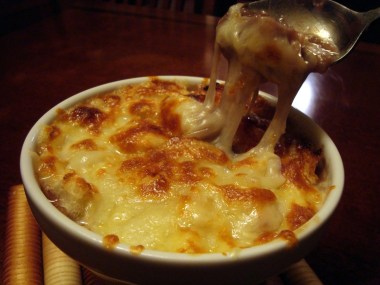
cheese.jpg

Please excuse my drooling.

Just don’t be processed cheese. Got it?

But wait!

I’m not saying it’s not possible to draft a novel in a month or less. That happens all the time, and even though sometimes I take  upwards of a year to complete the first draft of one of my novels, I know that is not the norm. Drafting a novel quickly is not the problem; rather, the problem is releasing everything that touches a Word document within six months of conception in an attempt to inflate the number of works attached to your name.

What do you think? Is it a good idea to release a lot of novels in a short time span? How many books will you release this year?

Filter Words, and Why it Seems You Should Kill Them All

See what I did there?

If you don’t yet know, filter words are words that writers use when they are trying to describe what a character is experiencing. For example, these sentences below could be in any piece of prose (but they aren’t cuz I wrote them):

  • Mary saw that Joe drove his car too quickly for a residential street.
  • It seemed to Mary that Joe drove recklessly, too terribly for someone who ought to know how to drive.
  • Mary heard the tires screech. Mary watched the car swerve.
  • Mary wondered if she should call the cops.
  • She realized she would have to.

So now that we know what they are, why have I decided to devote an entire blog post to them?

Let me tell you a story. First and foremost, I am a writer. It is my dream for my novels to reach readers and for me to spend all my days crafting stories and developing characters and all around having a darn good time. But none of this happens without work. A writer who doesn’t take the time to hone their craft will end up just writing for themselves (which we all say we do, but don’t lie: there’s a *little* part of us that *wants* someone else to read along).

And what has been the best thing for me to hone my craft? It’s been editing other writers’ work. I did it informally for years, and now I work in editing at a publishing house. That work is what helped me name these hideous creatures that I bolded in the examples above and determine why they are so irritating.

Back to the example of Mary and Joe who may or may not have drank a little too much or had too little sleep or may have mixed up his prescription pills by accident. You’ll be happy to know that Mary called the cops, and they caught Joe, and no one was hurt, but the real tragedy wasn’t that Joe’s car got impounded, and he has to take the bus to work. No: it’s the amount of filter words that I used to describe the situation to you.

“Why?” you ask. “What’s so bad about filter words?”

Well, if the example above didn’t already come across to you as annoying, I’d like to point out that filter words create prose that is “filtered” through the eyes of the main character. It’s like hearing something from a friend of a friend of a friend of yours. The story starts to sound passive to the reader, and it doesn’t give the immediateness that readers need to feel involved and invested in a story. Filter words almost make the prose blunted and boring and just… bleh!

Further, most of the time they are unnecessary. For example, if I write “Joe drove his car too quickly for a residential street“, does the reader lose any crucial information if we already know Mary is in her front yard trimming her rose bushes and plotting the death of the neighbor who kept her up until 4 a.m. the night before with his bombastic rap music? No. We can assume that Mary notices Joe’s unsafe driving just by virtue of knowing that she’s outside.

So, can you ever use filter words? Short answer: yes. Sometimes filter words can be essential to a scene or a sentence. Filter words only become a problem when they are part of every sentence. Maybe it’s because I edit professionally now, but I find that too many filter words make me cringe. And you’d be surprised how many get used in any given manuscript. You’d be surprised at how many I found in “The Black Oracle” prior to publication.

Do a ctrl +f in your WIP and look for these words NOW:

  • to see
  • to hear
  • to wonder
  • to realize
  • to watch
  • to look
  • to seem
  • to feel (or feel like)
  • can or to be able to
  • to decide
  • to sound (or sound like)
  • to notice
  • to experience

To finish: filter words should be to prose as garlic is to cooking. A delicate sprinkle is all that’s needed because too much will leave a sour taste in your reader’s mouth and have them wishing they’d bought something else off of Amazon.

How many filter words do you use in your work?

4 Misconceptions About Writing a Novel

When it comes to writing, there is nothing more daunting than writing a novel. Okay, maybe attempting to write a saga of twelve novels is a little bit more daunting, but let’s stick to just one for now. In my opinion, writing a novel is a little more difficult than say a short story or a poem. That’s not to say it’s more difficult than writing a good short story or poem, that’s just to point out that short stories and poems don’t generally run 60,000+ words — unless you’re Homer and write two epic poems that come in at over 200,000.

Wrong Homer...

Wrong Homer…

In any case, the enormity of a novel is disillusioning enough on its own, so while we’re at it, let’s disillusion some more.

Everyone Has a Novel in Them

To me, this misconception is the equivalent of saying that everyone has a music album in them. Sure, everyone has the capacity to make music, but does everyone have the capacity to make good music? Anyone who answers yes to that question has obviously never heard Friday by Rebecca Black.

The same is true for writing a novel. Sure, everyone has the capacity to physically sit down and hammer out enough words to write a novel, but does everyone have the capacity to write a good one? Even still, is novel writing something that someone can just wake up and do, or it is a learning curve of trail and error, observation and failure? By saying that everyone has a novel in them, we trivialize the skill of people who write for a living and chalk down writing a novel to simply reaching a word count. But for anyone who has written a novel, you know it’s more than that: it’s plotting and characterization and tone and theme development and atmosphere and so much more.

One Draft and You’re Done

This misconception is particularly cringe-worthy. I really feel for writers who think that they can get away with writing a first draft and then doing zero revisions or editing. Not only it is extremely advisable to read over your work at least once to catch any spelling, grammar or continuity errors, but first drafts (in my opinion) are meant to be the bare bones of a piece. Think you have an amazing first draft? Think of how amazing the second draft will be! Still not convinced to write a second? Well, give it to a beta-reader and come back in two weeks or so. Perhaps your judgement will be a little less clouded when the first-draft-finished high wears off.

You’re Getting Published so It’s Time to Quit Your Job!

Haha, if only that were true. I hate to break it to the hopeful, but a publishing contract does not equate to financial security — with or without an agent who’s got your back. That’s just simply not how it works. There are hundreds of thousands of novels published every year. You better believe that not every one of them is making $100,000 a pop.

That’s not to discourage anyone from trying — write if that’s what you were meant to do. But don’t think that you’ll complete and publish one novel and you’ll never have to work another day in your life. In fact, a UK study found that British writers made an average of £4,000 ($6252 American Dollars or $7140 Canadian Dollars) and only 1 in 10 professional authors were able to support themselves solely off of their writing. Kinda depressing, right? Yeah, but by now, I hope you’re not writing for the money. There are easier ways to make money that don’t involve perfecting tens of thousands of words, becoming an anti-social hermit, and potentially getting rejected hundreds of times.

tumblr_lvcy3wVHwH1qldt8eo1_500

But wouldn’t it be nice to be the exception?

Novel Writing is Not Work at All

I once wrote an entire blog post about this, so I won’t rant and ramble again here. To those who think that novel writing doesn’t qualify as work, I have one word: No. Actually, make that two: f*ck no. Yes, don’t get me wrong, I have fun writing novels, but I wouldn’t say that it’s something I breeze through. It’s blood, sweat, and tears. Okay, maybe a little less blood, but there are sweat and tears. And yes, I write because I want to, but that doesn’t mean I’m not warranted in calling a spade a spade. There’s no reward without work, right? Well, think of writing as no different. 85,000 words don’t just arrive with a big gust of wind.

Got any misconceptions?

To Sequel or Not To Sequel

That is the question, isn’t it?

It seems to be the thing to do at this moment in the entertainment industry, particularly the film industry. In fact, the film industry does it so well that it takes sequels and breaks them into parts so as to make one sequel into three or four in a sequel-ception frenzy. Don’t get me wrong, I just saw Mockingjay Part 1 and I think it was pretty well done as with the rest of the film adaptations for the Hunger Games Trilogy, but this whole Part 1 / Part 2 nonsense is getting a little out of control. What next? Are they gonna release book adaptations in episodes and make full 24-installment seasons out of them?

Wait…

anigif_enhanced-buzz-10113-1382948371-0

The film industry aside, the desire for sequels has penetrated deep into the book industry too. Every book nowadays has some sequel or prequel or companion book or series or *gasp* trilogy attached to it. Do we really need three snail-paced, mediocre books when one perfectly-paced, awesome book will do? It seems to me that trilogies and sequels work well in some cases, but sometimes I’m reading book two or book five and all I’m doing is questioning why the content wasn’t just condensed and put into book one. What if writers just cut out some of the filler and whining and got to the point? Writers are supposed to be concise, aren’t they? If we answer yes to that question, why are some of our bestselling books full of such hot air?

And then it occurs to me: sequels sell. Trilogies sell. Trilogies make fantastic movie franchises. It’s easier to market a series of books than just a single book. And if a publisher gets a good momentum going, they can even have people buying more than one book at a time. Sure, there is some artistic choice on behalf of the author because they’re the ones doing majority of the writing after all, but how much of that inspiration is conflated to conform to this quantity over quality phenomenon?

So, the real question: Should I write a series or a trilogy because it has the potential to sell better than a stand-alone book or should I focus on the need for something more? To be honest, I have ideas and characters that can stretch three or more novels but when is enough enough? How do I know when I’ve struck writerly gold and when am I just grovelling? Maybe it’s just me, but sometimes I feel an odd pressure to write more than one book about a particular character or plot, but I’m not really sure if that pressure is coming from a story that’s not yet done being told. How do I know if that impulse is a genuine expression of inspiration and creative need or if I’m just eager to jump on the bandwagon of stories that would have been better told in a single installment?

The answer is quite ironic, really: I guess I’m just going to have to write and find out. I guess if I’m still invested in a character or an idea, I should strike the iron while it’s hot, right? And besides, what’s writing another two or three books? Some writers make it seem like child’s play. I even recall writers who churn out a couple of manuscripts every year. Not all of them can be alien robots.

What do you think? Do all stories have sequel potential or is it just the entrepreneur inside the writer that wants us to believe that this is the case?

Music and Writing

Writing without music is like swimming without a bathing suit on. Okay, maybe I don’t know where I’m going with that analogy. Let’s try again: writing without music is like driving without a seat belt. Yup, no. That’s a little dramatic. *Ahem* Writing without music is like missing that last invisible step in the dark.

Whatever. You get what I’m trying to say. Maybe I should just plug in my headphones and get on with it.

Music has always been a big part of my life — almost as big as writing. I took vocal and guitar lessons as a kid and there may have even been a period of time where I *thought* I was part of a band. I say thought because we didn’t really make much music and we didn’t play any live shows. We just sat around and dreamed about how great it would be to be rock stars. Needless to say, we never got a recording contract or had the chance to appear on MTV.

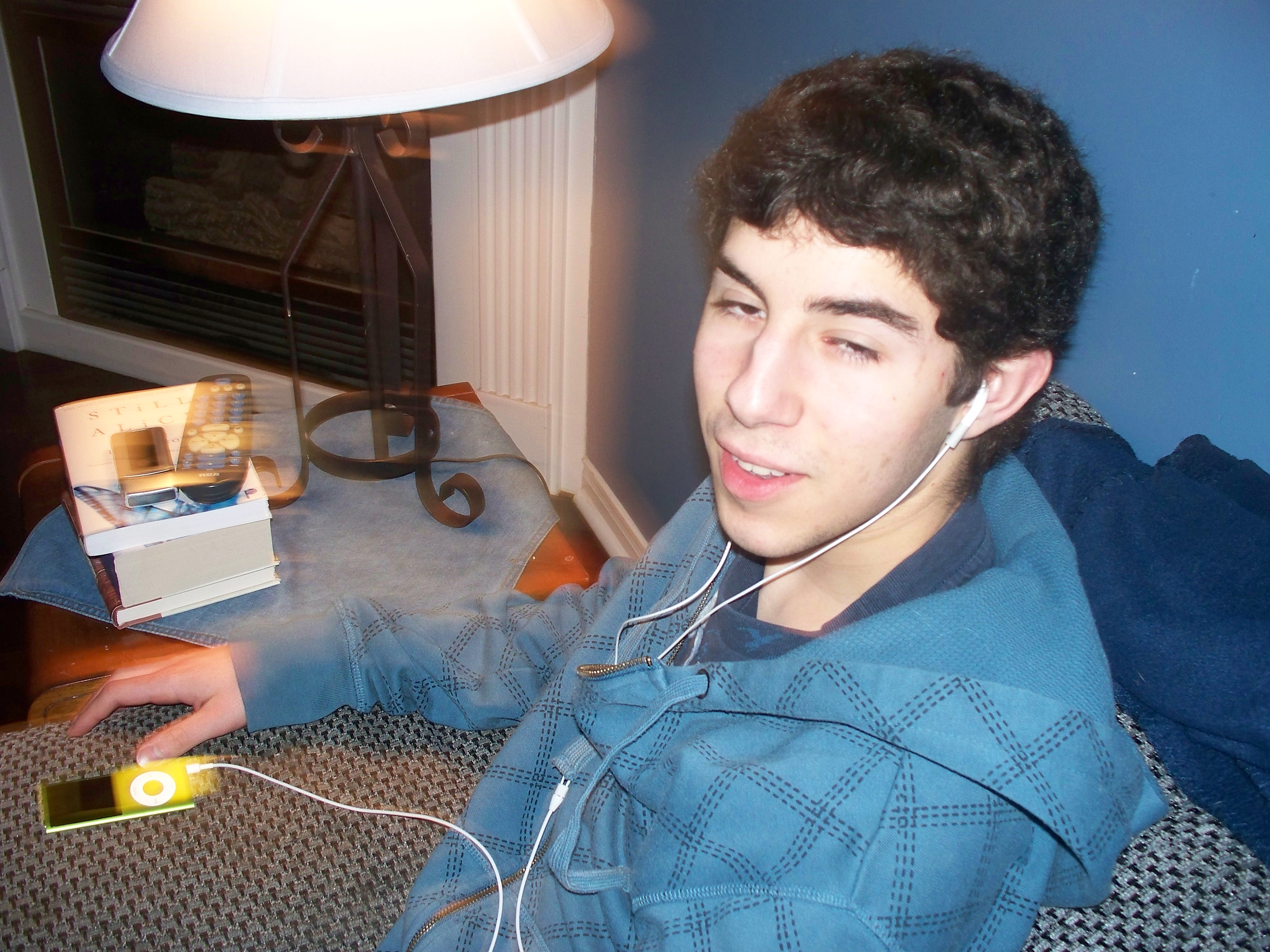
Me, circa 2010. May not be writing, but still plugged in. And apparently not ready for a photo...

Me, circa 2010. May not be writing, but still plugged in. Oh, and why did no one force me to get a haircut?!

Despite no longer being part of a band or wanting to be on MTV, my love for music didn’t go away. In fact, what took place was a marriage of sorts between my love for music and my desire to create and to write. Whenever I wanted to get into the zone, I would just plug in my headphones and find a good album or two. Without much effort at all, I found that the music helped guide what I was writing. It helped shape the atmosphere of the story and the feel of the words. Think of it like mood music, but without the rose petals and scented candles. Or maybe add in those scented candles. They always make me want baked goods.

In any case, if I wanted to write something sad, I listened to a sad song. If I wanted anger, an aggressive song would do. My eclectic music taste helps too: I listen to everything from Nine Inch Nails to Björk, from the neo-classical stylings of Olafur Arnalds to house music and dubstep. I wrote the entirety of my first novel to Nine Inch Nails and other Industrial Music. I was working on another manuscript last year that I wrote to Kanye West’s Yeezus.

In fact, I find now that when I listen to certain albums or songs, I am reminded of the stories or scenes I wrote to them. It’s like the songs have a new meaning that extends beyond the music itself. And worse, I find it nearly impossible to write until I find the perfect song or album to write to. That’s happening a bit to me right now, actually. I haven’t been able to pinpoint a mood or atmosphere for my novel-in-progress because I haven’t been able to find music that puts me in the right mood. I sometimes spend so much time looking for musical inspiration for the things I want to write that I even overlook the actual writing. But honestly, it’s worth it. If I get the right music with the right feel, BAM! I feel like I could write something on par with Shakespeare or JK Rowling.

Okay, maybe not, but that’s how I feel…

Do you listen to music when you write? What are you writing to currently? I’m open to suggestions :p

5 Ways of Balancing Your Writerly Life

One of the biggest challenges I have as a writer has very little to with writing and very much to do with time and motivation. After spending eight hours at a 9-to-5, writing often gets left out of the weekday equation, especially when other commitments like personal upkeep, maintaining relationships, and sleep also demand attention. And even when a writer gets around to the half-hour of writing time, it almost never pans out the way we want it too, too commonly fraught with distraction, pressure, and a lack of motivation.

But never fear! Some tips for balancing your writerly life are here!

Welp, I may be able to squeeze in some writing time at 4 am next Tuesday.

Welp, I may be able to squeeze in some writing time at 4 am next Tuesday.

1. Make Time to Write

Seems simple enough… Yet, for me, it’s the single hardest thing to do. I find that unless I actually set aside time to get to my computer and work on something, I won’t. It’s not that I don’t want to do it, because I really do love what I do, it’s that time slips away easily when we’re busiest. In fact, sometimes I go a couple days without doing any writing at all, and yet it feels like no time has passed.

In between all that homework, 9-to-5 work, socializing, exercising, cleaning, laundry, cooking, driving, and sleeping, it is essential to take a chunk of time and dedicate it to writing. Some writers and bloggers stress that this should be every day, but I don’t know what world they live in. I would aim for at least an hour or more every couple days. And put that in your calendar (or as an alarm on your phone). If you make yourself obligated to get up every morning, sit in traffic, and go to work, then make yourself obligated to doing something you love.

2. Make Time to Relax

There’s nothing more annoying than sitting down for a writing session and discovering that you’re just too damn tired, jaded, and agitated to be productive. And to make matters worse, I instantly get more agitated when I’ve set aside time to write and I just don’t feel like doing it.

For me, writing it not just a hobby and potential job. Writing is a state of mind. And frankly, it’s hard to tap into that state of mind after frantically buzzing around an office all day, sitting in traffic, and then balancing the responsibilities of being a semi-functional-but-trying adult. To counter this anti-inspiration lifestyle, I generally take a half hour before a writing session to set the mood, so to speak. I’ll do some reading, turn off the technology, and sometimes listen to some music to set the tone. I find this allows me to approach my writing with a clear head instead of trying to combat all the other fleeting thoughts while I’m trying to focus.

3. Remove the Pressure

This ties into my previous piece of advice. I like to call this performance anxiety. I spend all day telling myself that I’m going to write and I’m excited to do so and then I build it up and before I know it, I’ve committed myself to churning out 3,000 words in the 25 minutes I’ve allotted to writing. And then when I fail, I feel guilty and angry with myself.

Take away the expectations and attempt to write in a stress-free manner. I would even go so far as to not worry about a word count. Instead of setting yourself a requirement to write 1,000 words in a given sitting, try just writing any amount of words at all. Lowering your expectations leads to no disappointment and a healthier pro-writing mindset. You might even be surprised at how productive you can be if you allow yourself the freedom of no word count.

I don't care how cute you are. You're distracting me!

I don’t care how cute you are. You’re distracting me!

4. Cut the Distractions

That means Facebook. And Twitter. And the 100,000 fail videos on YouTube. While you’re at it, tell those around you that you’re taking the time to write and they should only bug you if zombies are taking over the world or if the house is on fire. Last but not least, turn off your phone. I can see mine staring at me right now and there’s nothing he likes more than ringing when I’m trying to get into the mood to write.

And put the cat away. Like the phone, he can smell antisocial behaviour from a mile away, and attacking your foot is the only solution.

5. Don’t Force It

Now, I’m going to give you some advice, and MANY a writer disagrees with me: don’t write if you don’t feel like it. Don’t get me wrong, sometimes we all need a little push to get the words flowing, but other times those words ain’t gonna come unless you drag them out by their underpants. And who wants to be dragged out by their underpants?

Listen to your muse. If it’s not going to come, don’t waste time and toil over it. Return when you feel ready.

Confession: Twilight Inspired Me! (10 Books that Have Stuck With Me)

So, I’m a little late, but I’ve decided not to do this challenge on Facebook. Instead, I’ll make it into a blog post! It may take me a little longer than a few minutes, but yolo, right? Thanks to my mom and brother for tagging me! Instructions:

“Don’t take more than a few minutes and don’t think too hard – they don’t have to be the “right” books or great works of literature, just the ones that have affected you in some way.”
Why no sequels?

Why no sequels?

A Series of Unfortunate Events by Lemony Snicket

Yeah, there are 13 books… I know. In any case, these books were my favourite for a long time, even more so than Harry Potter (until book 7, of course). I remember reading the first book in this series, The Bad Beginning, in a single evening after elementary school. For me, that was when my love for books and writing really started.

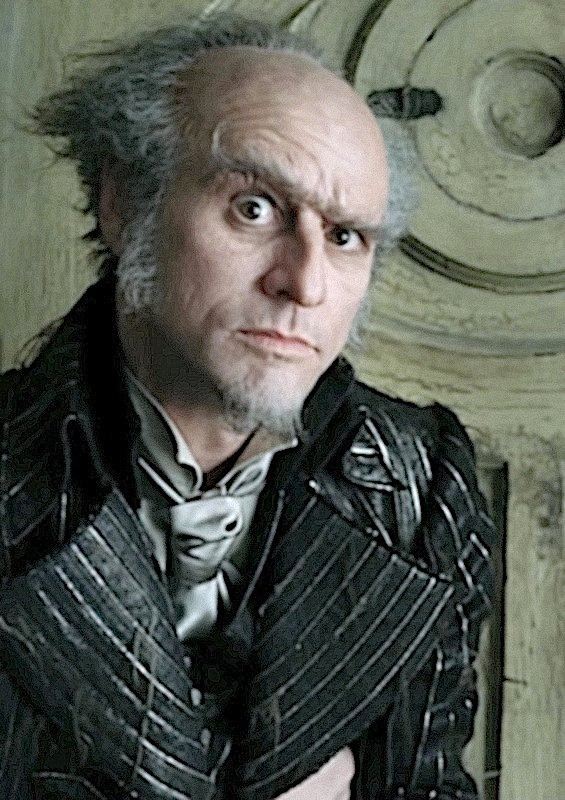
And besides, have you seen the movie with Jim Carrey? The fact that there were never any sequels produced is one of the great human atrocities.

Harry Potter and the Whole Goddamn Series (Obviously)

Another series, but how could I not? I have such admiration for JK Rowling as a writer and for the world she created. I really love how all-encompassing it is for people and how all-encompassing it was for me. I remember staying up all night to read these bad boys and I distinctly remember crying when some of the characters died… Okay, I cried almost every time.

Oryx and Crake by Margaret Atwood

I have never once been so riled up by a book. Oryx and Crake follows a man who has survived a global pandemic who recalls the details of his life, his dead lover, and his best friend who was responsible for it all. This book made me many things: sad, angry, and even disgusted — only Margaret Atwood could pull off a child pornography scene (you read correctly). In fact, the feeling of being disturbed is why I think this book was so powerful to me. Margaret Atwood has always been one of my favourite authors, but this book is her best in my opinion. If you’re a fan of speculative fiction with a literary flair intertwined with a healthy dose of cynicism, then this book is right for you.

Big Brother is watching.

Big Brother is watching.

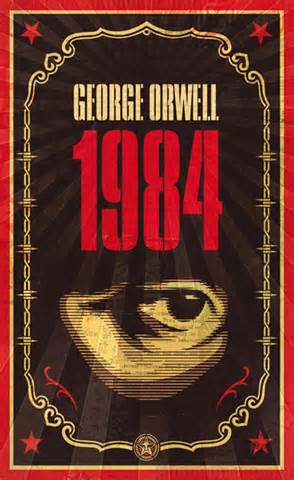
1984 and Brave New World

I’ll group book four and five together, mostly because their content is related. For the longest time, 1984 by George Orwell was my favourite book… And then I read Brave New World by Aldous Huxley. If you haven’t heard of either, I implore you to surface from under your rock and read them. THIS INSTANT. For me as a young reader and writer, these two novels were one of the biggest influences for my debut novel coming out in 2015. Dystopia is just so interesting!

Intrigued? Stay tuned.

The Great Gatsby and This Side of Paradise by F. Scott Fitzgerald

The Great Gatsby? Amazing. It was one of those novels I appreciated as I got older and I became kind of obsessed with the Jazz Age and the I-don’t-care attitude for a while there.

This Side of Paradise? Even better. Maybe it’s because I can relate so much to the main character. Yeah, he’s whiny and entitled and cynical, but he would fit right in in this age of millennial disappointment and a general distaste for real life. If you haven’t read it but adore Fitzgerald as much as I do, this is a must!

The Wise Man’s Fear by Patrick Rothfuss

Mr. Rothfuss gets a bad rep for taking such a long time between installations of his trilogy The Kingkiller Chronicle, but this second book was well worth the four years I had to wait for it. He has such a way with words and his world-building skills remind me of Tolkien. Yeah, he may not have mentioned anything about his third book for this trilogy lately, but he has a new companion book coming out in October. I can’t wait!

Wizard’s First Rule by Terry Goodkind

I’m not gonna lie, I kind of fell off the bandwagon after book four of The Sword of Truth series, but I did love this book. This was the first book I read post-Harry Potter that was in the fantasy genre and it definitely piqued my interest… enough to write a whole manuscript in the genre. Yes, that manuscript sucked and will never be published (EVER), but the initial inspiration was there thanks to Mr. Goodkind.

And the moment you’ve all been waiting for… Twilight

It’s not what you think. Really. I didn’t even read all of the first one. In fact the Twilight Saga didn’t stick with me because I enjoyed the story or because it was well-written. Instead, it instilled in me a critical eye. I just wanted to understand. Why was it so successful even though I thought it was lacking in both story and style? Why were people freaking out over it? I gave it a try, really I did, but I just couldn’t do it.

The real Twilight, my friends. Notice the lack of sparkling.

The real Twilight, my friends. Notice the lack of sparkling.

The Twilight Saga impacted me for one reason: I didn’t like it but it was popular and successful nonetheless. It sent me on a crusade to *not* do all the things that made me cringe in the book. Frankly, it made me want to write something that wasn’t terrible. It also gave me hope that my own work could be published. I’m not saying I’m an amazing author or anything, but there’s definitely no Bella Swan in my work.

Why Your Query Letter is Making Agents and Editors Cringe

Before I landed a publishing deal, believe it or not, I spent a lot of time trying to land a publishing deal. Shocking, right? Well, when I say a lot of time, I mean to say that I spent almost six years tirelessly hammering out query letters and getting either form rejections or no response at all from agents, editors, or publishers.

And the worst part? I didn’t know what I was doing wrong. Were my query letters that bad that it didn’t even warrant a response? It wasn’t until I had actually acquired a publisher for my debut novel, joined a writing forum and critiqued other writers’ letters that I was able to look back and see where I had gone wrong. And trust me, my old letters were awful. Here’s why.

woman-and-laptop

Unimpressed Agent is unimpressed.

It all Starts with Story

Believe or not, a good query letter starts before it is even written. Hell, a good query letter starts before the novel itself is written. Why? Well, I’m no scientist or anything, but it seems to me that there’s a relation between shitty stories and shitty query letters.

How to avoid this? Write good stories. Easy, right? Maybe not, but I do think it takes some mindfulness on the part of the writer. Write an original story. Don’t follow the trends. Avoid cliches and cliched story-lines. Know your genre. Know your audience. Enlist a beta-reader, a peer, or someone who will give you an honest opinion and then help you burn that shit should it make readers cringe.

Most important of all: read good books. The better read you are, the more equipped you are to know what is good and what is bad — and trust me, you can find a lot of bad without looking very hard. With time, that knowledge gets applied to your own work. It’s called growth, bro.

Vagueness is NOT Your Friend

During my time at previously mentioned writing forum, I have had the pleasure of reading and critiquing quite a few query letters from other aspiring writers. One of the number one things that turns me off of a letter is when the author presents his or her story in a run-around, pseudo-Hollywood manner. Observe:

When Random Randy moves abroad, he must conquer the fears that have hindered him in his love life — and in achieving his dreams. He has been hurt before, but he won’t be again. In a story of love, loss, betrayal and family, Random Randy must learn how to trust again before he loses all sense of control.

Well, Random Randy, that’s all good and fine, but the cringing agent or editor still knows nothing about your story. There’s no substance here and definitely very little plot. Yes, I understand the need to want to tantalize your reader and not give too much of your precious story away, but being vague won’t distinguish you from other writers in the slush pile.

And for God’s sake, endless adjectives do not equate good story.

Hey, You! Focus!

Writing a story is hard. There are often many characters involved, many plots, many themes, and that only grows with your word count. But legit, when you write a query, the agent generally only cares about one of those things: your main character.

Yes, it is tempting to delve into every single plot point, well-developed character, and explored theme, but that doesn’t help you in a query letter. You need focus. You need to be deliberate and singular. In fact, to focus a query letter, I have generally stuck to what I and other writers call the Three Big Questions. They are as follows:

1. What does your protagonist want?
2. What does s/he have to do to get it?
3. What happens if s/he fails to get what she wants?

So, leave the other stuff behind. Let your literary gold be a surprise when that intrigued agent decides to read your manuscript.

This is NOT a News Report

This last point is actually a polar opposite of the two previous points I have mentioned. So, you’ve now reworded all the vague language and focused your query, but you find you have something like this:

When Ursula Unlucky loses all her money in a burglary, she and her children must move across the city to the sketchy part of town. There, she gets a job she hates and she discovers her neighbours are mean. Worse, her children are being bullied and even when she meets with their teachers, the school decides it won’t punish the bullies. Ursula then…

You are not on CNN. You don’t need to talk about every development and twist and turn in your plot. This comes across as being dry and boring and frankly, the agent or editor is cringing. The problem with this is that a query shouldn’t read like a synopsis — the synopsis should read like a synopsis. The query should give enough plot to have a focus (see above), but not enough to take away from the intrigue of your query.

Think of it like testing samples at a grocery store. You want to give the agent/editor/publisher a sample of your story and writing style so they’ll decide to come back for more.

Mmmm... Samples.

Mmmm… Samples.

______

And for shits and giggles, let’s look at one of my old query letters that I submitted once upon a time. It was for a novel that I no longer wish to publish mostly because it is a hideously cliched story (see reason #1 why agents and editors are cringing). In fact, I believe this is my very first query.

Dear Ms. Agent I Found,

As an avid reader of both fantasy and young adult novels, I was immediately drawn to the XXXX Agency and your work. I admire the optimism and support you give writers both aspiring and with your agency. That said, I would like you to consider my novel [Hideosly Cliched Fantasy Title]. It runs approximately 90,000 words and is an epic fantasy novel aimed at young adults.

Set in a world where different realms mesh in a not-so-perfect harmony, [Main Character] spends his youth gazing out an enormous window in his father’s study awaiting adventure. After an experience outside his hillside home that he is too terrified to remember, he must somehow harness a magic that he holds within.

Meanwhile, a fearsome leader named [Fearsome Name] has summoned an ancient magic that has only survived in the superstitions of crazed mystics. With it, he threatens to grip the entire world in his wretchedness. In a story of fallen kingdoms and multiple realms, [Main Character] must stop the bloodshed as the boy for whom the scripture glows.

A student at the University of Toronto studying language and professional writing, I believe that working with an experienced, caring agent such as yourself is the next step for both my novel and me. I think [My Novel] would go together well with the array of fantasy titles attributed to the agency. Also, I read in an interview that you did that you enjoy young adult fantasy and I hope that my novel can find a comfortable place in your repertoire.

Thank you for your time and consideration.

Regards,

Michael Cristiano

Shaman: Too Long, Didn’t Read

Kill it! Kill it with fire!

Kill it! Kill it with fire!

I always finish a book. Always. I’m the kind of person who can’t just leave one on my bookshelf without having read it — all of it. I do it because I’m a believer in books. Besides, what if the best part is at the end? What if something awesome is just around the corner.

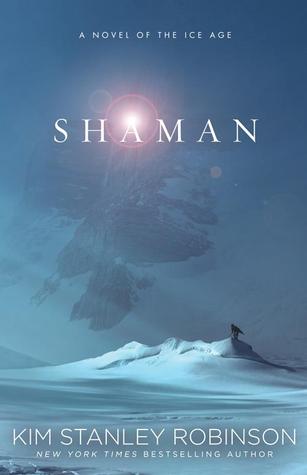
But I failed. I couldn’t do it. Shaman by Kim Stanley Robinson is my kryptonite.

You can check out my full review here, but in a nutshell, I just couldn’t bring myself to finish the book. This is my first read from this author and I had high hopes. I’d heard about other books he’d written and I was really excited. His Mars Trilogy has been met with acclaim and I’d been eyeing 2312 for a while. When I saw Shaman, I thought I’d give it a try.

I should have known when I couldn’t find a plot description on the cover and when I found even less of one on the internet. THE INTERNET! The all-knowing, all-consuming, information hub of the world had nothing to say about this book besides everyone claiming it was the best (Marina Abramovic, you tricked me!) And you know why I couldn’t find a plot description?

Because there was no plot. Spoiler alert.

Okay, maybe there was. In the book’s defense, I only made it to page 250. But in MY defense, I made it to page 250! I was so bored I thought I should swallow it for some entertainment. The characters were boring and the prose was dry and the concept had promise but it ultimately felt like a BBC documentary about the Ice Age… And I like BBC documentaries.

Maybe I just don’t get it. I have read books with little to no plot before, and I can honestly say I don’t mind them. Heck, a few of the best written books out there are nearly plotless. But at least those books had other elements that made them worthwhile: exhilarating prose, great characters, interesting ideas.

This just wasn’t one of them. In the words of my mother, life is too short to read a book you don’t like. If I died tomorrow, I don’t want my last literary memories to be of me struggling to pay attention, all while contemplating throwing the book out of my window on the highway so I wouldn’t feel guilty about keeping a book half-read on my bookshelf.

Maybe next time, Kim Stanley Robinson.

What makes you stop reading a book?

My Biggest Issues with Mainstream Fiction

For me, there are two types of books. I will admit, I enjoy the first the most: a good plot, well-thought out characters, interesting themes, and ultimately, a book with something to say. This is the haute couture of books, the Ferraris, if you will. And then there’s the other stuff. Maybe I’m just getting older. Maybe I’m just getting more and more acquainted with what’s good and what’s not so good. Either way, I find myself reading something, and I can’t help but wonder: “how did this get published?”

Well, I believe I’ve found out, and to be truthful, the answers are part of the problem.

Vampires and Zombies and Dystopias, Oh My!

Trends. Trends will be the death of the publishing industry (or the saving grace, depending on how you look at it). Do you know how many times I’ve read or *thought about* reading a book, only to discover it’s following the current fad? It makes me sad. I understand how the world works. I understand that books, like any other industry, go through certain successes, and then tries to get the most out of said success by replicating it again and again and again.

But seriously. How many books were turned down by big publishing houses because the current trend was focused on some frivolous fad like uni-cycling unicorns? Worse: how many badly written books were published anyway just because uni-cycling unicorns became the thing to do?

I vant to suck all the originality out of the books you read.

I vant to suck all the originality out of the books you read.

Emphasis on the XXX

Sex sells. We all know it. Tackled the right way, it can be effective — poetic even. But a book that devotes itself entirely to it without any mind to develop characters or have a good plot or follow some basic guidelines for good storytelling? Again, sadness ensues. What happened to sex being something that enhanced a story, not its reason for existence?

How about Fifty Shades of My Fist?

How about Fifty Shades of My Fist?

Pop Fiction

Over the years, I’ve discovered something that has become more and more apparent in the publishing industry. I call it Pop Fiction. Think pop music but without the excessive music videos and lip syncing. But then again, this is much the same. It’s like an author writes an okay book, gets the backing of a big publishing house, and BANG! bestseller. And fine, maybe some of these books aren’t so bad, but the quality has tanked. String together a few sentences, throw some sex in there, get some pre-teens on your side, and call it a day.

It’s like no one even tries any more. Can you imagine what people will think 100 years from now when the books released today are considered classics?

I shudder.