Tag Archives: fiction

9 Tips to Improve Your Writing

One of the hardest things about being a writer is knowing when you’ve reached that elusive status of being a good writer. Scratch that: the hardest thing about being a writer is knowing when you no longer suck.

You see, bad writing is everywhere nowadays. With the exploding self-publishing industry, anyone can become a published author. Anyone. Have good books been self-published? Of course, but bad books have been published tenfold, and this excludes all the times that a big press has released a poorly written book (in the name of business, of course).

So, how do you avoid being a bad writer? Well, the answer is simple: hard work. And while you’re at it, pounding away at your keyboard and going for that eighth cup of coffee, incorporate these tips.

coffee

Yeah, I’d go put the pot back on. You might be here a while.

Write Often and Diversify

A writer who doesn’t write is a person who is just… well, a person. To be a writer, you must write. Yes, that means you must sit down with notebook and pen, keyboard and screen, arm and permanent market, and create something. But you mustn’t only strive to write as often as you can. You should experiment with differently genres and mediums to see what works best for you. If you’re a poet, try a short story. If you’re a novelist, try articles or essays. There are so many ways writers can practice and hone their craft (freelance writing, blogs, social media), and there’s a seemingly endless stream of topics to write about.

Read. EVERYTHING.

Just because you’re a science fiction writer, it doesn’t mean you should only read science fiction. Just because your a short story guru, it doesn’t mean you shouldn’t pick up poetry. You should read things you would never think to read, and the classics of each medium are a must. Don’t only stick forget nonfiction and media though. Read newspapers, online journalism, blogs, the backs of cereal boxes. The more you immerse yourself in writing, the more natural it becomes — and the mind has a way of imitating things it likes.

Subscribe to a Style Guide

I know, I know. Why would you want to buy something that reads like a grammar textbook? Yes, I’m aware that writing is an art, but you also must realize that this art has rules. Buying a style guide is a way of learning about those rules. I like the Chicago Manual of Style, mainly because it is the predominant style guide in North America, but there are loads of others. If it is your dream to write professionally, whether it be fiction, freelance, or nonfiction, you should get yourself  style guide. Regardless of which guide you subscribe to, the key is to be consistent.
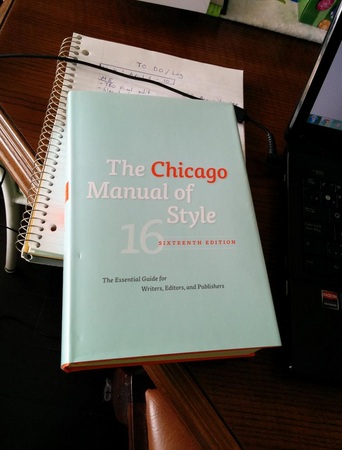
Look at how pretty it is!

Look at how pretty it is!

Use Prompts and Exercises

I’m not big into writing prompts, but I do admit, they’ve gotten me a few cool ideas. Do a quick Google search, and you’ll see that there are hundreds, nay, THOUSANDS of prompts to get you in the mood (not that mood). I’m all about those writing exercises though. Whenever I’m trying to get a new idea, I love a good free write. Whenever I’m trying to flesh that idea out, I make mind maps and pretend conversations with my characters. Exercises and prompts are also good ways to counter that writer’s block.

Focus on Openers

There’s a reason why openers are called hooks. The purpose of the opener is to entice your reader, pull them in, and then trap them so they won’t think to run until it’s far too late. From my experience as an Acquisitions Editor, I reject a lot of work because of weak openers. Put simply: I reject things I’m not excited to continue reading. It doesn’t matter if your middle is spit-shined, bacon-wrapped, chocolate-dipped literary gold. No one will get to it if you don’t give them a reason to hang around.

Do Things that Inspire You

Sitting around the house all day won’t inspire you enough to be excited about your writing. Well, it might, but you might also find you need something more. Travel, discover your city, visit museums and art galleries and after hours nightclubs (creeper protection not included). Don’t be afraid to do things out of your normal because it’s in these situations where we grow. Besides, new experiences are always great sources for writing material.

Find a Friend

Writers need criticism. Do they always want it? No, but after a while, a writer realizes that the best way to grow is to embrace criticism and STOP writing it off as useless hatred (haha, see what I did there?). I’m serious. Go find a writing partner, ideally someone who reads a lot and perhaps writes quite a bit too. Most importantly, you want this person to be honest with you. You want them to give you notes about what they don’t like and what needs to change, and you need to TAKE THEIR CRITICISM AND USE IT. Is all of it useful? No. Some of it, you may veto (I’ve done so from time to time). But if you’re ignoring 95% of all the criticism you receive, the problem *may* not be your writing partner.

Edit Ruthlessly

Whether you have a writing partner or not, a first draft is NEVER an acceptable manuscript. You should cut things. You should add things. You should eliminate all cliches, most adverbs, and flowery prose from your work. Once you think you’re done, take some space. Give yourself a week or two, and return to hack away some more. It’s not over until you’ve mistakenly cut off a limb.

Wait, you’re not done. Remember the style guide we spoke about? Go read it. Brush up on your grammar, go back, and copy edit the crap out of your work.

Don’t Try So Hard

My final piece of advice is quite simple: don’t try so hard. Revel in the simplicity. Be concise, and say what you mean. I’m sorry to tell you, you will not be another Hemingway. Before you sulk, you will not be another Hemingway because there is only ONE Hemingway (and spoiler alert: he’s dead). But you’re you! Isn’t that enough? Take pointers from the greats, but don’t steal their style. Yours may still be a ways away, but it’ll come.

But leave out those damn adverbs.
You Can Only Write One Genre for the Rest of Your Writerly Life!

As a writer, the last thing I want to do is restrict myself. Yes, it’s true, there are genres that I will never write (erotica, true crime, nonfiction textbooks on astrophysics), but other than that, I’m open to pretty much anything. I love straddling the line between genres, often bridging fantasy, science fiction, and paranormal and then throwing in some literary flair.

So, imagine my surprise when I was told that I should pick and stick to one genre. My conversation went something like this:

Me: “My most recent work is a blend of fantasy and sci-fi, but I have ideas that venture into horror, paranormal, and even contemporary fiction.”

Acquaintance-With-Some-Writing-Experience: “Aren’t you worried?”

Me: “No. Why?”

Acquaintance-With-Some-Writing-Experience: “I learned in my creative writing courses that authors should stick to one genre. That way, they become really good at writing it, and they become specialized in that field.”

I’m not going to lie, I understand the logic, but I was taken aback. First of all, I haven’t taken many courses. I took a few in high school and one in university, but I didn’t major in creative writing (and I didn’t want to, but that’s for another post). Most of what I learned about writing was a trial and error of sorts: reading a lot, writing a lot (of crap, I might add), getting feedback from beta-readers.

But I was completely floored that a creative writing instructor would tell students that they had to pick one genre and only one genre, and any straying was literary suicide.

You must choose ONE pill that will seal your fate for all-- Oh, wrong post.

You must choose ONE pill that will seal your fate for all of — Oh, wrong post.

Needless to say, I disagreed with this conclusion vehemently. I didn’t really say what I was thinking, giving my acquaintance some response between apathy and “to each his own”. There’s nothing wrong with writing only one genre, but there are two fundamental problems with the argument my acquaintance presented. Observe.

Tastes Change

Writers, like all other human beings, are not static. If you had given me a salad 5 years ago, and you happened to put onions in it, I would have picked all of them out, avoiding them like they were hemlock or something. Now, however, I love onions. Put onions in EVERYTHING! I’m not even sorry for my stinky breath.

The same goes for writing. When I was younger, I loved Harry Potter. In fact, I loved it so much that I wanted to write a series about a school that taught the occult arts, and instead of wizards and witches, the students were known as little devils. Luckily, that idea didn’t last long, and as I read more, I grew to want to write more. Even now, I read more widely than ever: fantasy, science fiction, young adult, literary, horror. And ultimately, what kind of writer doesn’t get impacted by what they’re reading?

For me, diversifying is a form of improvement. By changing up what I read, I am exposed to different forms of writing, and trying them out helps me hone my craft. Is everything I produce good? Of course not, but if I’ve written something that I love and that I believe in, why should I deny it its chance to shine because it isn’t in the pre-determined genre I’ve chosen?

The Greats Don’t Always Stick with This Rule

After the Harry Potter series, JK Rowling wrote a contemporary drama and then a series of mystery novels under the name Robert Galbraith. Margaret Atwood is known for bending the rules and writing across genres, often spanning mystery, science fiction, and literary fiction. Do I think I’m on the same level as these greats? Well, no. But they’ve found success in multiple genres, so why can’t I?

Regardless of these two arguments, however, I think this solution to this issue comes down to one thing: where does your inspiration lie? There are many successful writers that stick to a single genre, and they do quite well. There are ALSO successful writers who write across genres. Do I think this has impacts on the quality of the writing itself? No. I think if a writer writes well enough, they can tackle any genre they’re passionate about.

What do you think? Are you a one genre kind of writer, or do you like traversing multiple ones?

The Black Oracle is Now on Goodreads

Hey everyone!

Just a quick post before I give my review of Kurt Vonnegut’s Slaughterhouse Five within the next few days. I am happy to announce that my debut novel, The Black Oracle, is now up on Goodreads. Further, I am ecstatic to finally say that it will be released on May 11, 2015!

Stay tuned for my cover reveal later this month and for ordering details, but for now, check it out and add it to your to-read list on Goodreads! I’ve attached a description of the novel below.

THE BLACK ORACLE

On a post-apocalyptic Earth, humans are not alone.

Joachim is a hunter. Though generations have passed since the Great Death, something has evolved in the trees beyond the giant glowing mushrooms, mutants that want to see human entrails spread along the jungle floor.

And now they’ve taken Joachim’s wife.

To get her back, Joachim will have to give the leader of these demons something in return: immortality. A creature knows when he is going to die, after all. Plunged into a world of magic and darkness, Joachim must find the only woman in who knows where the ingredients are. She is a prophetess known as the Black Oracle living in the realm of Zalm, but she’s a little preoccupied at the moment. She leads a rebellion against the ruthless High Council, and when Joachim seeks her out, he too finds himself consumed by her struggle.

In a story of betrayal, prophecy, and bloodshed, Joachim has ten days to retrieve the ingredients and return to Earth all while evading the High Council’s army, one that wants the Black Oracle and her associates killed — Joachim included.

Why is Writing the Ending so Hard?!

So, I’ve been blogging about this for a while. I was writing something that I didn’t feel I was ready to write yet, so I jumped ship for another project, a YA paranormal novel that I’ve written in record time (so far). I completed 40,000 words of a first draft in two and a half months. Maybe most write faster, and that’s cool, but for me, that’s an amazing feat. It took me almost two years to complete a first draft of a project I finished last year, and that word count came in at 50,000 words.

But now I’m left with the task of writing an ending. I have 13,000 words left to go, and all the events are planned out and ready to be committed to paper. Perfect, right? Well, that’s what I thought. But why is this becoming so hard? I’ve chalked it down to one thing:

The honeymoon period is over.

it-s-over-snape-o

I hate to say it, but it happens in every relationship, especially the special kind of relationship that an author has with his or her work-in-progress (WIP). The initial impulse for a piece is like falling in love. There’s passion and excitement and obsession. With my current WIP, it was all I could think about. I’d develop the plot in the shower, daydream about scenes while sitting in traffic, have pretend conversations with characters while I was at work. This kind of mania made me really productive for the first two weeks. But then something happened.

I didn’t fall out of love, but I didn’t feel maddening passion anymore either. And then when I thought about it, I realized that this happens to a lot of my projects — all of them, actually. I get two thirds through a WIP, and suddenly, I just don’t feel the same. I get a little bored and the haze of the high fades away. Because of this, I get over critical and insecure. I start rereading earlier scenes, and when I find one that I don’t like, I get nervous. I start feeling like maybe my idea was stupid or maybe I won’t get my good ideas on paper in a way that *actually* makes them sound good.

All of this leads to slowed progress. I’ve written a grand total of 2500 words in a little less than four weeks. I used to write that in a couple days when I was on the writing high.

So, what do I do? Do I take a break and wait for the inspiration to return to me, or do I keep trudging through, knowing that if I get all my ideas out I can spit shine them later? I’m leaning toward doing the latter, but I won’t lie when I say that I’m ready to move onto another project for a while. I think being invested in something for a long time makes it easy to burn out, and I already have a short attention span. I honestly don’t know how some authors do it. Committing yourself to a series as expansive and time consuming as Harry Potter or A Song of Ice and Fire must be exhausting.

How do you keep yourself going? How do you feel about writing endings?

5 Reasons Why I Leave a Book Half-Read

It’s happened again. I’ve fallen out of love. Well, actually, I don’t think I was ever in love, but after 200 pages of George RR Martin’s A Clash of Kings, I’ve decided to take some space. I mean, I think it’s better for the both of us. I need to answer some very serious questions: Who am I? What do I want? More importantly, what don’t I want, and right now, that’s this.

It’s nothing personal against George RR Martin. I read A Game of Thrones two summers ago and I loved it. I will, however, say that it took me a long time to get into it. Say, 150 pages? But I just can’t do it this time. So, that led me to think about why. Why do I ditch books halfway through? It seldom happens. I honestly think I’ve only ever done it to about a dozen books, but is there a formula?

I strove to find out.

I Hate the Characters

I’m not going to lie, this doesn’t happen very often for me, but when it does, it’s a huge turn off. And I don’t mean the good hate. Think Joffrey from Game of Thrones. That’s good hate. It feels good to hate him. You watch the show or read the book just so you can see what he’s going to say or do next so that you can get angry and want to strangle the poor kid.

I’m talking about the other hate. In this circumstance, I can’t stand a character. It started happening with Harry Potter circa The Order of the Pheonix. Harry became whiny and annoying and acted like the whole wizardly world was against him and that made me want to reach into the pages and give him a smack across the face. Now, in that situation, I didn’t stop reading, but it definitely slowed my pace down. I was happy when he stopped being such a suck in the subsequent books.

joffrey

Where’s the Plot?

I understand the lack of plot for artistic reasons (think Catcher in the Rye), but unless you’re JD Salinger or F. Scott Fitzgerald, you best have a point. I can’t stand getting halfway through a story and realizing that it isn’t going anywhere. It’s like seeing a car crash happening in slow motion. You know what’s going to happen, but you trudge on thinking that you’re wrong, and then you get to the final scene and–

Nothing. There’s just a whole lot of nothing.

And the worst part is that I sometimes don’t even see this coming until it’s too late. I’m invested in the characters, and I just need to know. But if I had some foresight or if I had bothered to read reviews of the book on Amazon or Goodreads, I would put the book down.

Three Words: TOO MUCH DESCRIPTION!

This is the number one culprit. If I decide halfway through a book that I don’t want to read it anymore, ninety percent of the time it’s because there’s too much description and I’m bored: too much description of the setting, too much description of objects. And the worst: too much description of past events and back story.

tumblr_mea9wqzdbK1rl7213o1_500

Too much description has sealed the fate of quite a few books that I’ve decided not to read: Shaman by Kim Stanley Robinson, Across the Face of the World by Russell Kirkpatrick, and most recently A Clash of Kings by George RR Martin. That’s not to say that I won’t return to these books. This happened to The Lord of the Rings Trilogy at first, and I ended up finishing all three eventually and loved them. This is just to say that I won’t read these kinds of books right now. I need time to engross myself, time that my life just doesn’t have right now. I’m too busy a person for a book to spend hundreds of pages describing trees and rocks and lineages.

Maybe I’ll make reading these books my retirement task.

The Writing is Full of Errors

This one is self-explanatory, and this often leaves a book unread before I even start reading. Most of the time, this doesn’t happen to big name authors, but a lot of indie authors that have piqued my interest have sealed their fate with spelling and grammar errors. Sure, they happen, even with a professional editor. But when it’s clear to me that there has been no editor, none at all, I’m out. I won’t buy.

The Writing is Just BAD

Thankfully, I have yet to read a book where the writing was so bad that I stopped reading. There have been cases where the writing isn’t my cup of tea, per se, but I normally trek through, especially if it promises to be an easy read.

However, bad writing has stopped me from buying a book outright. Think the Twilight Saga or the Fifty Shades of Grey trilogy (Gray? What country is this?). I picked up the books in a bookstore just to see what the hype was about. At around five to ten pages in, I would decide the writing was crap and the books wouldn’t be for me. I know sometimes this is an unpopular opinion (sorry Twi-hards!), but as my mom always says: Life is too short to read a bad book.

CoK

So, with that in mind, I extend my apologies to A Clash of Kings. This isn’t working out for me, and I’m thinking I should leave before one of us gets really hurt. Maybe we can try to make this happen some other time. Don’t call me, I’ll call you.

What makes you stop reading a book? Reply in the comments.

Review: Jazz by Cristian Mihai

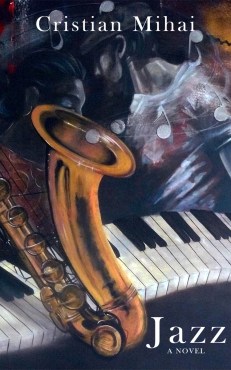
ebook_small Jazz by Cristian Mihai is a novel about a lovesick Chris Sommers who leaves his hometown of New York City to go to Paris in pursuit of Amber, the outrageously beautiful but always-falling-for-the-wrong-guy type. But when Chris arrives in Paris, he is dismayed to discover that he and Amber still cannot be together: she’s with Jacques, another “wrong guy” painter who holds Amber’s interest. The more Chris learns about Amber and the complicated, deceitful life she’s built in Paris, the more dismayed he becomes.
First impression: Mihai has some serious writing talent. Seriously. His writing style reminded me of Fitzgerald or Hemingway, not only in prowess but also in maturity. I love a piece that is multi-layered, and Jazz is just that. It’s a great story of love, heartbreak, and betrayal, but it’s also riddled with delectable metaphors and motifs. In fact, Mihai has Chris read The Great Gatsby at one point which I thought was not only a nod to a great, but also a little bit ironic considered Mihai’s writing style reminded me of that book.

I also loved the characters that Mihai created. Each was wonderfully flawed, and that’s refreshing to me. What’s even more refreshing is that Mihai doesn’t spend the entire novel trying to have his characters revamp themselves or fight their inner demons, so to speak. Amber is just as naive and deceitful at the end of the novel as she was at the beginning. Chris is constantly overly optimistic and easy-to-disappoint throughout the novel as well. But that last scene was a fantastic way to end.

In the final scene, Mihai gives almost nothing away. He paints the scene and then leaves it at the crucial moment between Chris and Amber, leaving it up to the reader to decide if the characters would actually change their ways or if they were fall back into their absurd, detrimental habits. He also doesn’t give away the resolution of their quasi-love affair and I think that’s awesome. I’m a little over novels that end with “…and they fell in love and lived happy together”. I’m glad Mihai ditched the cliche and gave us something new to enjoy.

Among the many highlights of this piece, though, there were a few places for improvement. First and foremost, the literary prowess was a little less impactful in spots because of blatant spelling or grammatical errors. To me, there’s nothing more distracting than tripping over a missing word or noticing that the grammar is wrong. It really breaks the flow. Secondly, I felt that sometimes Jazz was a little too close to The Great Gatsby in some places: Chris is almost an outsider and observer in the same way Nick Carraway is. The female love interest is ridiculously naive and willingly powerless against her perils in the same way Daisy is. I liked it, personally, but sometimes I feel that the allusions to Fitzgerald were a little too strong.

In any case, this is a definite buy! You can check out Cristian Mihai’s website and blog here. Also, buy yourself a copy of Jazz here.

How I Kept the Fire Burning

This is a response to my previous blog post about getting in the mood.

Well, let’s just say I got in the mood. I tried to push myself to keep up with a manuscript that just wasn’t coming. I was getting frustrated and a tad depressed that I was making time for writing and then feeling like I was wasting it because nothing was coming out. And if I did write something, I didn’t like it. I just couldn’t get the mood right.

But then it hit me. I was in the shower one morning and I was tormenting over another writing “session” where I managed a whopping word count of 110 in three hours when I had a stroke of inspiration: a new story idea waltzed into my head. Angels starting singing and music started playing and I couldn’t get dressed fast enough so that I could get back to my damned laptop and write some of the stuff down.

So, humans of the planet Earth, I have a confess that I’m excited to share but I’m also a little ashamed of: I kept the fire burning by, in essence, having an affair. Yes, I have started a second manuscript: a young adult paranormal novel. Now, I know that is a touchy field. Young adult has been a little over-saturated lately and any mention of young adult paranormal automatically screams Twilight (bleh!) but I can assure you, I have something that I am happy with and I am excited to be writing it. In fact, I managed to hammer out a little over 8000 words in two weeks. How’s that for a fiery romance?!

2 hawt.

2 hawt.

Now, I have no intention of abandoning the first manuscript, partially because I have 15,000 words there and also because I really do like the story. But I’ll be honest, I’m okay to put it on the back burner for a bit and take a break while I work on something else. It’s not you, it’s me, right?

No, it really is me…

I am somewhat of a planner, and by that I mean that I do a lot of romanticizing about ideas before I get the chance to write them. Needless to say, this is the first time I’ve been so struck by an idea that I’m willing to abandon another one mid-first draft so I can work on it. And to be honest, I kind of like it. It’s a kind of exhilaration I’ve been missing in my writing lately because I haven’t given myself the freedom to just go with the flow and write what feels right to me at the moment. I guess the motto strike the iron while it’s hot has some merit to it after all, huh?

But there is one downside that I didn’t anticipate: the worry. Since I’ve now left one project to work on another, I essentially have two projects on the go. I guess my fear is that if this second manuscript fizzles out like the first one did, I have two work-in-progresses that are not completed. I understand the notion of going where the wind takes me, but I’m also paranoid I won’t get either of them done. Publishers work with full manuscripts after all.

But I guess I can relax: with The Black Oracle coming out next year and a second book (hopefully) to commence the publishing process soon after, having two projects that are not yet completed isn’t so bad. The publishing process has so far proved to be a long one (though, definitely enjoyable) so I guess I do have quite a bit of time.

Have you ever left one project unfinished to pursue another?

5 Ways to Overcome Writer’s Block

DISCLAIMER: I may or may not be dealing with a slight case of this at the moment.

Sometimes, writer’s block is a quiet, somber annoyance, filled with insecurity and a tinge of disappointment. For me, writer’s block is a rather angering bout of self-doubt and frustration, perhaps spiced with a nice sprinkle of self-loathing. It makes me feel like I am wasting time or that I am missing out on some magical element that will make all the other elements of a project fall into place. And frankly, it just makes me mad.

But let’s not get angry, Michael. Let’s look at some strategies before we get out of control.

Find Some Fresh Inspiration

For me, I need to consume a large amount of inspiration to help me carry a project from 100 words to 80,000 words. Oftentimes, this results in a few lapses of writing, a few too many forays into movie watching, music downloading, daydreaming, and book reading. But for me, the biggest writer’s block is a lack of inspiration. If I don’t fell inspired, I’m not writing, even if I really want to or if I feel like I should be.

So, go out and find something inspiring. Watch a documentary about the subject matter you’re tackling. Go read a book in the genre you’re writing. Download some new music. Hit up a new museum or venue. Do something that will provide you with some freshness and newness that will breathe some life into your work. I find that old inspirations often yield that result: old, stale work.

Have a Goal

Another setback for me is aimlessness. I don’t mean to say that you should outline your entire novel — some may, but that’s not at all for me. I do mean to say though that there should be a goal to guide you. What is the goal of your character? What is happening in the scene? Where is all of this going? Sometimes it’s so easy to get wrapped up in the minute details of it all that it’s hard to have a clear direction. That lack of direction can sometimes be detrimental to the stamina it takes to write a novel.

Go For a Walk

Do it. Now. A change of scenery will help. I mean, how inspiring is your computer screen or your bedroom. Mine isn’t all that inspiring. Also, I find that if I have a negative writing experience in a certain space for a considerable amount of time, that negativity seems to linger. It’s as if I can feel it in the air around me and I predetermine that I’m going to struggle with writing before I’ve even sat down and perched my fingers.

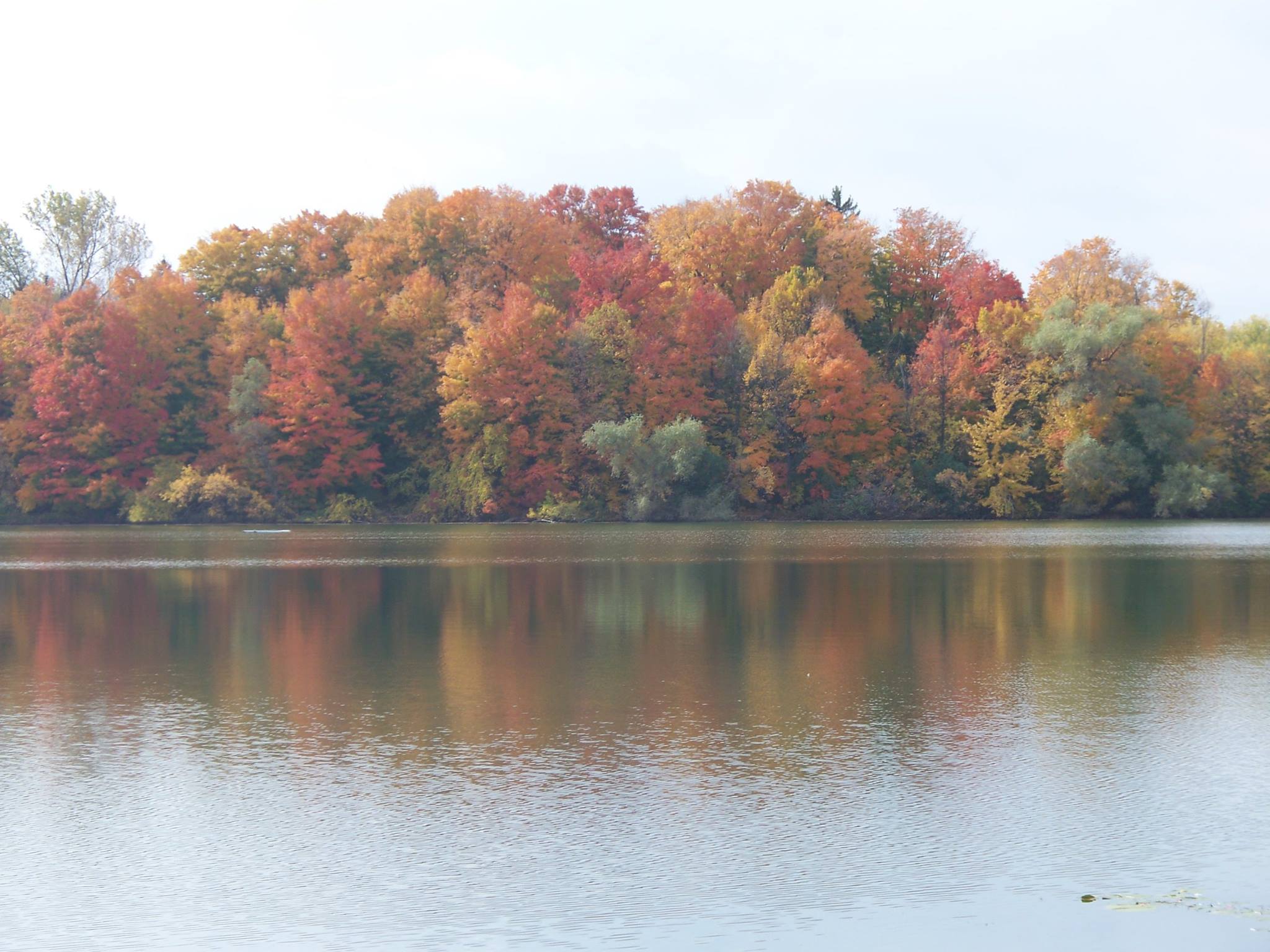
So, bundle up, sailor, it’s getting cold (#CanadianProblems). But don’t let it deter you. And bring a notebook. There’s nothing worse that being struck in the head with a breakthrough and having nothing to record it with. Though, I suppose your arm and a pointy stick will do.

Just kidding. Put down the stick.

Isn't this inspiring? AND peaceful?

Isn’t this inspiring? AND peaceful?

Skip the Scene

I find that I often feel more excited to write some scenes and less excited to write others. This is natural. Some scenes heighten the tension and other scenes are foundations for that tension. Either way, both the scenes need to be written, but no one says that you can’t write the more exciting one first. In fact, you may have a renewed sense of purpose if you have something to work up to like an intense moment between characters or an epic, change-the-life-of-your-reader twist.

Besides, why waste the time staring at a blank screen or a blank page for the scene you’re not ready to write if there’s another one screaming for attention at the back of your head? Go on and write that one! You can come back to that scene later on. In fact, you may be more ready to write it the second time around.

Take a Break

There. I said it and I’ll say it again. Just stop. Step away from the computer. Maybe come back tomorrow, maybe next week. Heck, it may even take months or a year. In fact, my first novel was completed after a bout of writer’s block. I wrote 40,000 words over the course of two years and then one day, I just couldn’t get the juices flowing. I took a break (though at that time, I felt like I was abandoning my project) and then two years later, I came back with a fresh head and new inspiration and I completed that bad boy. And look at me now! It’s due for release in 2015!

Long story short, taking a break and focusing on something else allows you to clear your mind and come back refreshed. It could allow you to shed some of that negative energy and frustration and get back to what’s important — what you’re writing. You may even find that the inspiration comes back to you when you least expect it, like when you’re doing laundry or at three o’clock in the morning. But just go with it. Sometimes muses are fickle.

Good luck!

Confession: Twilight Inspired Me! (10 Books that Have Stuck With Me)

So, I’m a little late, but I’ve decided not to do this challenge on Facebook. Instead, I’ll make it into a blog post! It may take me a little longer than a few minutes, but yolo, right? Thanks to my mom and brother for tagging me! Instructions:

“Don’t take more than a few minutes and don’t think too hard – they don’t have to be the “right” books or great works of literature, just the ones that have affected you in some way.”
Why no sequels?

Why no sequels?

A Series of Unfortunate Events by Lemony Snicket

Yeah, there are 13 books… I know. In any case, these books were my favourite for a long time, even more so than Harry Potter (until book 7, of course). I remember reading the first book in this series, The Bad Beginning, in a single evening after elementary school. For me, that was when my love for books and writing really started.

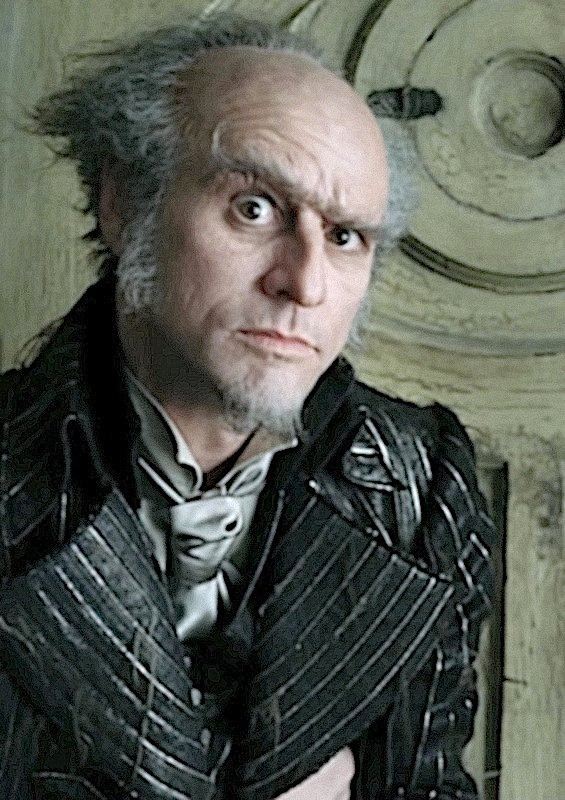
And besides, have you seen the movie with Jim Carrey? The fact that there were never any sequels produced is one of the great human atrocities.

Harry Potter and the Whole Goddamn Series (Obviously)

Another series, but how could I not? I have such admiration for JK Rowling as a writer and for the world she created. I really love how all-encompassing it is for people and how all-encompassing it was for me. I remember staying up all night to read these bad boys and I distinctly remember crying when some of the characters died… Okay, I cried almost every time.

Oryx and Crake by Margaret Atwood

I have never once been so riled up by a book. Oryx and Crake follows a man who has survived a global pandemic who recalls the details of his life, his dead lover, and his best friend who was responsible for it all. This book made me many things: sad, angry, and even disgusted — only Margaret Atwood could pull off a child pornography scene (you read correctly). In fact, the feeling of being disturbed is why I think this book was so powerful to me. Margaret Atwood has always been one of my favourite authors, but this book is her best in my opinion. If you’re a fan of speculative fiction with a literary flair intertwined with a healthy dose of cynicism, then this book is right for you.

Big Brother is watching.

Big Brother is watching.

1984 and Brave New World

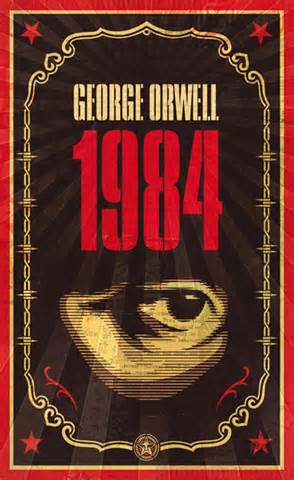
I’ll group book four and five together, mostly because their content is related. For the longest time, 1984 by George Orwell was my favourite book… And then I read Brave New World by Aldous Huxley. If you haven’t heard of either, I implore you to surface from under your rock and read them. THIS INSTANT. For me as a young reader and writer, these two novels were one of the biggest influences for my debut novel coming out in 2015. Dystopia is just so interesting!

Intrigued? Stay tuned.

The Great Gatsby and This Side of Paradise by F. Scott Fitzgerald

The Great Gatsby? Amazing. It was one of those novels I appreciated as I got older and I became kind of obsessed with the Jazz Age and the I-don’t-care attitude for a while there.

This Side of Paradise? Even better. Maybe it’s because I can relate so much to the main character. Yeah, he’s whiny and entitled and cynical, but he would fit right in in this age of millennial disappointment and a general distaste for real life. If you haven’t read it but adore Fitzgerald as much as I do, this is a must!

The Wise Man’s Fear by Patrick Rothfuss

Mr. Rothfuss gets a bad rep for taking such a long time between installations of his trilogy The Kingkiller Chronicle, but this second book was well worth the four years I had to wait for it. He has such a way with words and his world-building skills remind me of Tolkien. Yeah, he may not have mentioned anything about his third book for this trilogy lately, but he has a new companion book coming out in October. I can’t wait!

Wizard’s First Rule by Terry Goodkind

I’m not gonna lie, I kind of fell off the bandwagon after book four of The Sword of Truth series, but I did love this book. This was the first book I read post-Harry Potter that was in the fantasy genre and it definitely piqued my interest… enough to write a whole manuscript in the genre. Yes, that manuscript sucked and will never be published (EVER), but the initial inspiration was there thanks to Mr. Goodkind.

And the moment you’ve all been waiting for… Twilight

It’s not what you think. Really. I didn’t even read all of the first one. In fact the Twilight Saga didn’t stick with me because I enjoyed the story or because it was well-written. Instead, it instilled in me a critical eye. I just wanted to understand. Why was it so successful even though I thought it was lacking in both story and style? Why were people freaking out over it? I gave it a try, really I did, but I just couldn’t do it.

The real Twilight, my friends. Notice the lack of sparkling.

The real Twilight, my friends. Notice the lack of sparkling.

The Twilight Saga impacted me for one reason: I didn’t like it but it was popular and successful nonetheless. It sent me on a crusade to *not* do all the things that made me cringe in the book. Frankly, it made me want to write something that wasn’t terrible. It also gave me hope that my own work could be published. I’m not saying I’m an amazing author or anything, but there’s definitely no Bella Swan in my work.

My Biggest Issues with Mainstream Fiction

For me, there are two types of books. I will admit, I enjoy the first the most: a good plot, well-thought out characters, interesting themes, and ultimately, a book with something to say. This is the haute couture of books, the Ferraris, if you will. And then there’s the other stuff. Maybe I’m just getting older. Maybe I’m just getting more and more acquainted with what’s good and what’s not so good. Either way, I find myself reading something, and I can’t help but wonder: “how did this get published?”

Well, I believe I’ve found out, and to be truthful, the answers are part of the problem.

Vampires and Zombies and Dystopias, Oh My!

Trends. Trends will be the death of the publishing industry (or the saving grace, depending on how you look at it). Do you know how many times I’ve read or *thought about* reading a book, only to discover it’s following the current fad? It makes me sad. I understand how the world works. I understand that books, like any other industry, go through certain successes, and then tries to get the most out of said success by replicating it again and again and again.

But seriously. How many books were turned down by big publishing houses because the current trend was focused on some frivolous fad like uni-cycling unicorns? Worse: how many badly written books were published anyway just because uni-cycling unicorns became the thing to do?

I vant to suck all the originality out of the books you read.

I vant to suck all the originality out of the books you read.

Emphasis on the XXX

Sex sells. We all know it. Tackled the right way, it can be effective — poetic even. But a book that devotes itself entirely to it without any mind to develop characters or have a good plot or follow some basic guidelines for good storytelling? Again, sadness ensues. What happened to sex being something that enhanced a story, not its reason for existence?

How about Fifty Shades of My Fist?

How about Fifty Shades of My Fist?

Pop Fiction

Over the years, I’ve discovered something that has become more and more apparent in the publishing industry. I call it Pop Fiction. Think pop music but without the excessive music videos and lip syncing. But then again, this is much the same. It’s like an author writes an okay book, gets the backing of a big publishing house, and BANG! bestseller. And fine, maybe some of these books aren’t so bad, but the quality has tanked. String together a few sentences, throw some sex in there, get some pre-teens on your side, and call it a day.

It’s like no one even tries any more. Can you imagine what people will think 100 years from now when the books released today are considered classics?

I shudder.