Tag Archives: writing

How I Kept the Fire Burning

This is a response to my previous blog post about getting in the mood.

Well, let’s just say I got in the mood. I tried to push myself to keep up with a manuscript that just wasn’t coming. I was getting frustrated and a tad depressed that I was making time for writing and then feeling like I was wasting it because nothing was coming out. And if I did write something, I didn’t like it. I just couldn’t get the mood right.

But then it hit me. I was in the shower one morning and I was tormenting over another writing “session” where I managed a whopping word count of 110 in three hours when I had a stroke of inspiration: a new story idea waltzed into my head. Angels starting singing and music started playing and I couldn’t get dressed fast enough so that I could get back to my damned laptop and write some of the stuff down.

So, humans of the planet Earth, I have a confess that I’m excited to share but I’m also a little ashamed of: I kept the fire burning by, in essence, having an affair. Yes, I have started a second manuscript: a young adult paranormal novel. Now, I know that is a touchy field. Young adult has been a little over-saturated lately and any mention of young adult paranormal automatically screams Twilight (bleh!) but I can assure you, I have something that I am happy with and I am excited to be writing it. In fact, I managed to hammer out a little over 8000 words in two weeks. How’s that for a fiery romance?!

2 hawt.

2 hawt.

Now, I have no intention of abandoning the first manuscript, partially because I have 15,000 words there and also because I really do like the story. But I’ll be honest, I’m okay to put it on the back burner for a bit and take a break while I work on something else. It’s not you, it’s me, right?

No, it really is me…

I am somewhat of a planner, and by that I mean that I do a lot of romanticizing about ideas before I get the chance to write them. Needless to say, this is the first time I’ve been so struck by an idea that I’m willing to abandon another one mid-first draft so I can work on it. And to be honest, I kind of like it. It’s a kind of exhilaration I’ve been missing in my writing lately because I haven’t given myself the freedom to just go with the flow and write what feels right to me at the moment. I guess the motto strike the iron while it’s hot has some merit to it after all, huh?

But there is one downside that I didn’t anticipate: the worry. Since I’ve now left one project to work on another, I essentially have two projects on the go. I guess my fear is that if this second manuscript fizzles out like the first one did, I have two work-in-progresses that are not completed. I understand the notion of going where the wind takes me, but I’m also paranoid I won’t get either of them done. Publishers work with full manuscripts after all.

But I guess I can relax: with The Black Oracle coming out next year and a second book (hopefully) to commence the publishing process soon after, having two projects that are not yet completed isn’t so bad. The publishing process has so far proved to be a long one (though, definitely enjoyable) so I guess I do have quite a bit of time.

Have you ever left one project unfinished to pursue another?

Getting in the Mood

Excuse me for being a little forthcoming, but lately I’ve had a little trouble getting in the mood. I dim the lighting, put on the music, and get into something comfortable. I tidy the room and I make sure I’ve eaten (but not too much). If I really want to get into it, I may go for a glass of wine or two. I sometimes even even light a scented candle and disconnect my phone to maximize my focus.

Oh… no, that’s not what I meant. I’m talking about setting the mood for writing.

Getting in the mood, huh? Well, this is awkward...

Getting in the mood, huh? Well, this is awkward…

And in spite of all these aforementioned things, I’m having trouble. Legit. I get home from work or home from errands on the weekends and I’m just not in the mood. I sit myself down after dinner, open up the work-in-progress I’ve decided to focus on (I have two  manuscripts that are in a first draft stage and two in a revising/editing stage), and I just can’t do it. I just can’t.

If I try to write, it feels forced and unfocused. I’m lucky if I’m able to get down more than a couple hundred words at a time. If I try to revise or edit, it feels like everything I’m editing is crap and I should just toss it all and start over. I’m bitter and bored and the writing seems uninspired and bland. And it’s weird, I’ve never had that problem before. Sure, I go through ups and downs throughout the editing process, but I never reach a point where something feels hopeless or unsalvageable. And frankly, I know it’s not because when I’ve read through it before, I’ve had the complete opposite reaction.

And then it hits me: I’m having trouble getting in the mood in a much bigger sense. Sure, I’m able to set up my writing space for a couple hours devoted to writing, but I’m having trouble setting up my head space. I’ve recently started working full time and although I like it, it’s hard work and I come home tired and groggy and sometimes just downright grumpy. And even on weekends if I’m not grocery shopping, I’m getting car work done; if I’m not visiting family and friends, I’m running one of the 300 errands that I should have run last weekend (read: three weekends ago). And don’t even get me started on reading. I’m not gonna lie, I’m normally a slow reader, but hell, I’m like astronomically slow at this point.

So, that brings me to my present predicament: what should I do? I can’t quit my job. It’s a nice thought, but as a 20-something who JUST started working, I’m not quite at writing-as-a-full-time job just yet. I can’t ignore my relationships and groceries and errands either: I already tried and that resulted in having to replace my entire gas tank (if only I started taking that check engine light seriously!).

So, I guess it comes down to state of mind. I think I have to be a bit more focused and start making more time to write (and read). On the flip side, I think I have to remove some of the pressure and let myself just enjoy the process again. Writing shouldn’t be a chore but I have to admit that it’s starting to feel like one. Ultimately, I also think that I just have to go with the flow for a bit. I know this is a period of change for me, what with the new job and moving out and having my first novel published next year. Maybe I just need to step back and focus on letting the mood set me.

If that makes any sense…

Any thoughts? What do you do to get in the mood? 😉

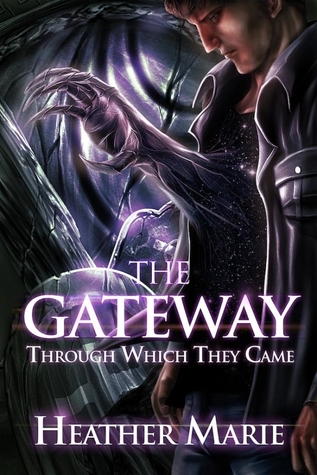
Review: The Gateway Through Which They Came by Heather Marie

19089172Aiden Ortiz is a gateway who allows the souls of the dead to pass through him on their journey to finding peace in the afterlife. His job is inconvenient enough and it becomes even more so when the Dark Priest returns and threatens to use Aiden’s power to bring back souls that are better left dead. Throw in a long-lost lover who mysteriously resurfaces without an explanation (or a home) and this quickly becomes a recipe for a young adult masterpiece.

I was drawn to this book for multiple reasons. Primarily, I was really excited for the concept. The horror geek in me loves this idea: souls having to cross over into the afterlife by physically walking through a person. And better yet, that person was a young adult. Unless you’ve been asleep for the past couple years, it’s evident that some of the most popular books have been in the young adult genre. Secondly, the hype around this book is massive. Heather Marie, a fellow Curiosity Quills author, is an all-out rock star with TV and radio spots as well as features in the Huffington Post and Cosmopolitan and a slew of good reviews to back her up. Oh, and that book cover? Let’s just say I went into this one with high expectations.

Well, I was not disappointed. Marie does a great job of developing Aiden as a character and really allows the reader to get into his head. I enjoyed the relationship between Aiden and Koren, the long-lost lover. Their backstories were so intertwined and riddled with intricacies that it made for well thought out characterization, something that I feel the YA genre lacks at times. Also, the story almost had a neo-gothic feel to it: the paranormal, eerie churches and passageways, lovers who cannot be. We need more books like this. I miss this!

Further, I liked the themes presented in the novel. With subject matter such as this, it’s hard not to overemphasize the battle between good and evil, but Marie handles it with grace and doesn’t jam it down the reader’s throat. I think it’s easy to inadvertently do so, especially with a primary setting being a church, but I liked how Marie left it up to the reader to make those good-vs.-evil distinctions. Also, I love how Marie touched on Latin and LGBTQ+ themes in this novel. These are things that are prevalent in our real world society, so I like when current books reflect that. I only hope she develops these further in her later work.

My only criticism of this novel is that my expectations were sky-high. Don’t get me wrong, Marie does a great job with this debut and I am excited for the second (and third, I think) installments, but I was a little less blown away with the writing. It was a little too young feeling for me and used a few too many cliches. The pacing was also a little slow and even though the action scenes were good, Aiden only ever seemed to black out in the peak of them — though, I can’t say I blame him.

That aside, I can honestly say I enjoyed this book and look forward to reading Heather Marie’s subsequent work — and following her sure-to-be rock star career!

All in all, I suggest buying a copy.

4 Misconceptions About Writing a Novel

When it comes to writing, there is nothing more daunting than writing a novel. Okay, maybe attempting to write a saga of twelve novels is a little bit more daunting, but let’s stick to just one for now. In my opinion, writing a novel is a little more difficult than say a short story or a poem. That’s not to say it’s more difficult than writing a good short story or poem, that’s just to point out that short stories and poems don’t generally run 60,000+ words — unless you’re Homer and write two epic poems that come in at over 200,000.

Wrong Homer...

Wrong Homer…

In any case, the enormity of a novel is disillusioning enough on its own, so while we’re at it, let’s disillusion some more.

Everyone Has a Novel in Them

To me, this misconception is the equivalent of saying that everyone has a music album in them. Sure, everyone has the capacity to make music, but does everyone have the capacity to make good music? Anyone who answers yes to that question has obviously never heard Friday by Rebecca Black.

The same is true for writing a novel. Sure, everyone has the capacity to physically sit down and hammer out enough words to write a novel, but does everyone have the capacity to write a good one? Even still, is novel writing something that someone can just wake up and do, or it is a learning curve of trail and error, observation and failure? By saying that everyone has a novel in them, we trivialize the skill of people who write for a living and chalk down writing a novel to simply reaching a word count. But for anyone who has written a novel, you know it’s more than that: it’s plotting and characterization and tone and theme development and atmosphere and so much more.

One Draft and You’re Done

This misconception is particularly cringe-worthy. I really feel for writers who think that they can get away with writing a first draft and then doing zero revisions or editing. Not only it is extremely advisable to read over your work at least once to catch any spelling, grammar or continuity errors, but first drafts (in my opinion) are meant to be the bare bones of a piece. Think you have an amazing first draft? Think of how amazing the second draft will be! Still not convinced to write a second? Well, give it to a beta-reader and come back in two weeks or so. Perhaps your judgement will be a little less clouded when the first-draft-finished high wears off.

You’re Getting Published so It’s Time to Quit Your Job!

Haha, if only that were true. I hate to break it to the hopeful, but a publishing contract does not equate to financial security — with or without an agent who’s got your back. That’s just simply not how it works. There are hundreds of thousands of novels published every year. You better believe that not every one of them is making $100,000 a pop.

That’s not to discourage anyone from trying — write if that’s what you were meant to do. But don’t think that you’ll complete and publish one novel and you’ll never have to work another day in your life. In fact, a UK study found that British writers made an average of £4,000 ($6252 American Dollars or $7140 Canadian Dollars) and only 1 in 10 professional authors were able to support themselves solely off of their writing. Kinda depressing, right? Yeah, but by now, I hope you’re not writing for the money. There are easier ways to make money that don’t involve perfecting tens of thousands of words, becoming an anti-social hermit, and potentially getting rejected hundreds of times.

tumblr_lvcy3wVHwH1qldt8eo1_500

But wouldn’t it be nice to be the exception?

Novel Writing is Not Work at All

I once wrote an entire blog post about this, so I won’t rant and ramble again here. To those who think that novel writing doesn’t qualify as work, I have one word: No. Actually, make that two: f*ck no. Yes, don’t get me wrong, I have fun writing novels, but I wouldn’t say that it’s something I breeze through. It’s blood, sweat, and tears. Okay, maybe a little less blood, but there are sweat and tears. And yes, I write because I want to, but that doesn’t mean I’m not warranted in calling a spade a spade. There’s no reward without work, right? Well, think of writing as no different. 85,000 words don’t just arrive with a big gust of wind.

Got any misconceptions?

To Sequel or Not To Sequel

That is the question, isn’t it?

It seems to be the thing to do at this moment in the entertainment industry, particularly the film industry. In fact, the film industry does it so well that it takes sequels and breaks them into parts so as to make one sequel into three or four in a sequel-ception frenzy. Don’t get me wrong, I just saw Mockingjay Part 1 and I think it was pretty well done as with the rest of the film adaptations for the Hunger Games Trilogy, but this whole Part 1 / Part 2 nonsense is getting a little out of control. What next? Are they gonna release book adaptations in episodes and make full 24-installment seasons out of them?

Wait…

anigif_enhanced-buzz-10113-1382948371-0

The film industry aside, the desire for sequels has penetrated deep into the book industry too. Every book nowadays has some sequel or prequel or companion book or series or *gasp* trilogy attached to it. Do we really need three snail-paced, mediocre books when one perfectly-paced, awesome book will do? It seems to me that trilogies and sequels work well in some cases, but sometimes I’m reading book two or book five and all I’m doing is questioning why the content wasn’t just condensed and put into book one. What if writers just cut out some of the filler and whining and got to the point? Writers are supposed to be concise, aren’t they? If we answer yes to that question, why are some of our bestselling books full of such hot air?

And then it occurs to me: sequels sell. Trilogies sell. Trilogies make fantastic movie franchises. It’s easier to market a series of books than just a single book. And if a publisher gets a good momentum going, they can even have people buying more than one book at a time. Sure, there is some artistic choice on behalf of the author because they’re the ones doing majority of the writing after all, but how much of that inspiration is conflated to conform to this quantity over quality phenomenon?

So, the real question: Should I write a series or a trilogy because it has the potential to sell better than a stand-alone book or should I focus on the need for something more? To be honest, I have ideas and characters that can stretch three or more novels but when is enough enough? How do I know when I’ve struck writerly gold and when am I just grovelling? Maybe it’s just me, but sometimes I feel an odd pressure to write more than one book about a particular character or plot, but I’m not really sure if that pressure is coming from a story that’s not yet done being told. How do I know if that impulse is a genuine expression of inspiration and creative need or if I’m just eager to jump on the bandwagon of stories that would have been better told in a single installment?

The answer is quite ironic, really: I guess I’m just going to have to write and find out. I guess if I’m still invested in a character or an idea, I should strike the iron while it’s hot, right? And besides, what’s writing another two or three books? Some writers make it seem like child’s play. I even recall writers who churn out a couple of manuscripts every year. Not all of them can be alien robots.

What do you think? Do all stories have sequel potential or is it just the entrepreneur inside the writer that wants us to believe that this is the case?

By Your Request: Query Success Stories and Why They Were Successful

Check out my journey to a publishing contract on Aussie Owned and Read!

hybridlady's avatarAussie Writers

Today I have the first of a couple of posts about successful queries and why they worked, just like you asked! So, since I work in acquisitions, I asked some of the authors I had the privilege of acquiring to send me their stories. Enjoy!

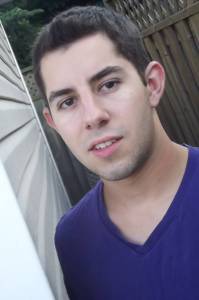
Headshot I

Michael Cristiano is a Canadian writer. His relentless obsession with fiction began long before he could even spell the words ‘relentless obsession’. He spent most of his childhood getting lost in fantastical masterpieces, learning foreign languages, and attempting to be published by the age of thirteen. Though he’s off by a few years, The Black Oracle is his debut novel and is due for publication in 2015.

Website & Blog: www.michaelcristiano.net

Facebook: www.facebook.com/MichaelCristianoOfficial

Twitter: www.twitter.com/mcristianowrite

I got the idea for The Black Oracle when I was fifteen and I had no idea that writing it would be such a long and all-encompassing process. I had loved…

View original post 2,146 more words

Music and Writing

Writing without music is like swimming without a bathing suit on. Okay, maybe I don’t know where I’m going with that analogy. Let’s try again: writing without music is like driving without a seat belt. Yup, no. That’s a little dramatic. *Ahem* Writing without music is like missing that last invisible step in the dark.

Whatever. You get what I’m trying to say. Maybe I should just plug in my headphones and get on with it.

Music has always been a big part of my life — almost as big as writing. I took vocal and guitar lessons as a kid and there may have even been a period of time where I *thought* I was part of a band. I say thought because we didn’t really make much music and we didn’t play any live shows. We just sat around and dreamed about how great it would be to be rock stars. Needless to say, we never got a recording contract or had the chance to appear on MTV.

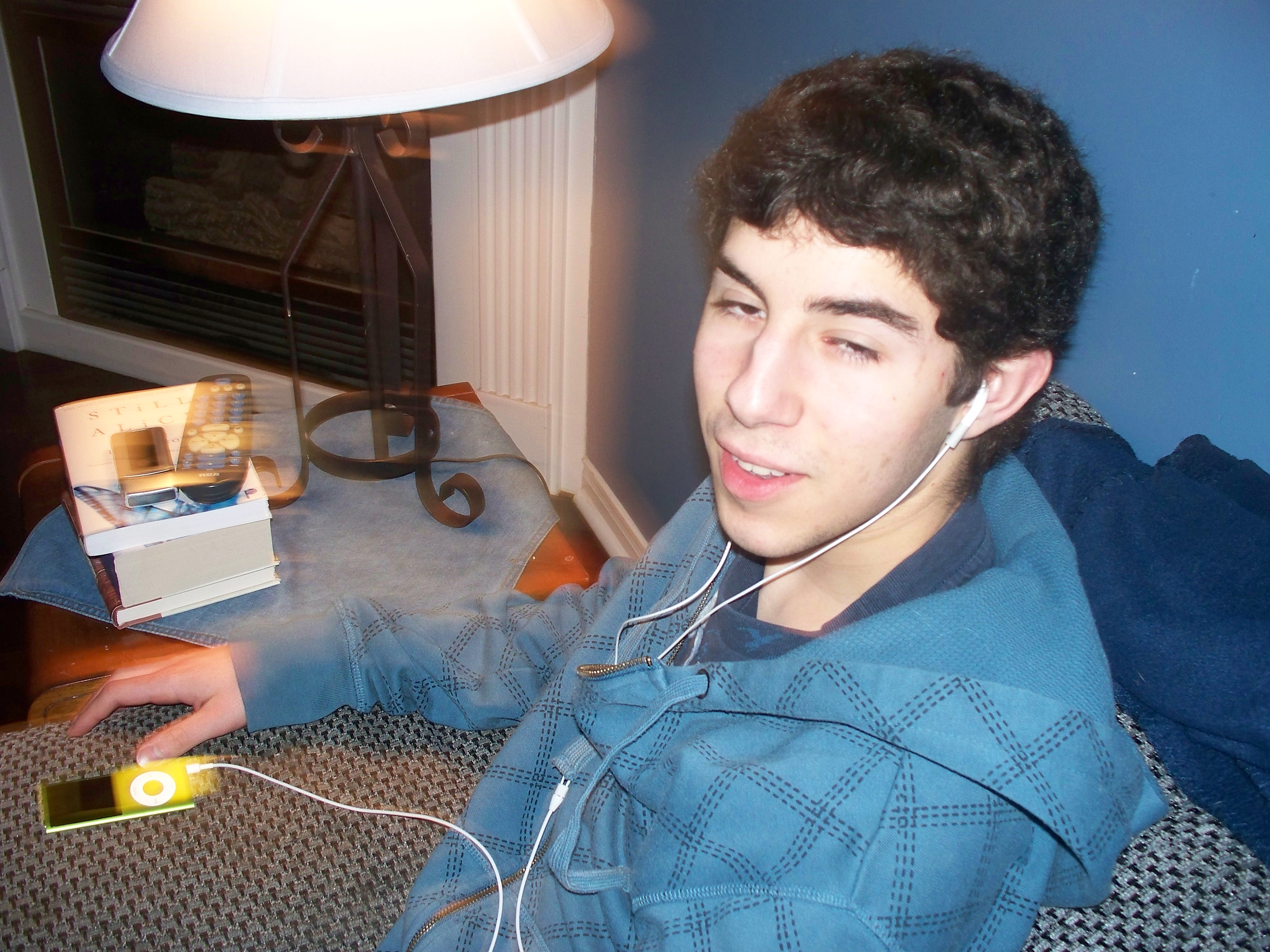
Me, circa 2010. May not be writing, but still plugged in. And apparently not ready for a photo...

Me, circa 2010. May not be writing, but still plugged in. Oh, and why did no one force me to get a haircut?!

Despite no longer being part of a band or wanting to be on MTV, my love for music didn’t go away. In fact, what took place was a marriage of sorts between my love for music and my desire to create and to write. Whenever I wanted to get into the zone, I would just plug in my headphones and find a good album or two. Without much effort at all, I found that the music helped guide what I was writing. It helped shape the atmosphere of the story and the feel of the words. Think of it like mood music, but without the rose petals and scented candles. Or maybe add in those scented candles. They always make me want baked goods.

In any case, if I wanted to write something sad, I listened to a sad song. If I wanted anger, an aggressive song would do. My eclectic music taste helps too: I listen to everything from Nine Inch Nails to Björk, from the neo-classical stylings of Olafur Arnalds to house music and dubstep. I wrote the entirety of my first novel to Nine Inch Nails and other Industrial Music. I was working on another manuscript last year that I wrote to Kanye West’s Yeezus.

In fact, I find now that when I listen to certain albums or songs, I am reminded of the stories or scenes I wrote to them. It’s like the songs have a new meaning that extends beyond the music itself. And worse, I find it nearly impossible to write until I find the perfect song or album to write to. That’s happening a bit to me right now, actually. I haven’t been able to pinpoint a mood or atmosphere for my novel-in-progress because I haven’t been able to find music that puts me in the right mood. I sometimes spend so much time looking for musical inspiration for the things I want to write that I even overlook the actual writing. But honestly, it’s worth it. If I get the right music with the right feel, BAM! I feel like I could write something on par with Shakespeare or JK Rowling.

Okay, maybe not, but that’s how I feel…

Do you listen to music when you write? What are you writing to currently? I’m open to suggestions :p

5 Ways to Overcome Writer’s Block

DISCLAIMER: I may or may not be dealing with a slight case of this at the moment.

Sometimes, writer’s block is a quiet, somber annoyance, filled with insecurity and a tinge of disappointment. For me, writer’s block is a rather angering bout of self-doubt and frustration, perhaps spiced with a nice sprinkle of self-loathing. It makes me feel like I am wasting time or that I am missing out on some magical element that will make all the other elements of a project fall into place. And frankly, it just makes me mad.

But let’s not get angry, Michael. Let’s look at some strategies before we get out of control.

Find Some Fresh Inspiration

For me, I need to consume a large amount of inspiration to help me carry a project from 100 words to 80,000 words. Oftentimes, this results in a few lapses of writing, a few too many forays into movie watching, music downloading, daydreaming, and book reading. But for me, the biggest writer’s block is a lack of inspiration. If I don’t fell inspired, I’m not writing, even if I really want to or if I feel like I should be.

So, go out and find something inspiring. Watch a documentary about the subject matter you’re tackling. Go read a book in the genre you’re writing. Download some new music. Hit up a new museum or venue. Do something that will provide you with some freshness and newness that will breathe some life into your work. I find that old inspirations often yield that result: old, stale work.

Have a Goal

Another setback for me is aimlessness. I don’t mean to say that you should outline your entire novel — some may, but that’s not at all for me. I do mean to say though that there should be a goal to guide you. What is the goal of your character? What is happening in the scene? Where is all of this going? Sometimes it’s so easy to get wrapped up in the minute details of it all that it’s hard to have a clear direction. That lack of direction can sometimes be detrimental to the stamina it takes to write a novel.

Go For a Walk

Do it. Now. A change of scenery will help. I mean, how inspiring is your computer screen or your bedroom. Mine isn’t all that inspiring. Also, I find that if I have a negative writing experience in a certain space for a considerable amount of time, that negativity seems to linger. It’s as if I can feel it in the air around me and I predetermine that I’m going to struggle with writing before I’ve even sat down and perched my fingers.

So, bundle up, sailor, it’s getting cold (#CanadianProblems). But don’t let it deter you. And bring a notebook. There’s nothing worse that being struck in the head with a breakthrough and having nothing to record it with. Though, I suppose your arm and a pointy stick will do.

Just kidding. Put down the stick.

Isn't this inspiring? AND peaceful?

Isn’t this inspiring? AND peaceful?

Skip the Scene

I find that I often feel more excited to write some scenes and less excited to write others. This is natural. Some scenes heighten the tension and other scenes are foundations for that tension. Either way, both the scenes need to be written, but no one says that you can’t write the more exciting one first. In fact, you may have a renewed sense of purpose if you have something to work up to like an intense moment between characters or an epic, change-the-life-of-your-reader twist.

Besides, why waste the time staring at a blank screen or a blank page for the scene you’re not ready to write if there’s another one screaming for attention at the back of your head? Go on and write that one! You can come back to that scene later on. In fact, you may be more ready to write it the second time around.

Take a Break

There. I said it and I’ll say it again. Just stop. Step away from the computer. Maybe come back tomorrow, maybe next week. Heck, it may even take months or a year. In fact, my first novel was completed after a bout of writer’s block. I wrote 40,000 words over the course of two years and then one day, I just couldn’t get the juices flowing. I took a break (though at that time, I felt like I was abandoning my project) and then two years later, I came back with a fresh head and new inspiration and I completed that bad boy. And look at me now! It’s due for release in 2015!

Long story short, taking a break and focusing on something else allows you to clear your mind and come back refreshed. It could allow you to shed some of that negative energy and frustration and get back to what’s important — what you’re writing. You may even find that the inspiration comes back to you when you least expect it, like when you’re doing laundry or at three o’clock in the morning. But just go with it. Sometimes muses are fickle.

Good luck!

My Ghost Story: The Yellow Room (Hello, Poppa) by Michael Cristiano

This Halloween, Curiosity Quills authors are spreading the spookiness by sharing their own personal paranormal experiences. Get haunted with these bone-chilling blogs, or post your own! #myghoststory.

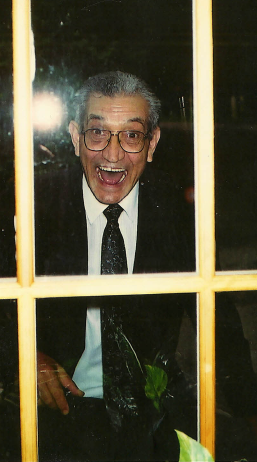
Poppa IWe called my maternal grandpa Poppa and he died in 2001 when I was ten years old. His death was sudden: into the hospital one day and then gone the next. No one saw it coming and he was relatively young, just shy of his 67th birthday.

The death was hard on us: my immediate family was devastated, my extended family was devastated, and my Grandma was never quite the same. But even though he had departed from us, he didn’t necessarily go away. Following his death, we began to see signs that he was still around.

The day of his funeral, my father and I sat outside the church just after the service. I was especially upset. Poppa had been my best friend. I would skip school and pretend to be sick just to hang out with him. While I was sitting there, I felt something flutter by my ear. I looked up and saw that a butterfly circled me and my father and then swept across the parking lot to the remainder of my family. It went up to each family member and finally to my Grandma, where it lingered the longest.

A butterfly, you say. I’m supposed to be convinced of your ghost story by a little butterfly? Well, those butterflies didn’t go away, not around my house or the house of my family in the months to follow. They lingered near the windows and around the parked cars, greeting us whenever we went outside.

Other strange things began to happen around my house too. I woke up once in the middle of the night and went to the bathroom. From where my room was, it was easy to see the landing and the stairs. Though it may have been my overactive imagination (I’m a writer, remember?), I saw a shadow at the bottom of the stairs. As I ran from it, as overactive 10-year-olds do, I barricaded myself in my room and turned on my light. I calmed myself and just as I did, I heard a noise: a thud not far away. I looked into the corner of the room where a picture of my Poppa and me usually stood on my desk.  It had fallen over onto the floor.

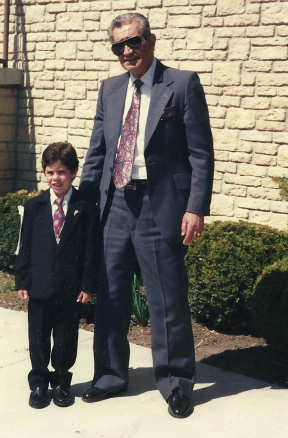
The photo that fell over in my bedroom. My Poppa and me at my first communion, circa 1998.

The photo that fell over in my bedroom. My Poppa and me at my first communion, circa 1998.

Most creepy of all, my mom and my aunt went to a psychic as a way to get some closure. According to my mom, the psychic guessed that my grandfather had passed before either mentioned it, but she also went on to say something else. I normally don’t believe in psychic abilities, but even this surprised me. The psychic told my mom that my Poppa was still around—in fact, he was in our house.

“He’s in the yellow room,” the psychic said.

“Yellow room?” My mom asked. “We don’t have any room painted that color.”

But apparently we did. The psychic was adamant. My mom went home confused and with a little less closure than she wanted. In any case, she went on with her life, slowly overcoming the loss of her father and returning to normality. One day, my mother sat in the study working on one of her freelance writing projects. She turned on the lamp beside her, the sun setting as she worked well into the evening. When her eye caught sight of the wall behind the computer screen, she put her hand to her mouth.

Though the walls were white, the fabric of the lampshade was a light gold. It illuminated the room and shone on the walls. My mom was sitting in the yellow room.

Years passed and the butterflies went away and sure, I was still running from shadows, but they were largely fueled by raging hormones and high school jitters. One day, I was home alone studying for my grade nine English exam. We had just gotten a dog, a beagle-basset hound cross named Tessie. During my cramming, the dog started barking. She only ever did when someone was at the door but when I went downstairs, there was no one there. Instead, I found her in front of an antique chair in the study that Poppa had given my parents, sitting and barking and wagging her tail.

I turned on the lamp.

Hello, Poppa.

—–

Links to other stories:

J.E. Anckorn

Samantha Dunaway Bryant

Katie Hamstead Teller

This story can also be found on Curiosity Quills’ website here.

5 Ways of Balancing Your Writerly Life

One of the biggest challenges I have as a writer has very little to with writing and very much to do with time and motivation. After spending eight hours at a 9-to-5, writing often gets left out of the weekday equation, especially when other commitments like personal upkeep, maintaining relationships, and sleep also demand attention. And even when a writer gets around to the half-hour of writing time, it almost never pans out the way we want it too, too commonly fraught with distraction, pressure, and a lack of motivation.

But never fear! Some tips for balancing your writerly life are here!

Welp, I may be able to squeeze in some writing time at 4 am next Tuesday.

Welp, I may be able to squeeze in some writing time at 4 am next Tuesday.

1. Make Time to Write

Seems simple enough… Yet, for me, it’s the single hardest thing to do. I find that unless I actually set aside time to get to my computer and work on something, I won’t. It’s not that I don’t want to do it, because I really do love what I do, it’s that time slips away easily when we’re busiest. In fact, sometimes I go a couple days without doing any writing at all, and yet it feels like no time has passed.

In between all that homework, 9-to-5 work, socializing, exercising, cleaning, laundry, cooking, driving, and sleeping, it is essential to take a chunk of time and dedicate it to writing. Some writers and bloggers stress that this should be every day, but I don’t know what world they live in. I would aim for at least an hour or more every couple days. And put that in your calendar (or as an alarm on your phone). If you make yourself obligated to get up every morning, sit in traffic, and go to work, then make yourself obligated to doing something you love.

2. Make Time to Relax

There’s nothing more annoying than sitting down for a writing session and discovering that you’re just too damn tired, jaded, and agitated to be productive. And to make matters worse, I instantly get more agitated when I’ve set aside time to write and I just don’t feel like doing it.

For me, writing it not just a hobby and potential job. Writing is a state of mind. And frankly, it’s hard to tap into that state of mind after frantically buzzing around an office all day, sitting in traffic, and then balancing the responsibilities of being a semi-functional-but-trying adult. To counter this anti-inspiration lifestyle, I generally take a half hour before a writing session to set the mood, so to speak. I’ll do some reading, turn off the technology, and sometimes listen to some music to set the tone. I find this allows me to approach my writing with a clear head instead of trying to combat all the other fleeting thoughts while I’m trying to focus.

3. Remove the Pressure

This ties into my previous piece of advice. I like to call this performance anxiety. I spend all day telling myself that I’m going to write and I’m excited to do so and then I build it up and before I know it, I’ve committed myself to churning out 3,000 words in the 25 minutes I’ve allotted to writing. And then when I fail, I feel guilty and angry with myself.

Take away the expectations and attempt to write in a stress-free manner. I would even go so far as to not worry about a word count. Instead of setting yourself a requirement to write 1,000 words in a given sitting, try just writing any amount of words at all. Lowering your expectations leads to no disappointment and a healthier pro-writing mindset. You might even be surprised at how productive you can be if you allow yourself the freedom of no word count.

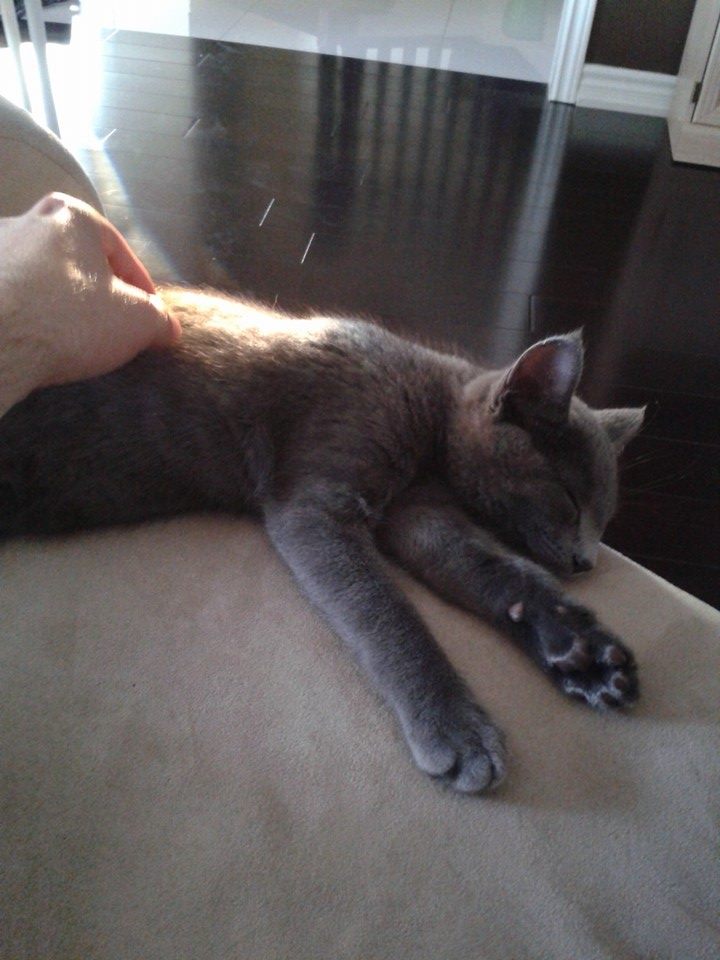
I don't care how cute you are. You're distracting me!

I don’t care how cute you are. You’re distracting me!

4. Cut the Distractions

That means Facebook. And Twitter. And the 100,000 fail videos on YouTube. While you’re at it, tell those around you that you’re taking the time to write and they should only bug you if zombies are taking over the world or if the house is on fire. Last but not least, turn off your phone. I can see mine staring at me right now and there’s nothing he likes more than ringing when I’m trying to get into the mood to write.

And put the cat away. Like the phone, he can smell antisocial behaviour from a mile away, and attacking your foot is the only solution.

5. Don’t Force It

Now, I’m going to give you some advice, and MANY a writer disagrees with me: don’t write if you don’t feel like it. Don’t get me wrong, sometimes we all need a little push to get the words flowing, but other times those words ain’t gonna come unless you drag them out by their underpants. And who wants to be dragged out by their underpants?

Listen to your muse. If it’s not going to come, don’t waste time and toil over it. Return when you feel ready.