Tag Archives: Books

How to Write a Query Letter that Makes Agents and Editors Swoon

This is a response to my earlier post called Why Your Query Letter is Making Agents and Editors Cringe. I’m so meta, right?

Writing a query letter is an art, they say. What they really mean is that it’s really gosh-darn hard. It seems that everyone and their sister thinks they can write a query letter, but out in the real world, it fails. Miserably.

That’s what happened to me. I thought writing a query letter was easy. I composed one in a couple hours and unleashed it onto the world. Little did I know, it was crap and yielded no return. It wasn’t until I joined the Absolute Write and participated in their forum that I was able to learn how to write a query letter properly.

Now, I shall bestow my knowledge upon you.

Step One: Write a Manuscript

A given, right? Wrong. I am a big advocate that writers complete their entire manuscript before they attempt to write a query letter. Yes, I know querying seems exciting for you right now. Yes, I know you think you’ve struck gold and you absolutely NEED to tell someone. But you need to finish. And when I say finish, I mean beta-read, edited, spit-shined, and all.

Why? Well, how can you write a clear, concise, pristine query letter if your manuscript is not clear, concise, and pristine. So, get back to writing, grasshopper! Your day in query letter hell will come.
stop-sign_w725_h544

Step Two: Learn the Anatomy of a Query Letter

A query letter is generally broken into three parts:

  1. The Hook
  2. The Story
  3. The Credentials

This is the basic structure that writers follow. Yes, there are little variations to this structure, but they generally only occur if a specific editor or agent requests said variations (and they will make such requests and other specifications on the submissions page of their website). Otherwise, it’s safest to stick to this model. Remember, you are writing a proposal for your product (ie. your novel), not taking over the world with your revolutionary literary prowess.

Step Three: The Hook

The Hook is just what it seems: it is a small paragraph, normally one to three sentences, that will draw in a reader, hold tight, and make them want to read more. Think of it like the deep, intense voice that begins movie trailers. A lot of writers will use a When-clause, but it’s not always necessary. Here is an example of a When-clause:

“When Harry Potter discovers he is a wizard, he enrols in Hogwarts School of Witchcraft and Wizardry and uncovers a dark magic, one that threatens to take over the wizarding world.”

With that hook alone, it’s easy to identify three things: the main character, the location, and the gist of the plot. In theory, this should be enough to force the reader to read the remainder of the query letter, but don’t forget to make it sound pretty. You’re selling your amazing writing skills, after all.

Step Four: The Story

The Story is, again, just that. It is the plot of your novel, concise and juicy, giving away just enough to entice. It is important not to overwhelm your reader with too many details. That generally means that you should stick to your main character, no more than two supporting characters, and the chief antagonist. Also, it is essential to stick to the MAIN PLOT. Again, the OVERARCHING PLOT. I know you love your subplots, but those do not belong in your query letter. They will overwhelm the reader and crowd your query letter.

crowd

Reading your query letter shouldn’t feel like trying to find a small child in a crowd.

Now, I’m not one for outlines. I very rarely outline a story and when I do, it’s such a loose outline that it’s barely an outline at all. But the query letter is different. You absolutely should consider an outline. Why? Well, let’s try a little experiment. Take your current novel and try to sum it up in 150 words or less. Hard, right? Even if you were able to do it, I bet I didn’t sound beautiful and I bet you left out details that you’re dying to include.

The outline will help with that. To outline, I normally use the Three Question Method. This helps writers to focus their query and be sure not to forget the most important elements of the plot. Each query letter should strive to answer these three questions (taken from the Absolute Write forums):

  1.  What does your protagonist want?
  2.  What does s/he have to do to get it?
  3. What happens if s/he fails to get what she wants? (the stakes)

Once you’ve answered these three questions, you have the bare bones for a query letter. Essentially, you want this paragraph to read like the blurbs on the back of books. You want it to entice and you want to detail the plot, but leave it open-ended.

Step Five: The Credentials

This is the part where you talk about yourself. What other work have you gotten published? What qualifications do you have? Don’t have any of that? That’s really okay, but what inspired you to write this story and what makes YOU the person who should tell it?

Also, the second part of this paragraph should cater to the person you’re sending it to. Why did you choose said agent/editor/publisher as a candidate for your work? This will include some research. Look at other titles your agent/editor/publisher has worked with. Look at their blog, Twitter or Facebook pages. This is the part where you personalize your letter and don’t go skimpy on this part. They will know if you’re lying or if you haven’t done your research.

Lastly, do NOT forget to include the title of your manuscript, the genre and the word count. This is generally done in the first sentence of The Credentials paragraph.

Step Six: Get Feedback

This is perhaps the most important step. Have a writer friend? A beta-reader? A brutally honest friend who likes to read? Have them look it over. Does it entice them? Are they able to understand the main pillars of your plot? If you answer no to these questions, an agent or editor will to. Revise, revise, revise, and if you send it out to prospective literary personnel and get no bites, revise again.

Finally, don’t be discouraged. Querying is a long, labouring, and often fruitless process, but all writers go through it. Besides, all it takes is one yes.

——-

And it’s a simple as that. Good luck!
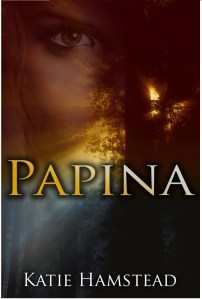
Papina: Love, Drama, and Murder… Oh my!

PapinaBraydon Miller and her husband Forrest move to the small town of Papina to raise a family. And that is about the time when their picture-perfect life comes to an abrupt stop. Forrest goes missing and the only person who knows what happened to him is Nova, a troubled teenager from the native reserves. Except Nova is so traumatized that she won’t speak. When Braydon Miller takes the girl in, the rollercoaster begins, one fraught with love, heartache, betrayal, and enough twists and turns to last this sleepy town in the American Southwest a lifetime.

I can honestly say that I liked this release. I normally don’t read mystery or drama, but I was pretty intrigued by the plot and the characters of Papina. To me, Katie Hamstead did a lot more than create a who-dunnit novel – she explored what happens behind the scenes of a murder trial and detailed the drama that ensues. Papina is a town ridden with complex relationships, a complex history, and even more complex characters. Learning about these characters and their pasts was one of the best parts of Papina!

Right from the beginning, I was trying to figure out who the culprit was. Trust me, there are a lot of characters with motives and as the story developed, I was suspicious of every one of them at least once. Hamstead fleshes out each character and gives them an in-depth backstory, one that helps paint the picture of a small town where everyone knows everyone else’s business. More than once, I read something and was like “NO. WAY.”, and even the details revealed about the Braydon and her husband made me question what exactly was going on. Hamstead definitely has a knack for storytelling and for weaving complex, believable characters into her stories.

I’m not going to lie, I did find myself feeling like Papina was a tad fluffy in the beginning, but I’m happy to say I was wrong. I was a big fan of Hamstead’s inclusion of topics that were a little heavier. She touches on race and native issues, and also flirts with the domain of LGBTQ+, even if a little too briefly. One of my only criticisms was that I feel Hamstead glossed over these topics a little too much when she had a prime opportunity to explore them more deeply in this novel. But perhaps she’s waiting to do that in the other books in the series (yes, it’s a series 😉 ). Other than that, there were a few spelling mistakes that were a little distracting, but they did not take away from the meat of the story.

All in all, it was a good, light read, but also one that had its thrilling moments. And for all you mushy-folk out there, I’m not big on romance, but it was kinda steamy, okay?

You can purchase your copy of Papina here. You can check out Katie Hamstead’s blog here.

Confession: Twilight Inspired Me! (10 Books that Have Stuck With Me)

So, I’m a little late, but I’ve decided not to do this challenge on Facebook. Instead, I’ll make it into a blog post! It may take me a little longer than a few minutes, but yolo, right? Thanks to my mom and brother for tagging me! Instructions:

“Don’t take more than a few minutes and don’t think too hard – they don’t have to be the “right” books or great works of literature, just the ones that have affected you in some way.”
Why no sequels?

Why no sequels?

A Series of Unfortunate Events by Lemony Snicket

Yeah, there are 13 books… I know. In any case, these books were my favourite for a long time, even more so than Harry Potter (until book 7, of course). I remember reading the first book in this series, The Bad Beginning, in a single evening after elementary school. For me, that was when my love for books and writing really started.

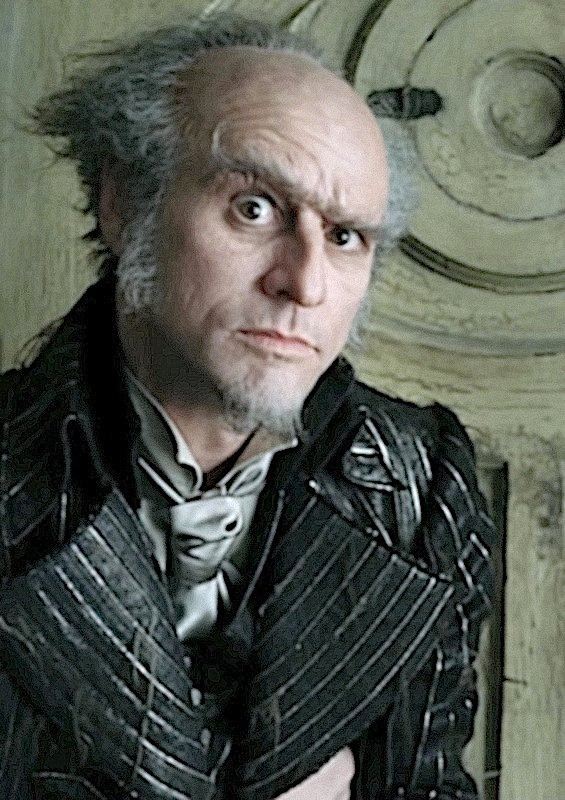
And besides, have you seen the movie with Jim Carrey? The fact that there were never any sequels produced is one of the great human atrocities.

Harry Potter and the Whole Goddamn Series (Obviously)

Another series, but how could I not? I have such admiration for JK Rowling as a writer and for the world she created. I really love how all-encompassing it is for people and how all-encompassing it was for me. I remember staying up all night to read these bad boys and I distinctly remember crying when some of the characters died… Okay, I cried almost every time.

Oryx and Crake by Margaret Atwood

I have never once been so riled up by a book. Oryx and Crake follows a man who has survived a global pandemic who recalls the details of his life, his dead lover, and his best friend who was responsible for it all. This book made me many things: sad, angry, and even disgusted — only Margaret Atwood could pull off a child pornography scene (you read correctly). In fact, the feeling of being disturbed is why I think this book was so powerful to me. Margaret Atwood has always been one of my favourite authors, but this book is her best in my opinion. If you’re a fan of speculative fiction with a literary flair intertwined with a healthy dose of cynicism, then this book is right for you.

Big Brother is watching.

Big Brother is watching.

1984 and Brave New World

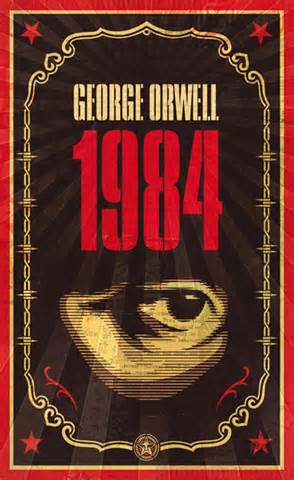
I’ll group book four and five together, mostly because their content is related. For the longest time, 1984 by George Orwell was my favourite book… And then I read Brave New World by Aldous Huxley. If you haven’t heard of either, I implore you to surface from under your rock and read them. THIS INSTANT. For me as a young reader and writer, these two novels were one of the biggest influences for my debut novel coming out in 2015. Dystopia is just so interesting!

Intrigued? Stay tuned.

The Great Gatsby and This Side of Paradise by F. Scott Fitzgerald

The Great Gatsby? Amazing. It was one of those novels I appreciated as I got older and I became kind of obsessed with the Jazz Age and the I-don’t-care attitude for a while there.

This Side of Paradise? Even better. Maybe it’s because I can relate so much to the main character. Yeah, he’s whiny and entitled and cynical, but he would fit right in in this age of millennial disappointment and a general distaste for real life. If you haven’t read it but adore Fitzgerald as much as I do, this is a must!

The Wise Man’s Fear by Patrick Rothfuss

Mr. Rothfuss gets a bad rep for taking such a long time between installations of his trilogy The Kingkiller Chronicle, but this second book was well worth the four years I had to wait for it. He has such a way with words and his world-building skills remind me of Tolkien. Yeah, he may not have mentioned anything about his third book for this trilogy lately, but he has a new companion book coming out in October. I can’t wait!

Wizard’s First Rule by Terry Goodkind

I’m not gonna lie, I kind of fell off the bandwagon after book four of The Sword of Truth series, but I did love this book. This was the first book I read post-Harry Potter that was in the fantasy genre and it definitely piqued my interest… enough to write a whole manuscript in the genre. Yes, that manuscript sucked and will never be published (EVER), but the initial inspiration was there thanks to Mr. Goodkind.

And the moment you’ve all been waiting for… Twilight

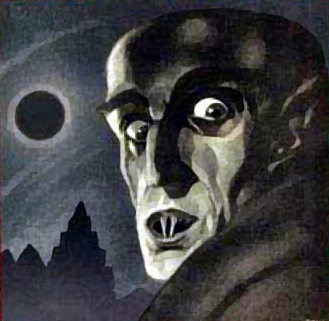
It’s not what you think. Really. I didn’t even read all of the first one. In fact the Twilight Saga didn’t stick with me because I enjoyed the story or because it was well-written. Instead, it instilled in me a critical eye. I just wanted to understand. Why was it so successful even though I thought it was lacking in both story and style? Why were people freaking out over it? I gave it a try, really I did, but I just couldn’t do it.

The real Twilight, my friends. Notice the lack of sparkling.

The real Twilight, my friends. Notice the lack of sparkling.

The Twilight Saga impacted me for one reason: I didn’t like it but it was popular and successful nonetheless. It sent me on a crusade to *not* do all the things that made me cringe in the book. Frankly, it made me want to write something that wasn’t terrible. It also gave me hope that my own work could be published. I’m not saying I’m an amazing author or anything, but there’s definitely no Bella Swan in my work.

Shaman: Too Long, Didn’t Read

Kill it! Kill it with fire!

Kill it! Kill it with fire!

I always finish a book. Always. I’m the kind of person who can’t just leave one on my bookshelf without having read it — all of it. I do it because I’m a believer in books. Besides, what if the best part is at the end? What if something awesome is just around the corner.

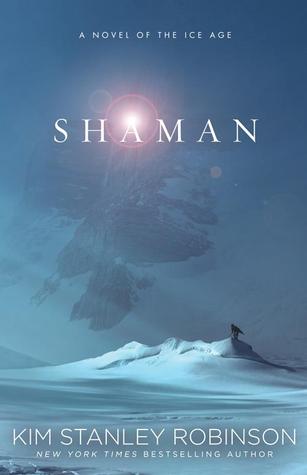
But I failed. I couldn’t do it. Shaman by Kim Stanley Robinson is my kryptonite.

You can check out my full review here, but in a nutshell, I just couldn’t bring myself to finish the book. This is my first read from this author and I had high hopes. I’d heard about other books he’d written and I was really excited. His Mars Trilogy has been met with acclaim and I’d been eyeing 2312 for a while. When I saw Shaman, I thought I’d give it a try.

I should have known when I couldn’t find a plot description on the cover and when I found even less of one on the internet. THE INTERNET! The all-knowing, all-consuming, information hub of the world had nothing to say about this book besides everyone claiming it was the best (Marina Abramovic, you tricked me!) And you know why I couldn’t find a plot description?

Because there was no plot. Spoiler alert.

Okay, maybe there was. In the book’s defense, I only made it to page 250. But in MY defense, I made it to page 250! I was so bored I thought I should swallow it for some entertainment. The characters were boring and the prose was dry and the concept had promise but it ultimately felt like a BBC documentary about the Ice Age… And I like BBC documentaries.

Maybe I just don’t get it. I have read books with little to no plot before, and I can honestly say I don’t mind them. Heck, a few of the best written books out there are nearly plotless. But at least those books had other elements that made them worthwhile: exhilarating prose, great characters, interesting ideas.

This just wasn’t one of them. In the words of my mother, life is too short to read a book you don’t like. If I died tomorrow, I don’t want my last literary memories to be of me struggling to pay attention, all while contemplating throwing the book out of my window on the highway so I wouldn’t feel guilty about keeping a book half-read on my bookshelf.

Maybe next time, Kim Stanley Robinson.

What makes you stop reading a book?

My Biggest Issues with Mainstream Fiction

For me, there are two types of books. I will admit, I enjoy the first the most: a good plot, well-thought out characters, interesting themes, and ultimately, a book with something to say. This is the haute couture of books, the Ferraris, if you will. And then there’s the other stuff. Maybe I’m just getting older. Maybe I’m just getting more and more acquainted with what’s good and what’s not so good. Either way, I find myself reading something, and I can’t help but wonder: “how did this get published?”

Well, I believe I’ve found out, and to be truthful, the answers are part of the problem.

Vampires and Zombies and Dystopias, Oh My!

Trends. Trends will be the death of the publishing industry (or the saving grace, depending on how you look at it). Do you know how many times I’ve read or *thought about* reading a book, only to discover it’s following the current fad? It makes me sad. I understand how the world works. I understand that books, like any other industry, go through certain successes, and then tries to get the most out of said success by replicating it again and again and again.

But seriously. How many books were turned down by big publishing houses because the current trend was focused on some frivolous fad like uni-cycling unicorns? Worse: how many badly written books were published anyway just because uni-cycling unicorns became the thing to do?

I vant to suck all the originality out of the books you read.

I vant to suck all the originality out of the books you read.

Emphasis on the XXX

Sex sells. We all know it. Tackled the right way, it can be effective — poetic even. But a book that devotes itself entirely to it without any mind to develop characters or have a good plot or follow some basic guidelines for good storytelling? Again, sadness ensues. What happened to sex being something that enhanced a story, not its reason for existence?

How about Fifty Shades of My Fist?

How about Fifty Shades of My Fist?

Pop Fiction

Over the years, I’ve discovered something that has become more and more apparent in the publishing industry. I call it Pop Fiction. Think pop music but without the excessive music videos and lip syncing. But then again, this is much the same. It’s like an author writes an okay book, gets the backing of a big publishing house, and BANG! bestseller. And fine, maybe some of these books aren’t so bad, but the quality has tanked. String together a few sentences, throw some sex in there, get some pre-teens on your side, and call it a day.

It’s like no one even tries any more. Can you imagine what people will think 100 years from now when the books released today are considered classics?

I shudder.

8 Rules for Writing Fiction and Why You Should Break Them

I always find it funny that writers and editors always seem to have a billion sometimes-contradictory dos and don’ts when it comes to writing “good” fiction. But what is “good” fiction? I don’t want to start a philosophical debate, but one person’s Shakespeare is another’s Rebecca Black, you know? So instead of giving you a list of things that I think make good writing, I’ve decided to look at the rules, whether they come from professionals or amateurs, and I’ve taken the liberty of refuting some of them.

3__It_feels_good_to_break_the_rules_gif

8. No Prologues

Listen, I can’t say I’m a particular fan of prologues, but honestly, a lot of successful writers have used them and their work has been just that: successful. I would suggest that writers stop agonizing over this rule and focus on what’s important. Get back to the writing. Get back to the story and the characters that will carry you beyond that prologue. If it’s essential to the story, it will stick.

7. No Adverbs

I read somewhere that using adverbs is a mortal sin. Mortal sin? Really? Even worse than a flawed plot line or boring characters? I militantly disagree. A couple adverbs here and there aren’t going to ruin a piece. In fact, sometimes I like them. It’s like drinking wine: a few adverbs may heighten your experience, but a lot of them can be draining and induce headaches.

Are they really that bad?

Are they really that bad?

6. Never Use A Dialogue Tag Besides “Said”

I was on this boat once, and then I got an editor and she pointed out how dry this made my writing after paragraphs and paragraphs of he said, she said. I’m not saying writers should go wild, I’m just suggesting that perhaps spicing it up a bit may actually enhance your writing.

5. No Present Tense

Don’t get me wrong: when done poorly, this can be disastrous, but mindless copies of the same old third person narrative can be terrible too. When done well, first person has an almost fast-paced, immediate feeling to it. It also feels more personal and more artistic, kind of like the primitive storytelling that humans were good at for THOUSANDS OF YEARS. So, give it a try. If it works, perhaps your story is meant to be told that way.

true-story_1413

4. Use Only Complete Sentences

If you’re writing academically, then sure. Fiction? It can have positive effects.

See what I did there?

3. Write Every Day

It’s not that I disagree with this rule, it’s just that it’s unrealistic and puts a lot of pressure on aspiring writers who ultimately fail at this and then feel inferior for not reaching this goal. Myself included. If I could rewrite this rule, I would say Write a lot.

Life happens. People have day jobs. And school. And children. And lives. If writing every day doesn’t happen, that’s okay. But don’t doubt the need for time. Writing won’t happen when you’re asleep. Just remember, sometimes quality trumps quantity. You may find that writing every day for ten minutes may not be as productive or as enjoyable as writing for 2 hours every couple days.

2. Write What you Know

I don’t necessarily disagree with this, but I disagree with the misinterpretation this rule carries. I read somewhere once that young people made for bad writers because they were too inexperienced. The argument was that young people should go out and experience the world before attempting writing. I even heard that young writers shouldn’t even try until they had a master’s degree in creative writing. In other words, young writers don’t have enough in the “know” category yet.

Pride-and-Prejudice

I say, to hell with that, write away! Forget about what you know and what you don’t. Write something that comes from the heart. 9 times out of 10, what comes from the heart isn’t just something you know, it’s what is meaningful to the soul. Besides, F. Scott Fitzgerald’s This Side of Paradise was published when he was in his twenties and he dropped out of his undergrad at Princeton without completing. That’s not to say that a writer shouldn’t explore the world around them and get new experiences, I just caution against waiting. Strike the iron while it’s hot, if you can pardon the cliché.

1. There are no Rules

There is perhaps no rule I can disagree with more. Rules are meant to be broken, yes, but that doesn’t mean that there are no rules. Writers still have to adhere to grammar and spelling rules. Failyure to do sow results in sentenses that look like this.

So, don’t listen to those who say that there are no rules. There are. Editors judge pieces based on rules. Publishers judge pieces based on rules. READERS judge pieces based on rules. What this rule means to say is that some rules can and should be broken. Others can even add an element of artistic flair if broken in the right way. Ultimately, you decide, but know that getting an opinion from an editor or trusted reader is always valuable.

Got any rules that plain just don’t make sense?

4 Things I HATE About Books

Everyone does posts and lists about how great books are, right? There’s always something like The Top 10 Books of the Summer or 100,000 Ridiculously Long Books You Should Read Before You Die, But Probably Won’t. I love those lists, but I don’t think I’d add anything original.

Instead, I’m not going to tell you what to read. In fact, I’m not even going to tell you what NOT to read (and trust me, I could name a few and save you some agony). I’ll be even more cryptic than that. I’ll tell you the 4 things that writers do that makes me want to throw their books into lawn mowers.

On nom nom, BOOKS!

1. Books that give me stage directions.

Timothy grabbed the pen and held it in his fingers. It was warm, as most pens are, and if he pressed it to the paper, it would emit the most delectable words. He held between his forefinger and his thumb and placed it to the page. He twitched his muscles in a deliberate way. He wrote a letter, curving around below the line and making a dot of smudging black.”

Do you see? This book, my friend, needs a serious copyeditor. I read a certain book like this lately, one quite popular in the YA market. It was from a trilogy about a dystopian world — maybe you’ve heard of it? Either way, if that author had cut out the mundane descriptions of everyday actions, she could’ve saved herself a hundred pages. Or two.

2. Sentences that are just too wordy.

Don’t get me wrong, I love the classics (read: adore), but these typically are the worst offenders. After a long day, the last thing I want to do is read a sentence that is longer than the book itself. I get it: spice it up, use a flowery adjective or two, wow me with your vocabulary. But invest in some periods or SOMETHING! I get to the end of your sentence and I’ve forgotten what you’ve said in the beginning.

3. Characters that can’t decide if they love each other or not.

Okay, don’t get me wrong, I like a little love story in books. In fact, I often write them into my own pieces. Love is a part of life, and it’s beautiful, and I get that. But sometimes, it makes me so angry. I just can’t stand the flip-flopping.

I love him. I hate him. He’s unreasonable. I’m unreasonable. I was wrong. But he hurt me so. He’s the worst. No, he’s not. I love him.”

Just stop. I have real life for that. A little drama is fine, but this isn’t a soap opera. The reader is not your therapist.

You aren't meant to be. We all know it. Let it go.

You aren’t meant to be. We all know it. Let it go.

4. Intellect that is out of place.

I walked into the room. She was standing there. She was pretty and I liked her.  I touched her arm and smiled. The endorphins rushed into the capillaries of my fingertips, and the serotonin in the receptors of my brain afforded me momentary contentment.”

Okay, there, Bill Nye. Tone it down. I know your writing was bland before this moment, but big words are NOT the answer. If your entire book is written that way then fine, bring it on. But don’t just add in intellectual banter to change it up. When that happens, it feels so random, like the author needs to prove to everyone that they are smart or something. We get it. Hell, you wrote an entire book. You need not prove anything!

—–

AND you know what’s even more infuriating than this list?!

When I find myself doing these things in my own writing. It makes me cringe. Don’t do it in yours. Consider yourself warned.