Tag Archives: editing

9 Tips to Improve Your Writing

One of the hardest things about being a writer is knowing when you’ve reached that elusive status of being a good writer. Scratch that: the hardest thing about being a writer is knowing when you no longer suck.

You see, bad writing is everywhere nowadays. With the exploding self-publishing industry, anyone can become a published author. Anyone. Have good books been self-published? Of course, but bad books have been published tenfold, and this excludes all the times that a big press has released a poorly written book (in the name of business, of course).

So, how do you avoid being a bad writer? Well, the answer is simple: hard work. And while you’re at it, pounding away at your keyboard and going for that eighth cup of coffee, incorporate these tips.

coffee

Yeah, I’d go put the pot back on. You might be here a while.

Write Often and Diversify

A writer who doesn’t write is a person who is just… well, a person. To be a writer, you must write. Yes, that means you must sit down with notebook and pen, keyboard and screen, arm and permanent market, and create something. But you mustn’t only strive to write as often as you can. You should experiment with differently genres and mediums to see what works best for you. If you’re a poet, try a short story. If you’re a novelist, try articles or essays. There are so many ways writers can practice and hone their craft (freelance writing, blogs, social media), and there’s a seemingly endless stream of topics to write about.

Read. EVERYTHING.

Just because you’re a science fiction writer, it doesn’t mean you should only read science fiction. Just because your a short story guru, it doesn’t mean you shouldn’t pick up poetry. You should read things you would never think to read, and the classics of each medium are a must. Don’t only stick forget nonfiction and media though. Read newspapers, online journalism, blogs, the backs of cereal boxes. The more you immerse yourself in writing, the more natural it becomes — and the mind has a way of imitating things it likes.

Subscribe to a Style Guide

I know, I know. Why would you want to buy something that reads like a grammar textbook? Yes, I’m aware that writing is an art, but you also must realize that this art has rules. Buying a style guide is a way of learning about those rules. I like the Chicago Manual of Style, mainly because it is the predominant style guide in North America, but there are loads of others. If it is your dream to write professionally, whether it be fiction, freelance, or nonfiction, you should get yourself  style guide. Regardless of which guide you subscribe to, the key is to be consistent.
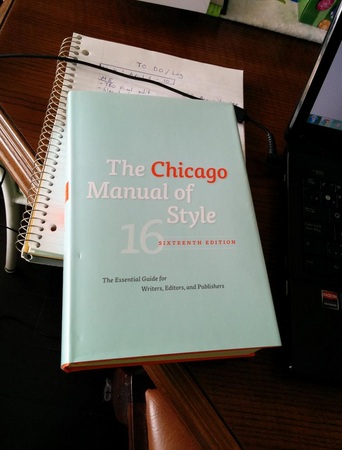
Look at how pretty it is!

Look at how pretty it is!

Use Prompts and Exercises

I’m not big into writing prompts, but I do admit, they’ve gotten me a few cool ideas. Do a quick Google search, and you’ll see that there are hundreds, nay, THOUSANDS of prompts to get you in the mood (not that mood). I’m all about those writing exercises though. Whenever I’m trying to get a new idea, I love a good free write. Whenever I’m trying to flesh that idea out, I make mind maps and pretend conversations with my characters. Exercises and prompts are also good ways to counter that writer’s block.

Focus on Openers

There’s a reason why openers are called hooks. The purpose of the opener is to entice your reader, pull them in, and then trap them so they won’t think to run until it’s far too late. From my experience as an Acquisitions Editor, I reject a lot of work because of weak openers. Put simply: I reject things I’m not excited to continue reading. It doesn’t matter if your middle is spit-shined, bacon-wrapped, chocolate-dipped literary gold. No one will get to it if you don’t give them a reason to hang around.

Do Things that Inspire You

Sitting around the house all day won’t inspire you enough to be excited about your writing. Well, it might, but you might also find you need something more. Travel, discover your city, visit museums and art galleries and after hours nightclubs (creeper protection not included). Don’t be afraid to do things out of your normal because it’s in these situations where we grow. Besides, new experiences are always great sources for writing material.

Find a Friend

Writers need criticism. Do they always want it? No, but after a while, a writer realizes that the best way to grow is to embrace criticism and STOP writing it off as useless hatred (haha, see what I did there?). I’m serious. Go find a writing partner, ideally someone who reads a lot and perhaps writes quite a bit too. Most importantly, you want this person to be honest with you. You want them to give you notes about what they don’t like and what needs to change, and you need to TAKE THEIR CRITICISM AND USE IT. Is all of it useful? No. Some of it, you may veto (I’ve done so from time to time). But if you’re ignoring 95% of all the criticism you receive, the problem *may* not be your writing partner.

Edit Ruthlessly

Whether you have a writing partner or not, a first draft is NEVER an acceptable manuscript. You should cut things. You should add things. You should eliminate all cliches, most adverbs, and flowery prose from your work. Once you think you’re done, take some space. Give yourself a week or two, and return to hack away some more. It’s not over until you’ve mistakenly cut off a limb.

Wait, you’re not done. Remember the style guide we spoke about? Go read it. Brush up on your grammar, go back, and copy edit the crap out of your work.

Don’t Try So Hard

My final piece of advice is quite simple: don’t try so hard. Revel in the simplicity. Be concise, and say what you mean. I’m sorry to tell you, you will not be another Hemingway. Before you sulk, you will not be another Hemingway because there is only ONE Hemingway (and spoiler alert: he’s dead). But you’re you! Isn’t that enough? Take pointers from the greats, but don’t steal their style. Yours may still be a ways away, but it’ll come.

But leave out those damn adverbs.

Why Write?

So, I read an interesting blog post yesterday by the fantastic Kristen Lamb (follow her. NOW!), and she addressed the idea that only 5% of prospective writers *actually* become successful authors. In her post, she argued that although this is a depressing statistic for those of us who aspire to be that elusive successful writer, 5% isn’t that bad. Check out her reasoning:

When I gave the 5% statistic earlier, many of you were probably discouraged. But let’s take a closer look at that number.

It’s been said that as much as 75% of the literate population would love to one day write a book. Out of hundreds of millions of possible authors, how many do you think actually take the idea seriously?

5%

And of the tens of millions left over, how many sit down and write and finish a first draft?

5%

Of the millions remaining, how many actually read craft books, get critique and keep revising that first draft until they have a polished draft?

5%

Of those who finish that first novel then realize they have a train wreck and not a novel, how many suck it up and start over to write a better book that’s more likely to engage with readers?

5%

Of those who finally write a decent book, how many take time to also build a brand and platform? How many learn to blog effectively in ways that reach and cultivate readers?

5%

How many get in the regular habit of writing, researching and revising? They don’t just stop with the one book and keep on writing more books?

5%

Of those who publish the first book and don’t instantly become zillionaires, how many keep writing and improving?

5%

This profession is really hard. Toss a few hundred million people with a dream into one large funnel and most will not shake out at the end. Yet, if we look at the individual pieces of becoming “successful” it is astonishing how much we control.

Others whine, we work.

At this point of my life, I found this to be pretty inspiring. I recently left my 9-to-5 (read: my contract didn’t get extended), and though I wasn’t completely against going out and finding another one, I’m *kinda* inspired to give this full-time writer thing a try. So, that’s what I’ve pledged to do. I have my novel coming out next month, and I’m working to secure some freelance work. Is this plan risky? Of course. Am I worried? Not really.

In light of these things, Kristen Lamb’s reasoning got me thinking. Yes, 5% may not be so bad when you consider that a lot of unsuccessful writers  are unsuccessful because they don’t put in the time, but the amount of commitment expected of a writer is nothing to laugh at. In fact, becoming a writer is often fruitless labor for the first while (10 years in my case), so with that seemingly unattainable dedication, why write at all?

I think the answer to that question is fairly simple. Anybody who is serious about writing already knows that answer, and I think it is those people who end up persevering and becoming the perceived unattainable successful writer. The fact is that writers write because they have to. They write because there isn’t anything else they’d rather be doing. They were “born this way”, so to speak (Thanks GaGa). And at the end of the day, a writer becomes one of the “lucky” 5% not because of luck at all but because they wanted to, and they worked their butt off to get there. I’ve always said that becoming a writer is like running a marathon: you don’t just wake up one day, show up at the starting line, and come in first place. There’s training. There’s failure. There are nasty blisters and early mornings and vomiting from overexertion (beautiful visual, Michael).

But writers like it this way. If becoming a successful writer were easy, it wouldn’t be worth it. How fulfilling would it be if you could just laser beam 80,000 words onto a computer screen and then sell it to the first publisher you pitched it to? Not very.

So, take comfort in the fact that determination does great things. Work your butt off, but enjoy the process. It’s not until years later that you appreciate all the time it took you to grow. Trust me, reading old material has become a nice pastime for me. It’s kind of inspiring.

Why do you write? Do you worry about becoming a successful writer?

Why is Writing the Ending so Hard?!

So, I’ve been blogging about this for a while. I was writing something that I didn’t feel I was ready to write yet, so I jumped ship for another project, a YA paranormal novel that I’ve written in record time (so far). I completed 40,000 words of a first draft in two and a half months. Maybe most write faster, and that’s cool, but for me, that’s an amazing feat. It took me almost two years to complete a first draft of a project I finished last year, and that word count came in at 50,000 words.

But now I’m left with the task of writing an ending. I have 13,000 words left to go, and all the events are planned out and ready to be committed to paper. Perfect, right? Well, that’s what I thought. But why is this becoming so hard? I’ve chalked it down to one thing:

The honeymoon period is over.

it-s-over-snape-o

I hate to say it, but it happens in every relationship, especially the special kind of relationship that an author has with his or her work-in-progress (WIP). The initial impulse for a piece is like falling in love. There’s passion and excitement and obsession. With my current WIP, it was all I could think about. I’d develop the plot in the shower, daydream about scenes while sitting in traffic, have pretend conversations with characters while I was at work. This kind of mania made me really productive for the first two weeks. But then something happened.

I didn’t fall out of love, but I didn’t feel maddening passion anymore either. And then when I thought about it, I realized that this happens to a lot of my projects — all of them, actually. I get two thirds through a WIP, and suddenly, I just don’t feel the same. I get a little bored and the haze of the high fades away. Because of this, I get over critical and insecure. I start rereading earlier scenes, and when I find one that I don’t like, I get nervous. I start feeling like maybe my idea was stupid or maybe I won’t get my good ideas on paper in a way that *actually* makes them sound good.

All of this leads to slowed progress. I’ve written a grand total of 2500 words in a little less than four weeks. I used to write that in a couple days when I was on the writing high.

So, what do I do? Do I take a break and wait for the inspiration to return to me, or do I keep trudging through, knowing that if I get all my ideas out I can spit shine them later? I’m leaning toward doing the latter, but I won’t lie when I say that I’m ready to move onto another project for a while. I think being invested in something for a long time makes it easy to burn out, and I already have a short attention span. I honestly don’t know how some authors do it. Committing yourself to a series as expansive and time consuming as Harry Potter or A Song of Ice and Fire must be exhausting.

How do you keep yourself going? How do you feel about writing endings?

15 Thoughts Every Writer Has When They Aren’t Writing

Not being able to write is a sad fact of life for a writer. There’s laundry to do, there’s food to cook, there’s sleep to be had. Worse, I have this pesky illness that eats up a lot of my time. I toil day in and day out to keep it at bay and under control. Sometimes, it creeps into my evenings, just when I think I’ve escaped. Worse, the horror of it all often keeps me awake at night and the dread fills my dreams with terror and sadness.

Oh, I’m not sick… I have a 9-to-5 job.

In any case, the truth is that my job isn’t that bad. I love the people I work with and to be honest, the job in and of itself is mostly an enjoyable and painless experience. But what I’m getting at is that I often feel like I don’t have a lot of time or energy at the end of the day to do what I really love: writing! Instead, I’m left repeating the same thoughts over and over again in my head as I toil through things that I would rather not do if it meant I had more time to write.

Here are a few of those thoughts:

1. “Today is the day. I’m in the mood to write, I’m excited for where story is taking me. I just have something to do first. But if I get through it quickly, maybe I can squeeze in a half-hour of writing.”

2. “And I’ll have to remember to work in this new development I’ve just thought up. It’ll completely change everything and set the story on the right track!”

MB002

3. “Ahhh! This task is going to take longer than I thought it would. Guess I should write this idea down before I forget it.”

4. “Okay, I have no pen. I guess I’ll just have to remember. Repeat something three times and it becomes a long-term memory, right?”

5. “And I’ve forgotten this life-changing development…”

6. “Task done. Time to sit down and write. Oh, wait, I should probably do this other time-consuming task while I have a little free time.”

7. “It’s okay. No need to get stressed out. Just relax. You can finish this quickly and then get to writing.”

8. “I think I just did this task wrong. Ughh.”

fml

9. “Okay, seriously. Just relax. On-the-ball Olivia said it wouldn’t take long. Just focus and get it done and then all the leisure time shall be MINE!”

10. “Wait. I think I’ll watch some Netflix first. There’s that new movie I’ve been so excited to see. It’ll get me back in the creative mood.”

11. “Time to download some new music. I can’t write without some fresh inspiration to get the juices flowing.”

12. “And I’ve just received the email I’ve been dreading. Writing. Delayed. AGAIN.”

13. “Done. Now I’ll creep a little Facebook to calm me down. That email got me a little worked up.”

14.

"Such a cute kitty. Whose little cute kitty are you?"

“Such a cute kitty. Whose little cute kitty are you?”

15. “Okay, plug in the USB, open the manuscript I’m working on, and…

I don’t even feel like writing any more.”

Three Writerly Goals for 2015

Well, hello there. How you doing? It’s been a long time… In fact, it’s been almost two and a half weeks since I posted any content. I know most bloggers will take a break over the holidays, but my break was rather unintentional. Besides all the craziness of Christmas celebrations, I got the flu… Oh, it was oodles of fun, let me tell you, bed-ridden for two full days and then too lethargic and fatigued to do ANYTHING. Needless to say, my goal of writing 20,000 words over my 16 day break from work isn’t going to happen. So, I’ve settled on 10,000 words instead and I’m a little more than halfway there. Now just to remain healthy…

Anyway, enough about me… Let’s talk about me! I’m normally a person who is very goal oriented so the new year is always awesome because I get to quantify my goals and track my progress. This year I’ve settled on three resolutions and *surprise, surprise*, they’re related to writing.

1325183965821_1911642

Publish The Black Oracle

Well, I guess I’m kind of cheating… The Black Oracle was picked up by Curiosity Quills Press in June of last year, but I can finally say that we are on the final stretch of seeing it in print! We’re currently finalizing the cover and we just set a release date (but, shhhh, I can’t say when just yet!)

The goal then is a successful release. I’ve been working on a marketing plan and I’m excited to begin. In fact, I think some things *may* be beginning within a month or so. So, stay tuned! And if anyone has any work coming out this year, whether traditionally published or otherwise, get at me. Let’s link up and have successful releases together!

Edit Next Published Novel and Finish Two Work-In-Progresses

Yes, I know… The Black Oracle ain’t even published yet and I have a second novel lined up and (almost) ready to be published. I spent the first six months of 2014 editing it and my goal for this year is to take another look at it, pump another 10,000 words into it and then get it ready to take on the world. It’s a new adult speculative fiction novel (think soft science fiction) and I am extremely excited to get the publishing process started.

Also, in my final post of 2013, I talked about how I was cheating on my first work-in-progress, an LGBTQ+ YA novel, with a second one that would end up being a YA horror/paranormal. Now I’ve got both manuscripts hovering around 15,000 words but I’ve decided I want to complete the first draft of the YA horror/paranormal first, hoping to have it finished around mid-February when I got to the Dominican Republic (wooo! Travel and sun!) As for the LGBTQ+ YA novel, I want to finish it over the summer. I started it last summer, it takes place in the summer, so maybe my lack of inspiration comes from the winter.

Blog More and Read More

I have been slacking so hard in these areas the past little while. Okay, maybe not as bad as my slacking in going to the gym… In any case, I want to blog more. Instead of only blogging four or five times a month, I want to try and blog twice a week. At first that’s daunting, but with an impending book release, that shouldn’t be hard. You like being spammed, right?

…I’m kidding. I won’t spam you.

And then there’s reading. I did so well in 2013. I FINALLY finished all the books on my bookshelf, a backlog of almost 40 titles, and only bought 2-3 new books at a time. And then in 2014, I relapsed and bought way too many books. My birthday and Christmas came and now I have a backlog again. What with being busy and sick I’ve managed to read 50 pages of A Clash of Kings since Christmas so I’ve read about 200 pages since the beginning of December (…yay.) So, catch up, Michael! Read all the books!

Got any resolutions, writing or otherwise?

4 Misconceptions About Writing a Novel

When it comes to writing, there is nothing more daunting than writing a novel. Okay, maybe attempting to write a saga of twelve novels is a little bit more daunting, but let’s stick to just one for now. In my opinion, writing a novel is a little more difficult than say a short story or a poem. That’s not to say it’s more difficult than writing a good short story or poem, that’s just to point out that short stories and poems don’t generally run 60,000+ words — unless you’re Homer and write two epic poems that come in at over 200,000.

Wrong Homer...

Wrong Homer…

In any case, the enormity of a novel is disillusioning enough on its own, so while we’re at it, let’s disillusion some more.

Everyone Has a Novel in Them

To me, this misconception is the equivalent of saying that everyone has a music album in them. Sure, everyone has the capacity to make music, but does everyone have the capacity to make good music? Anyone who answers yes to that question has obviously never heard Friday by Rebecca Black.

The same is true for writing a novel. Sure, everyone has the capacity to physically sit down and hammer out enough words to write a novel, but does everyone have the capacity to write a good one? Even still, is novel writing something that someone can just wake up and do, or it is a learning curve of trail and error, observation and failure? By saying that everyone has a novel in them, we trivialize the skill of people who write for a living and chalk down writing a novel to simply reaching a word count. But for anyone who has written a novel, you know it’s more than that: it’s plotting and characterization and tone and theme development and atmosphere and so much more.

One Draft and You’re Done

This misconception is particularly cringe-worthy. I really feel for writers who think that they can get away with writing a first draft and then doing zero revisions or editing. Not only it is extremely advisable to read over your work at least once to catch any spelling, grammar or continuity errors, but first drafts (in my opinion) are meant to be the bare bones of a piece. Think you have an amazing first draft? Think of how amazing the second draft will be! Still not convinced to write a second? Well, give it to a beta-reader and come back in two weeks or so. Perhaps your judgement will be a little less clouded when the first-draft-finished high wears off.

You’re Getting Published so It’s Time to Quit Your Job!

Haha, if only that were true. I hate to break it to the hopeful, but a publishing contract does not equate to financial security — with or without an agent who’s got your back. That’s just simply not how it works. There are hundreds of thousands of novels published every year. You better believe that not every one of them is making $100,000 a pop.

That’s not to discourage anyone from trying — write if that’s what you were meant to do. But don’t think that you’ll complete and publish one novel and you’ll never have to work another day in your life. In fact, a UK study found that British writers made an average of £4,000 ($6252 American Dollars or $7140 Canadian Dollars) and only 1 in 10 professional authors were able to support themselves solely off of their writing. Kinda depressing, right? Yeah, but by now, I hope you’re not writing for the money. There are easier ways to make money that don’t involve perfecting tens of thousands of words, becoming an anti-social hermit, and potentially getting rejected hundreds of times.

tumblr_lvcy3wVHwH1qldt8eo1_500

But wouldn’t it be nice to be the exception?

Novel Writing is Not Work at All

I once wrote an entire blog post about this, so I won’t rant and ramble again here. To those who think that novel writing doesn’t qualify as work, I have one word: No. Actually, make that two: f*ck no. Yes, don’t get me wrong, I have fun writing novels, but I wouldn’t say that it’s something I breeze through. It’s blood, sweat, and tears. Okay, maybe a little less blood, but there are sweat and tears. And yes, I write because I want to, but that doesn’t mean I’m not warranted in calling a spade a spade. There’s no reward without work, right? Well, think of writing as no different. 85,000 words don’t just arrive with a big gust of wind.

Got any misconceptions?

By Your Request: Query Success Stories and Why They Were Successful

Check out my journey to a publishing contract on Aussie Owned and Read!

hybridlady's avatarAussie Writers

Today I have the first of a couple of posts about successful queries and why they worked, just like you asked! So, since I work in acquisitions, I asked some of the authors I had the privilege of acquiring to send me their stories. Enjoy!

Headshot I

Michael Cristiano is a Canadian writer. His relentless obsession with fiction began long before he could even spell the words ‘relentless obsession’. He spent most of his childhood getting lost in fantastical masterpieces, learning foreign languages, and attempting to be published by the age of thirteen. Though he’s off by a few years, The Black Oracle is his debut novel and is due for publication in 2015.

Website & Blog: www.michaelcristiano.net

Facebook: www.facebook.com/MichaelCristianoOfficial

Twitter: www.twitter.com/mcristianowrite

I got the idea for The Black Oracle when I was fifteen and I had no idea that writing it would be such a long and all-encompassing process. I had loved…

View original post 2,146 more words

Music and Writing

Writing without music is like swimming without a bathing suit on. Okay, maybe I don’t know where I’m going with that analogy. Let’s try again: writing without music is like driving without a seat belt. Yup, no. That’s a little dramatic. *Ahem* Writing without music is like missing that last invisible step in the dark.

Whatever. You get what I’m trying to say. Maybe I should just plug in my headphones and get on with it.

Music has always been a big part of my life — almost as big as writing. I took vocal and guitar lessons as a kid and there may have even been a period of time where I *thought* I was part of a band. I say thought because we didn’t really make much music and we didn’t play any live shows. We just sat around and dreamed about how great it would be to be rock stars. Needless to say, we never got a recording contract or had the chance to appear on MTV.

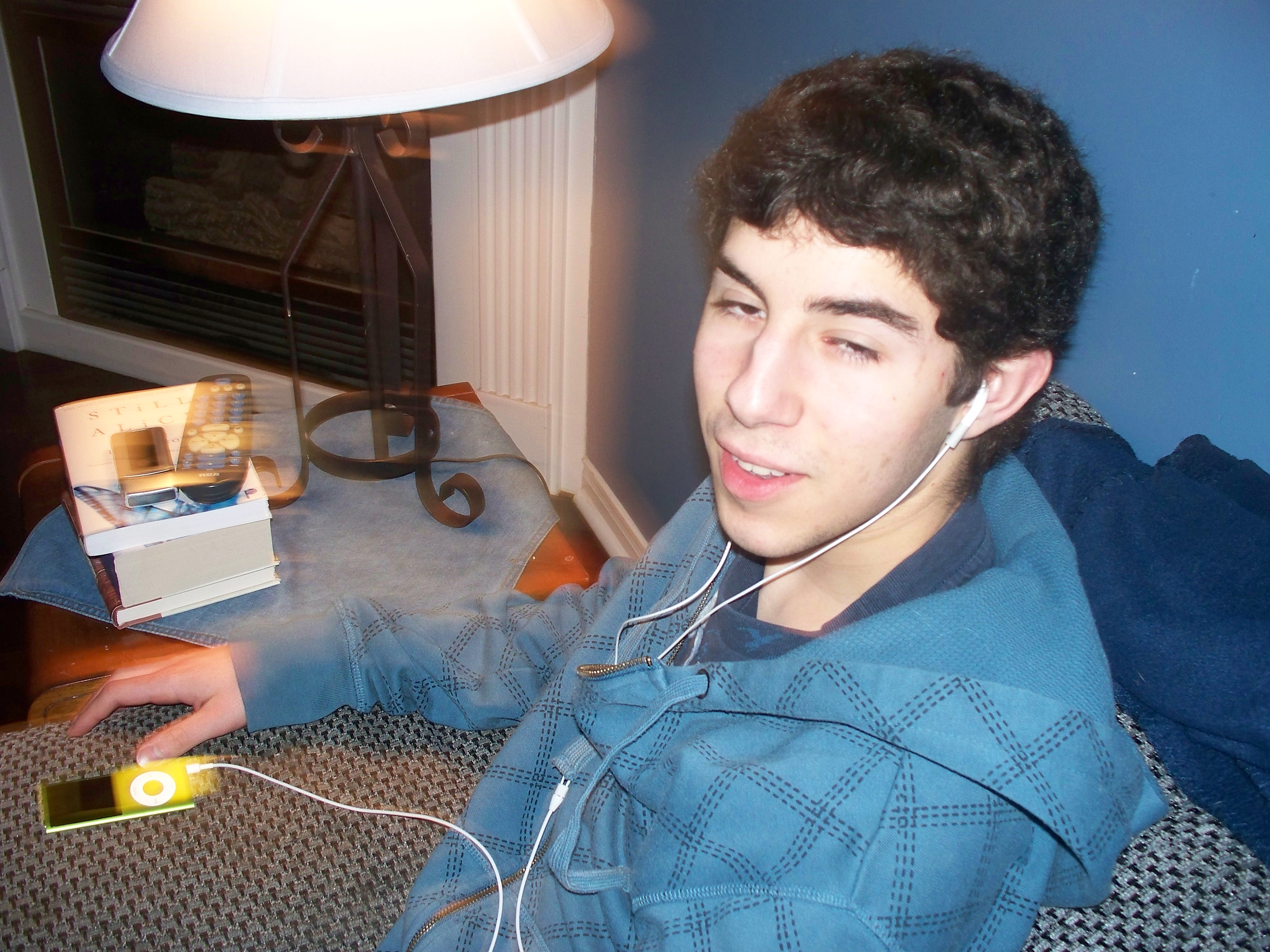
Me, circa 2010. May not be writing, but still plugged in. And apparently not ready for a photo...

Me, circa 2010. May not be writing, but still plugged in. Oh, and why did no one force me to get a haircut?!

Despite no longer being part of a band or wanting to be on MTV, my love for music didn’t go away. In fact, what took place was a marriage of sorts between my love for music and my desire to create and to write. Whenever I wanted to get into the zone, I would just plug in my headphones and find a good album or two. Without much effort at all, I found that the music helped guide what I was writing. It helped shape the atmosphere of the story and the feel of the words. Think of it like mood music, but without the rose petals and scented candles. Or maybe add in those scented candles. They always make me want baked goods.

In any case, if I wanted to write something sad, I listened to a sad song. If I wanted anger, an aggressive song would do. My eclectic music taste helps too: I listen to everything from Nine Inch Nails to Björk, from the neo-classical stylings of Olafur Arnalds to house music and dubstep. I wrote the entirety of my first novel to Nine Inch Nails and other Industrial Music. I was working on another manuscript last year that I wrote to Kanye West’s Yeezus.

In fact, I find now that when I listen to certain albums or songs, I am reminded of the stories or scenes I wrote to them. It’s like the songs have a new meaning that extends beyond the music itself. And worse, I find it nearly impossible to write until I find the perfect song or album to write to. That’s happening a bit to me right now, actually. I haven’t been able to pinpoint a mood or atmosphere for my novel-in-progress because I haven’t been able to find music that puts me in the right mood. I sometimes spend so much time looking for musical inspiration for the things I want to write that I even overlook the actual writing. But honestly, it’s worth it. If I get the right music with the right feel, BAM! I feel like I could write something on par with Shakespeare or JK Rowling.

Okay, maybe not, but that’s how I feel…

Do you listen to music when you write? What are you writing to currently? I’m open to suggestions :p

5 Ways to Overcome Writer’s Block

DISCLAIMER: I may or may not be dealing with a slight case of this at the moment.

Sometimes, writer’s block is a quiet, somber annoyance, filled with insecurity and a tinge of disappointment. For me, writer’s block is a rather angering bout of self-doubt and frustration, perhaps spiced with a nice sprinkle of self-loathing. It makes me feel like I am wasting time or that I am missing out on some magical element that will make all the other elements of a project fall into place. And frankly, it just makes me mad.

But let’s not get angry, Michael. Let’s look at some strategies before we get out of control.

Find Some Fresh Inspiration

For me, I need to consume a large amount of inspiration to help me carry a project from 100 words to 80,000 words. Oftentimes, this results in a few lapses of writing, a few too many forays into movie watching, music downloading, daydreaming, and book reading. But for me, the biggest writer’s block is a lack of inspiration. If I don’t fell inspired, I’m not writing, even if I really want to or if I feel like I should be.

So, go out and find something inspiring. Watch a documentary about the subject matter you’re tackling. Go read a book in the genre you’re writing. Download some new music. Hit up a new museum or venue. Do something that will provide you with some freshness and newness that will breathe some life into your work. I find that old inspirations often yield that result: old, stale work.

Have a Goal

Another setback for me is aimlessness. I don’t mean to say that you should outline your entire novel — some may, but that’s not at all for me. I do mean to say though that there should be a goal to guide you. What is the goal of your character? What is happening in the scene? Where is all of this going? Sometimes it’s so easy to get wrapped up in the minute details of it all that it’s hard to have a clear direction. That lack of direction can sometimes be detrimental to the stamina it takes to write a novel.

Go For a Walk

Do it. Now. A change of scenery will help. I mean, how inspiring is your computer screen or your bedroom. Mine isn’t all that inspiring. Also, I find that if I have a negative writing experience in a certain space for a considerable amount of time, that negativity seems to linger. It’s as if I can feel it in the air around me and I predetermine that I’m going to struggle with writing before I’ve even sat down and perched my fingers.

So, bundle up, sailor, it’s getting cold (#CanadianProblems). But don’t let it deter you. And bring a notebook. There’s nothing worse that being struck in the head with a breakthrough and having nothing to record it with. Though, I suppose your arm and a pointy stick will do.

Just kidding. Put down the stick.

Isn't this inspiring? AND peaceful?

Isn’t this inspiring? AND peaceful?

Skip the Scene

I find that I often feel more excited to write some scenes and less excited to write others. This is natural. Some scenes heighten the tension and other scenes are foundations for that tension. Either way, both the scenes need to be written, but no one says that you can’t write the more exciting one first. In fact, you may have a renewed sense of purpose if you have something to work up to like an intense moment between characters or an epic, change-the-life-of-your-reader twist.

Besides, why waste the time staring at a blank screen or a blank page for the scene you’re not ready to write if there’s another one screaming for attention at the back of your head? Go on and write that one! You can come back to that scene later on. In fact, you may be more ready to write it the second time around.

Take a Break

There. I said it and I’ll say it again. Just stop. Step away from the computer. Maybe come back tomorrow, maybe next week. Heck, it may even take months or a year. In fact, my first novel was completed after a bout of writer’s block. I wrote 40,000 words over the course of two years and then one day, I just couldn’t get the juices flowing. I took a break (though at that time, I felt like I was abandoning my project) and then two years later, I came back with a fresh head and new inspiration and I completed that bad boy. And look at me now! It’s due for release in 2015!

Long story short, taking a break and focusing on something else allows you to clear your mind and come back refreshed. It could allow you to shed some of that negative energy and frustration and get back to what’s important — what you’re writing. You may even find that the inspiration comes back to you when you least expect it, like when you’re doing laundry or at three o’clock in the morning. But just go with it. Sometimes muses are fickle.

Good luck!

5 Ways of Balancing Your Writerly Life

One of the biggest challenges I have as a writer has very little to with writing and very much to do with time and motivation. After spending eight hours at a 9-to-5, writing often gets left out of the weekday equation, especially when other commitments like personal upkeep, maintaining relationships, and sleep also demand attention. And even when a writer gets around to the half-hour of writing time, it almost never pans out the way we want it too, too commonly fraught with distraction, pressure, and a lack of motivation.

But never fear! Some tips for balancing your writerly life are here!

Welp, I may be able to squeeze in some writing time at 4 am next Tuesday.

Welp, I may be able to squeeze in some writing time at 4 am next Tuesday.

1. Make Time to Write

Seems simple enough… Yet, for me, it’s the single hardest thing to do. I find that unless I actually set aside time to get to my computer and work on something, I won’t. It’s not that I don’t want to do it, because I really do love what I do, it’s that time slips away easily when we’re busiest. In fact, sometimes I go a couple days without doing any writing at all, and yet it feels like no time has passed.

In between all that homework, 9-to-5 work, socializing, exercising, cleaning, laundry, cooking, driving, and sleeping, it is essential to take a chunk of time and dedicate it to writing. Some writers and bloggers stress that this should be every day, but I don’t know what world they live in. I would aim for at least an hour or more every couple days. And put that in your calendar (or as an alarm on your phone). If you make yourself obligated to get up every morning, sit in traffic, and go to work, then make yourself obligated to doing something you love.

2. Make Time to Relax

There’s nothing more annoying than sitting down for a writing session and discovering that you’re just too damn tired, jaded, and agitated to be productive. And to make matters worse, I instantly get more agitated when I’ve set aside time to write and I just don’t feel like doing it.

For me, writing it not just a hobby and potential job. Writing is a state of mind. And frankly, it’s hard to tap into that state of mind after frantically buzzing around an office all day, sitting in traffic, and then balancing the responsibilities of being a semi-functional-but-trying adult. To counter this anti-inspiration lifestyle, I generally take a half hour before a writing session to set the mood, so to speak. I’ll do some reading, turn off the technology, and sometimes listen to some music to set the tone. I find this allows me to approach my writing with a clear head instead of trying to combat all the other fleeting thoughts while I’m trying to focus.

3. Remove the Pressure

This ties into my previous piece of advice. I like to call this performance anxiety. I spend all day telling myself that I’m going to write and I’m excited to do so and then I build it up and before I know it, I’ve committed myself to churning out 3,000 words in the 25 minutes I’ve allotted to writing. And then when I fail, I feel guilty and angry with myself.

Take away the expectations and attempt to write in a stress-free manner. I would even go so far as to not worry about a word count. Instead of setting yourself a requirement to write 1,000 words in a given sitting, try just writing any amount of words at all. Lowering your expectations leads to no disappointment and a healthier pro-writing mindset. You might even be surprised at how productive you can be if you allow yourself the freedom of no word count.

I don't care how cute you are. You're distracting me!

I don’t care how cute you are. You’re distracting me!

4. Cut the Distractions

That means Facebook. And Twitter. And the 100,000 fail videos on YouTube. While you’re at it, tell those around you that you’re taking the time to write and they should only bug you if zombies are taking over the world or if the house is on fire. Last but not least, turn off your phone. I can see mine staring at me right now and there’s nothing he likes more than ringing when I’m trying to get into the mood to write.

And put the cat away. Like the phone, he can smell antisocial behaviour from a mile away, and attacking your foot is the only solution.

5. Don’t Force It

Now, I’m going to give you some advice, and MANY a writer disagrees with me: don’t write if you don’t feel like it. Don’t get me wrong, sometimes we all need a little push to get the words flowing, but other times those words ain’t gonna come unless you drag them out by their underpants. And who wants to be dragged out by their underpants?

Listen to your muse. If it’s not going to come, don’t waste time and toil over it. Return when you feel ready.