Tag Archives: publishing

To Sequel or Not To Sequel

That is the question, isn’t it?

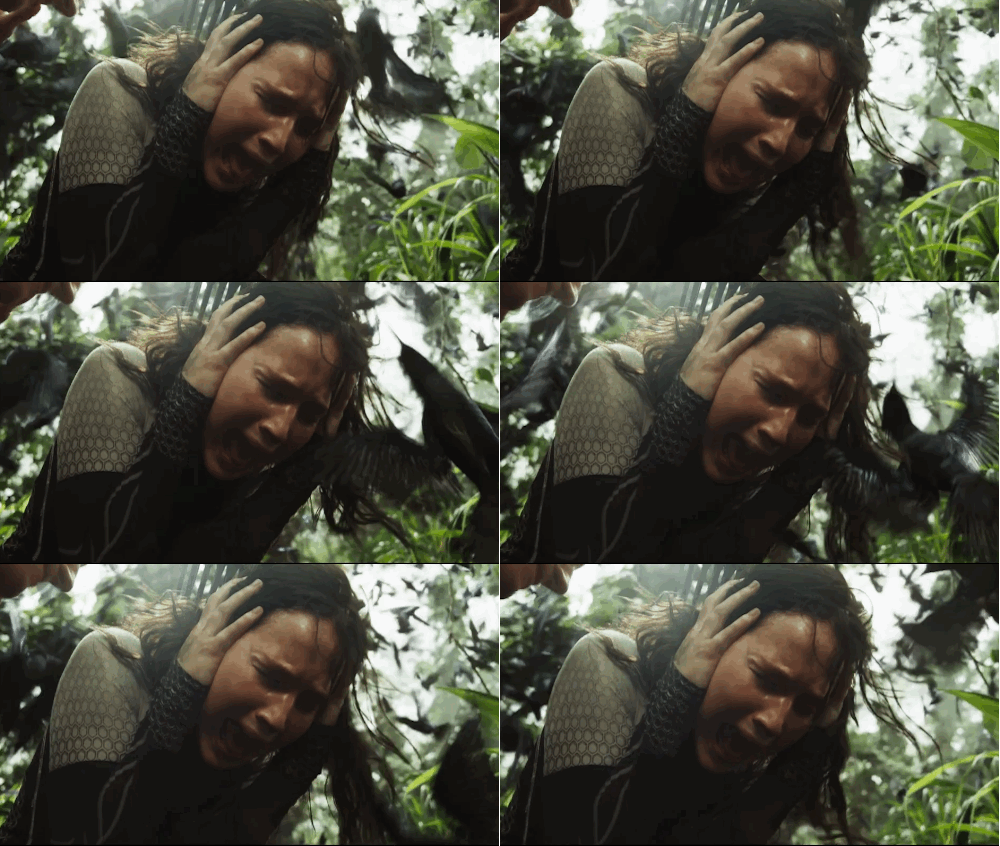
It seems to be the thing to do at this moment in the entertainment industry, particularly the film industry. In fact, the film industry does it so well that it takes sequels and breaks them into parts so as to make one sequel into three or four in a sequel-ception frenzy. Don’t get me wrong, I just saw Mockingjay Part 1 and I think it was pretty well done as with the rest of the film adaptations for the Hunger Games Trilogy, but this whole Part 1 / Part 2 nonsense is getting a little out of control. What next? Are they gonna release book adaptations in episodes and make full 24-installment seasons out of them?

Wait…
anigif_enhanced-buzz-10113-1382948371-0

The film industry aside, the desire for sequels has penetrated deep into the book industry too. Every book nowadays has some sequel or prequel or companion book or series or *gasp* trilogy attached to it. Do we really need three snail-paced, mediocre books when one perfectly-paced, awesome book will do? It seems to me that trilogies and sequels work well in some cases, but sometimes I’m reading book two or book five and all I’m doing is questioning why the content wasn’t just condensed and put into book one. What if writers just cut out some of the filler and whining and got to the point? Writers are supposed to be concise, aren’t they? If we answer yes to that question, why are some of our bestselling books full of such hot air?

And then it occurs to me: sequels sell. Trilogies sell. Trilogies make fantastic movie franchises. It’s easier to market a series of books than just a single book. And if a publisher gets a good momentum going, they can even have people buying more than one book at a time. Sure, there is some artistic choice on behalf of the author because they’re the ones doing majority of the writing after all, but how much of that inspiration is conflated to conform to this quantity over quality phenomenon?

So, the real question: Should I write a series or a trilogy because it has the potential to sell better than a stand-alone book or should I focus on the need for something more? To be honest, I have ideas and characters that can stretch three or more novels but when is enough enough? How do I know when I’ve struck writerly gold and when am I just grovelling? Maybe it’s just me, but sometimes I feel an odd pressure to write more than one book about a particular character or plot, but I’m not really sure if that pressure is coming from a story that’s not yet done being told. How do I know if that impulse is a genuine expression of inspiration and creative need or if I’m just eager to jump on the bandwagon of stories that would have been better told in a single installment?

The answer is quite ironic, really: I guess I’m just going to have to write and find out. I guess if I’m still invested in a character or an idea, I should strike the iron while it’s hot, right? And besides, what’s writing another two or three books? Some writers make it seem like child’s play. I even recall writers who churn out a couple of manuscripts every year. Not all of them can be alien robots.

What do you think? Do all stories have sequel potential or is it just the entrepreneur inside the writer that wants us to believe that this is the case?

By Your Request: Query Success Stories and Why They Were Successful

Check out my journey to a publishing contract on Aussie Owned and Read!

hybridlady's avatarAussie Writers

Today I have the first of a couple of posts about successful queries and why they worked, just like you asked! So, since I work in acquisitions, I asked some of the authors I had the privilege of acquiring to send me their stories. Enjoy!

Headshot I

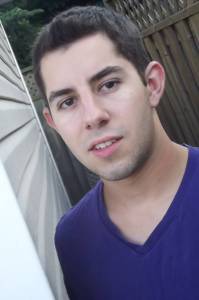
Michael Cristiano is a Canadian writer. His relentless obsession with fiction began long before he could even spell the words ‘relentless obsession’. He spent most of his childhood getting lost in fantastical masterpieces, learning foreign languages, and attempting to be published by the age of thirteen. Though he’s off by a few years, The Black Oracle is his debut novel and is due for publication in 2015.

Website & Blog: www.michaelcristiano.net

Facebook: www.facebook.com/MichaelCristianoOfficial

Twitter: www.twitter.com/mcristianowrite

I got the idea for The Black Oracle when I was fifteen and I had no idea that writing it would be such a long and all-encompassing process. I had loved…

View original post 2,146 more words

Music and Writing

Writing without music is like swimming without a bathing suit on. Okay, maybe I don’t know where I’m going with that analogy. Let’s try again: writing without music is like driving without a seat belt. Yup, no. That’s a little dramatic. *Ahem* Writing without music is like missing that last invisible step in the dark.

Whatever. You get what I’m trying to say. Maybe I should just plug in my headphones and get on with it.

Music has always been a big part of my life — almost as big as writing. I took vocal and guitar lessons as a kid and there may have even been a period of time where I *thought* I was part of a band. I say thought because we didn’t really make much music and we didn’t play any live shows. We just sat around and dreamed about how great it would be to be rock stars. Needless to say, we never got a recording contract or had the chance to appear on MTV.

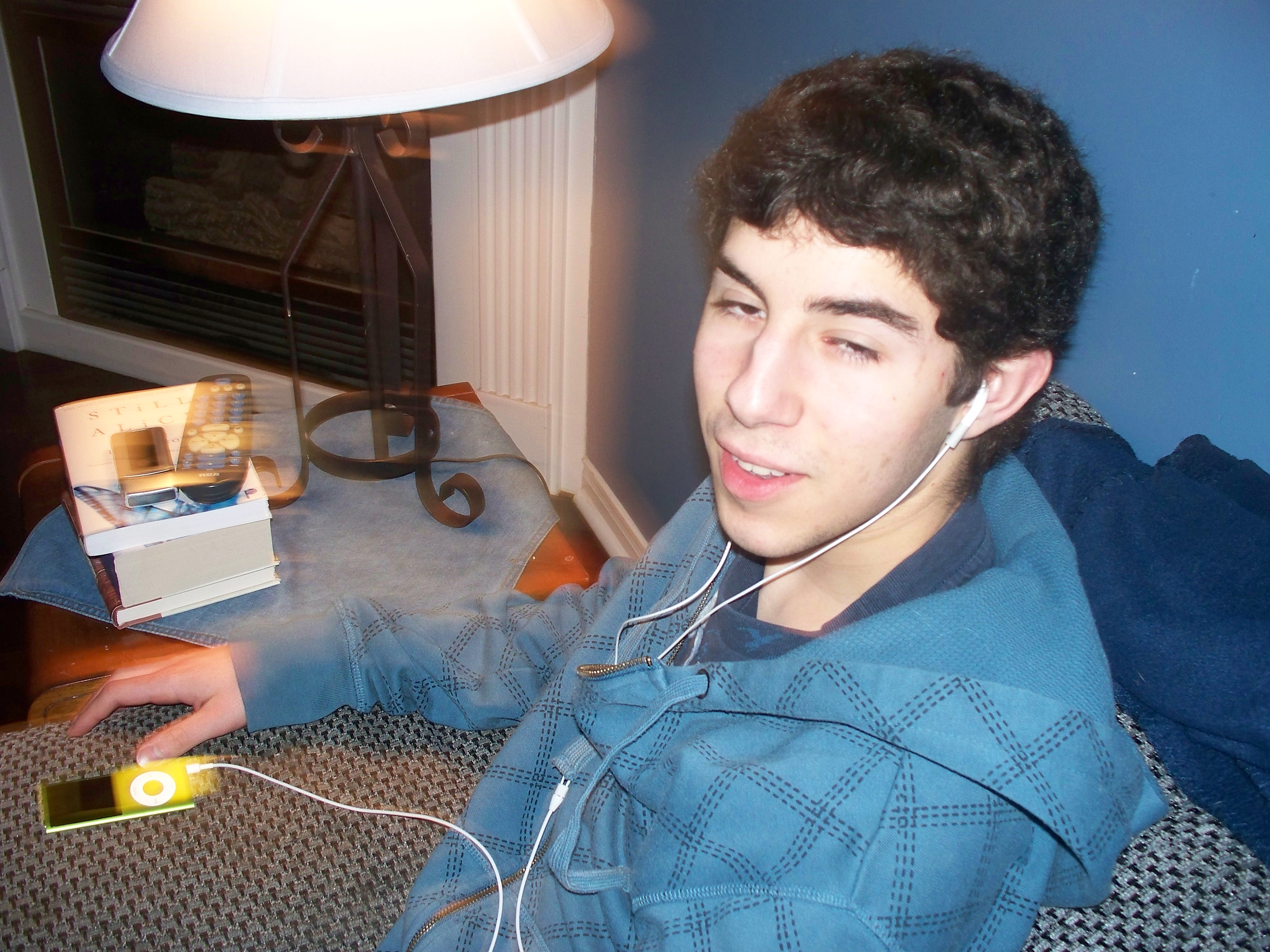
Me, circa 2010. May not be writing, but still plugged in. And apparently not ready for a photo...

Me, circa 2010. May not be writing, but still plugged in. Oh, and why did no one force me to get a haircut?!

Despite no longer being part of a band or wanting to be on MTV, my love for music didn’t go away. In fact, what took place was a marriage of sorts between my love for music and my desire to create and to write. Whenever I wanted to get into the zone, I would just plug in my headphones and find a good album or two. Without much effort at all, I found that the music helped guide what I was writing. It helped shape the atmosphere of the story and the feel of the words. Think of it like mood music, but without the rose petals and scented candles. Or maybe add in those scented candles. They always make me want baked goods.

In any case, if I wanted to write something sad, I listened to a sad song. If I wanted anger, an aggressive song would do. My eclectic music taste helps too: I listen to everything from Nine Inch Nails to Björk, from the neo-classical stylings of Olafur Arnalds to house music and dubstep. I wrote the entirety of my first novel to Nine Inch Nails and other Industrial Music. I was working on another manuscript last year that I wrote to Kanye West’s Yeezus.

In fact, I find now that when I listen to certain albums or songs, I am reminded of the stories or scenes I wrote to them. It’s like the songs have a new meaning that extends beyond the music itself. And worse, I find it nearly impossible to write until I find the perfect song or album to write to. That’s happening a bit to me right now, actually. I haven’t been able to pinpoint a mood or atmosphere for my novel-in-progress because I haven’t been able to find music that puts me in the right mood. I sometimes spend so much time looking for musical inspiration for the things I want to write that I even overlook the actual writing. But honestly, it’s worth it. If I get the right music with the right feel, BAM! I feel like I could write something on par with Shakespeare or JK Rowling.

Okay, maybe not, but that’s how I feel…

Do you listen to music when you write? What are you writing to currently? I’m open to suggestions :p

5 Ways to Overcome Writer’s Block

DISCLAIMER: I may or may not be dealing with a slight case of this at the moment.

Sometimes, writer’s block is a quiet, somber annoyance, filled with insecurity and a tinge of disappointment. For me, writer’s block is a rather angering bout of self-doubt and frustration, perhaps spiced with a nice sprinkle of self-loathing. It makes me feel like I am wasting time or that I am missing out on some magical element that will make all the other elements of a project fall into place. And frankly, it just makes me mad.

But let’s not get angry, Michael. Let’s look at some strategies before we get out of control.

Find Some Fresh Inspiration

For me, I need to consume a large amount of inspiration to help me carry a project from 100 words to 80,000 words. Oftentimes, this results in a few lapses of writing, a few too many forays into movie watching, music downloading, daydreaming, and book reading. But for me, the biggest writer’s block is a lack of inspiration. If I don’t fell inspired, I’m not writing, even if I really want to or if I feel like I should be.

So, go out and find something inspiring. Watch a documentary about the subject matter you’re tackling. Go read a book in the genre you’re writing. Download some new music. Hit up a new museum or venue. Do something that will provide you with some freshness and newness that will breathe some life into your work. I find that old inspirations often yield that result: old, stale work.

Have a Goal

Another setback for me is aimlessness. I don’t mean to say that you should outline your entire novel — some may, but that’s not at all for me. I do mean to say though that there should be a goal to guide you. What is the goal of your character? What is happening in the scene? Where is all of this going? Sometimes it’s so easy to get wrapped up in the minute details of it all that it’s hard to have a clear direction. That lack of direction can sometimes be detrimental to the stamina it takes to write a novel.

Go For a Walk

Do it. Now. A change of scenery will help. I mean, how inspiring is your computer screen or your bedroom. Mine isn’t all that inspiring. Also, I find that if I have a negative writing experience in a certain space for a considerable amount of time, that negativity seems to linger. It’s as if I can feel it in the air around me and I predetermine that I’m going to struggle with writing before I’ve even sat down and perched my fingers.

So, bundle up, sailor, it’s getting cold (#CanadianProblems). But don’t let it deter you. And bring a notebook. There’s nothing worse that being struck in the head with a breakthrough and having nothing to record it with. Though, I suppose your arm and a pointy stick will do.

Just kidding. Put down the stick.

Isn't this inspiring? AND peaceful?

Isn’t this inspiring? AND peaceful?

Skip the Scene

I find that I often feel more excited to write some scenes and less excited to write others. This is natural. Some scenes heighten the tension and other scenes are foundations for that tension. Either way, both the scenes need to be written, but no one says that you can’t write the more exciting one first. In fact, you may have a renewed sense of purpose if you have something to work up to like an intense moment between characters or an epic, change-the-life-of-your-reader twist.

Besides, why waste the time staring at a blank screen or a blank page for the scene you’re not ready to write if there’s another one screaming for attention at the back of your head? Go on and write that one! You can come back to that scene later on. In fact, you may be more ready to write it the second time around.

Take a Break

There. I said it and I’ll say it again. Just stop. Step away from the computer. Maybe come back tomorrow, maybe next week. Heck, it may even take months or a year. In fact, my first novel was completed after a bout of writer’s block. I wrote 40,000 words over the course of two years and then one day, I just couldn’t get the juices flowing. I took a break (though at that time, I felt like I was abandoning my project) and then two years later, I came back with a fresh head and new inspiration and I completed that bad boy. And look at me now! It’s due for release in 2015!

Long story short, taking a break and focusing on something else allows you to clear your mind and come back refreshed. It could allow you to shed some of that negative energy and frustration and get back to what’s important — what you’re writing. You may even find that the inspiration comes back to you when you least expect it, like when you’re doing laundry or at three o’clock in the morning. But just go with it. Sometimes muses are fickle.

Good luck!

My Ghost Story: The Yellow Room (Hello, Poppa) by Michael Cristiano

This Halloween, Curiosity Quills authors are spreading the spookiness by sharing their own personal paranormal experiences. Get haunted with these bone-chilling blogs, or post your own! #myghoststory.

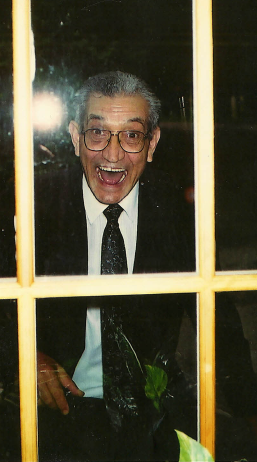
Poppa IWe called my maternal grandpa Poppa and he died in 2001 when I was ten years old. His death was sudden: into the hospital one day and then gone the next. No one saw it coming and he was relatively young, just shy of his 67th birthday.

The death was hard on us: my immediate family was devastated, my extended family was devastated, and my Grandma was never quite the same. But even though he had departed from us, he didn’t necessarily go away. Following his death, we began to see signs that he was still around.

The day of his funeral, my father and I sat outside the church just after the service. I was especially upset. Poppa had been my best friend. I would skip school and pretend to be sick just to hang out with him. While I was sitting there, I felt something flutter by my ear. I looked up and saw that a butterfly circled me and my father and then swept across the parking lot to the remainder of my family. It went up to each family member and finally to my Grandma, where it lingered the longest.

A butterfly, you say. I’m supposed to be convinced of your ghost story by a little butterfly? Well, those butterflies didn’t go away, not around my house or the house of my family in the months to follow. They lingered near the windows and around the parked cars, greeting us whenever we went outside.

Other strange things began to happen around my house too. I woke up once in the middle of the night and went to the bathroom. From where my room was, it was easy to see the landing and the stairs. Though it may have been my overactive imagination (I’m a writer, remember?), I saw a shadow at the bottom of the stairs. As I ran from it, as overactive 10-year-olds do, I barricaded myself in my room and turned on my light. I calmed myself and just as I did, I heard a noise: a thud not far away. I looked into the corner of the room where a picture of my Poppa and me usually stood on my desk.  It had fallen over onto the floor.

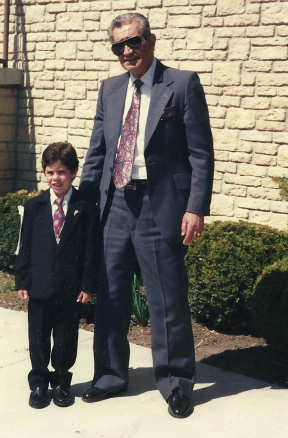
The photo that fell over in my bedroom. My Poppa and me at my first communion, circa 1998.

The photo that fell over in my bedroom. My Poppa and me at my first communion, circa 1998.

Most creepy of all, my mom and my aunt went to a psychic as a way to get some closure. According to my mom, the psychic guessed that my grandfather had passed before either mentioned it, but she also went on to say something else. I normally don’t believe in psychic abilities, but even this surprised me. The psychic told my mom that my Poppa was still around—in fact, he was in our house.

“He’s in the yellow room,” the psychic said.

“Yellow room?” My mom asked. “We don’t have any room painted that color.”

But apparently we did. The psychic was adamant. My mom went home confused and with a little less closure than she wanted. In any case, she went on with her life, slowly overcoming the loss of her father and returning to normality. One day, my mother sat in the study working on one of her freelance writing projects. She turned on the lamp beside her, the sun setting as she worked well into the evening. When her eye caught sight of the wall behind the computer screen, she put her hand to her mouth.

Though the walls were white, the fabric of the lampshade was a light gold. It illuminated the room and shone on the walls. My mom was sitting in the yellow room.

Years passed and the butterflies went away and sure, I was still running from shadows, but they were largely fueled by raging hormones and high school jitters. One day, I was home alone studying for my grade nine English exam. We had just gotten a dog, a beagle-basset hound cross named Tessie. During my cramming, the dog started barking. She only ever did when someone was at the door but when I went downstairs, there was no one there. Instead, I found her in front of an antique chair in the study that Poppa had given my parents, sitting and barking and wagging her tail.

I turned on the lamp.

Hello, Poppa.

—–

Links to other stories:

J.E. Anckorn

Samantha Dunaway Bryant

Katie Hamstead Teller

This story can also be found on Curiosity Quills’ website here.

How to Write a Query Letter that Makes Agents and Editors Swoon

This is a response to my earlier post called Why Your Query Letter is Making Agents and Editors Cringe. I’m so meta, right?

Writing a query letter is an art, they say. What they really mean is that it’s really gosh-darn hard. It seems that everyone and their sister thinks they can write a query letter, but out in the real world, it fails. Miserably.

That’s what happened to me. I thought writing a query letter was easy. I composed one in a couple hours and unleashed it onto the world. Little did I know, it was crap and yielded no return. It wasn’t until I joined the Absolute Write and participated in their forum that I was able to learn how to write a query letter properly.

Now, I shall bestow my knowledge upon you.

Step One: Write a Manuscript

A given, right? Wrong. I am a big advocate that writers complete their entire manuscript before they attempt to write a query letter. Yes, I know querying seems exciting for you right now. Yes, I know you think you’ve struck gold and you absolutely NEED to tell someone. But you need to finish. And when I say finish, I mean beta-read, edited, spit-shined, and all.

Why? Well, how can you write a clear, concise, pristine query letter if your manuscript is not clear, concise, and pristine. So, get back to writing, grasshopper! Your day in query letter hell will come.

stop-sign_w725_h544

Step Two: Learn the Anatomy of a Query Letter

A query letter is generally broken into three parts:

  1. The Hook
  2. The Story
  3. The Credentials

This is the basic structure that writers follow. Yes, there are little variations to this structure, but they generally only occur if a specific editor or agent requests said variations (and they will make such requests and other specifications on the submissions page of their website). Otherwise, it’s safest to stick to this model. Remember, you are writing a proposal for your product (ie. your novel), not taking over the world with your revolutionary literary prowess.

Step Three: The Hook

The Hook is just what it seems: it is a small paragraph, normally one to three sentences, that will draw in a reader, hold tight, and make them want to read more. Think of it like the deep, intense voice that begins movie trailers. A lot of writers will use a When-clause, but it’s not always necessary. Here is an example of a When-clause:

“When Harry Potter discovers he is a wizard, he enrols in Hogwarts School of Witchcraft and Wizardry and uncovers a dark magic, one that threatens to take over the wizarding world.”

With that hook alone, it’s easy to identify three things: the main character, the location, and the gist of the plot. In theory, this should be enough to force the reader to read the remainder of the query letter, but don’t forget to make it sound pretty. You’re selling your amazing writing skills, after all.

Step Four: The Story

The Story is, again, just that. It is the plot of your novel, concise and juicy, giving away just enough to entice. It is important not to overwhelm your reader with too many details. That generally means that you should stick to your main character, no more than two supporting characters, and the chief antagonist. Also, it is essential to stick to the MAIN PLOT. Again, the OVERARCHING PLOT. I know you love your subplots, but those do not belong in your query letter. They will overwhelm the reader and crowd your query letter.

crowd

Reading your query letter shouldn’t feel like trying to find a small child in a crowd.

Now, I’m not one for outlines. I very rarely outline a story and when I do, it’s such a loose outline that it’s barely an outline at all. But the query letter is different. You absolutely should consider an outline. Why? Well, let’s try a little experiment. Take your current novel and try to sum it up in 150 words or less. Hard, right? Even if you were able to do it, I bet I didn’t sound beautiful and I bet you left out details that you’re dying to include.

The outline will help with that. To outline, I normally use the Three Question Method. This helps writers to focus their query and be sure not to forget the most important elements of the plot. Each query letter should strive to answer these three questions (taken from the Absolute Write forums):

  1.  What does your protagonist want?
  2.  What does s/he have to do to get it?
  3. What happens if s/he fails to get what she wants? (the stakes)

Once you’ve answered these three questions, you have the bare bones for a query letter. Essentially, you want this paragraph to read like the blurbs on the back of books. You want it to entice and you want to detail the plot, but leave it open-ended.

Step Five: The Credentials

This is the part where you talk about yourself. What other work have you gotten published? What qualifications do you have? Don’t have any of that? That’s really okay, but what inspired you to write this story and what makes YOU the person who should tell it?

Also, the second part of this paragraph should cater to the person you’re sending it to. Why did you choose said agent/editor/publisher as a candidate for your work? This will include some research. Look at other titles your agent/editor/publisher has worked with. Look at their blog, Twitter or Facebook pages. This is the part where you personalize your letter and don’t go skimpy on this part. They will know if you’re lying or if you haven’t done your research.

Lastly, do NOT forget to include the title of your manuscript, the genre and the word count. This is generally done in the first sentence of The Credentials paragraph.

Step Six: Get Feedback

This is perhaps the most important step. Have a writer friend? A beta-reader? A brutally honest friend who likes to read? Have them look it over. Does it entice them? Are they able to understand the main pillars of your plot? If you answer no to these questions, an agent or editor will to. Revise, revise, revise, and if you send it out to prospective literary personnel and get no bites, revise again.

Finally, don’t be discouraged. Querying is a long, labouring, and often fruitless process, but all writers go through it. Besides, all it takes is one yes.

——-

And it’s a simple as that. Good luck!

Why Your Query Letter is Making Agents and Editors Cringe

Before I landed a publishing deal, believe it or not, I spent a lot of time trying to land a publishing deal. Shocking, right? Well, when I say a lot of time, I mean to say that I spent almost six years tirelessly hammering out query letters and getting either form rejections or no response at all from agents, editors, or publishers.

And the worst part? I didn’t know what I was doing wrong. Were my query letters that bad that it didn’t even warrant a response? It wasn’t until I had actually acquired a publisher for my debut novel, joined a writing forum and critiqued other writers’ letters that I was able to look back and see where I had gone wrong. And trust me, my old letters were awful. Here’s why.

woman-and-laptop

Unimpressed Agent is unimpressed.

It all Starts with Story

Believe or not, a good query letter starts before it is even written. Hell, a good query letter starts before the novel itself is written. Why? Well, I’m no scientist or anything, but it seems to me that there’s a relation between shitty stories and shitty query letters.

How to avoid this? Write good stories. Easy, right? Maybe not, but I do think it takes some mindfulness on the part of the writer. Write an original story. Don’t follow the trends. Avoid cliches and cliched story-lines. Know your genre. Know your audience. Enlist a beta-reader, a peer, or someone who will give you an honest opinion and then help you burn that shit should it make readers cringe.

Most important of all: read good books. The better read you are, the more equipped you are to know what is good and what is bad — and trust me, you can find a lot of bad without looking very hard. With time, that knowledge gets applied to your own work. It’s called growth, bro.

Vagueness is NOT Your Friend

During my time at previously mentioned writing forum, I have had the pleasure of reading and critiquing quite a few query letters from other aspiring writers. One of the number one things that turns me off of a letter is when the author presents his or her story in a run-around, pseudo-Hollywood manner. Observe:

When Random Randy moves abroad, he must conquer the fears that have hindered him in his love life — and in achieving his dreams. He has been hurt before, but he won’t be again. In a story of love, loss, betrayal and family, Random Randy must learn how to trust again before he loses all sense of control.

Well, Random Randy, that’s all good and fine, but the cringing agent or editor still knows nothing about your story. There’s no substance here and definitely very little plot. Yes, I understand the need to want to tantalize your reader and not give too much of your precious story away, but being vague won’t distinguish you from other writers in the slush pile.

And for God’s sake, endless adjectives do not equate good story.

Hey, You! Focus!

Writing a story is hard. There are often many characters involved, many plots, many themes, and that only grows with your word count. But legit, when you write a query, the agent generally only cares about one of those things: your main character.

Yes, it is tempting to delve into every single plot point, well-developed character, and explored theme, but that doesn’t help you in a query letter. You need focus. You need to be deliberate and singular. In fact, to focus a query letter, I have generally stuck to what I and other writers call the Three Big Questions. They are as follows:

1. What does your protagonist want?
2. What does s/he have to do to get it?
3. What happens if s/he fails to get what she wants?

So, leave the other stuff behind. Let your literary gold be a surprise when that intrigued agent decides to read your manuscript.

This is NOT a News Report

This last point is actually a polar opposite of the two previous points I have mentioned. So, you’ve now reworded all the vague language and focused your query, but you find you have something like this:

When Ursula Unlucky loses all her money in a burglary, she and her children must move across the city to the sketchy part of town. There, she gets a job she hates and she discovers her neighbours are mean. Worse, her children are being bullied and even when she meets with their teachers, the school decides it won’t punish the bullies. Ursula then…

You are not on CNN. You don’t need to talk about every development and twist and turn in your plot. This comes across as being dry and boring and frankly, the agent or editor is cringing. The problem with this is that a query shouldn’t read like a synopsis — the synopsis should read like a synopsis. The query should give enough plot to have a focus (see above), but not enough to take away from the intrigue of your query.

Think of it like testing samples at a grocery store. You want to give the agent/editor/publisher a sample of your story and writing style so they’ll decide to come back for more.

Mmmm... Samples.

Mmmm… Samples.

______

And for shits and giggles, let’s look at one of my old query letters that I submitted once upon a time. It was for a novel that I no longer wish to publish mostly because it is a hideously cliched story (see reason #1 why agents and editors are cringing). In fact, I believe this is my very first query.

Dear Ms. Agent I Found,

As an avid reader of both fantasy and young adult novels, I was immediately drawn to the XXXX Agency and your work. I admire the optimism and support you give writers both aspiring and with your agency. That said, I would like you to consider my novel [Hideosly Cliched Fantasy Title]. It runs approximately 90,000 words and is an epic fantasy novel aimed at young adults.

Set in a world where different realms mesh in a not-so-perfect harmony, [Main Character] spends his youth gazing out an enormous window in his father’s study awaiting adventure. After an experience outside his hillside home that he is too terrified to remember, he must somehow harness a magic that he holds within.

Meanwhile, a fearsome leader named [Fearsome Name] has summoned an ancient magic that has only survived in the superstitions of crazed mystics. With it, he threatens to grip the entire world in his wretchedness. In a story of fallen kingdoms and multiple realms, [Main Character] must stop the bloodshed as the boy for whom the scripture glows.

A student at the University of Toronto studying language and professional writing, I believe that working with an experienced, caring agent such as yourself is the next step for both my novel and me. I think [My Novel] would go together well with the array of fantasy titles attributed to the agency. Also, I read in an interview that you did that you enjoy young adult fantasy and I hope that my novel can find a comfortable place in your repertoire.

Thank you for your time and consideration.

Regards,

Michael Cristiano

20-Something Profile: Michael

My very own 20-Something Profile! Check it out!

My Biggest Issues with Mainstream Fiction

For me, there are two types of books. I will admit, I enjoy the first the most: a good plot, well-thought out characters, interesting themes, and ultimately, a book with something to say. This is the haute couture of books, the Ferraris, if you will. And then there’s the other stuff. Maybe I’m just getting older. Maybe I’m just getting more and more acquainted with what’s good and what’s not so good. Either way, I find myself reading something, and I can’t help but wonder: “how did this get published?”

Well, I believe I’ve found out, and to be truthful, the answers are part of the problem.

Vampires and Zombies and Dystopias, Oh My!

Trends. Trends will be the death of the publishing industry (or the saving grace, depending on how you look at it). Do you know how many times I’ve read or *thought about* reading a book, only to discover it’s following the current fad? It makes me sad. I understand how the world works. I understand that books, like any other industry, go through certain successes, and then tries to get the most out of said success by replicating it again and again and again.

But seriously. How many books were turned down by big publishing houses because the current trend was focused on some frivolous fad like uni-cycling unicorns? Worse: how many badly written books were published anyway just because uni-cycling unicorns became the thing to do?

I vant to suck all the originality out of the books you read.

I vant to suck all the originality out of the books you read.

Emphasis on the XXX

Sex sells. We all know it. Tackled the right way, it can be effective — poetic even. But a book that devotes itself entirely to it without any mind to develop characters or have a good plot or follow some basic guidelines for good storytelling? Again, sadness ensues. What happened to sex being something that enhanced a story, not its reason for existence?

How about Fifty Shades of My Fist?

How about Fifty Shades of My Fist?

Pop Fiction

Over the years, I’ve discovered something that has become more and more apparent in the publishing industry. I call it Pop Fiction. Think pop music but without the excessive music videos and lip syncing. But then again, this is much the same. It’s like an author writes an okay book, gets the backing of a big publishing house, and BANG! bestseller. And fine, maybe some of these books aren’t so bad, but the quality has tanked. String together a few sentences, throw some sex in there, get some pre-teens on your side, and call it a day.

It’s like no one even tries any more. Can you imagine what people will think 100 years from now when the books released today are considered classics?

I shudder.

20 Goals for a 23 Year Old

This past Friday, I turned 23! Hurray! I’m so old, right? Just kidding. I’m not that person. In any case, it’s a new year with new opportunities and I’m excited continue working to pursue my dreams of writing, travelling, and living.

Now, I obviously won’t be able to do ALL of this before I turn 24, but I plan on this being the trend for the next couple years. Maybe a 5 year plan? Either way, I’ll post updates as I make progress (or lack thereof).

20. Make good lifestyle choices. I am the worst. I suck at sticking to an exercise schedule (read: I have no time). I prefer to eat out rather than cook (read: I have NO time). I’m a sucker for sugar, sodium, and wine (read: I like comfort food).

19. Try new recipes. This builds into #20. I wanna expand my cooking abilities, especially with quinoa and couscous (I LOVE them both). Got a cooking blog? Get at me. I need inspiration.

18. Expand my short story and poetry collection. I’d ideally like to read more and write more from these two mediums. I dabble a little in them now, but I can honestly say that novel writing is more my thing.

17. Find a good TV show. I haven’t found one that’s held my interest since LOST. That ended in 2010.

Maybe I'll just rewatch LOST.

Maybe I’ll just rewatch LOST.

16. Brush up on my language skills. I’m a foreign language major but I feel like the languages I’ve studied are slipping away. Maybe I’ll start reading books in other languages again.

15. Learn a new language. My partner speaks Afrikaans and I’ve been dabbling in it for a while now. Time to jump on board and study it seriously?

14. Get back into non-fiction. I have so many non-fiction books on my shelf that I just. haven’t. read.

13. Explore the world in my backyard. I’m really good at finding places I wanna go that are far away, but not so much at exploring the places within driving distance. Anyone in southern Ontario or New England? I’m looking for places to go for weekend getaways. Suggest in the comments.

12. Buy a new car. Okay, not new, but I’m scared mine might go any day now. Maybe just a car that’s not 13 years old.

11. Clean out my car. After practically living out of it for almost two years now, it’s a joke. I apologize to any passengers who may have contracted a disease.

10. Clear out old clothes. I’ve been meaning to do this for AGES. I have so many things I don’t wear, and I’m sure I can find a good charity to give them to.

9. Get out of my city. Already decided I won’t live here. Hell, my family doesn’t want to either. Time to go.

8. Plan for the future. Where am I going? What do I need to do? Do I want to buy a house? Life insurance? A spaceship? Adult decisions everywhere!

Adulthood

7. Take more time to just be. Maybe that includes meditation. I haven’t decided. God, I’m so meta.

6. Spend more time with those I love. This one kinda bit me in the butt recently. I had someone very close to me pass away, and I kind of feel like I didn’t get to spend enough time with her these past couple years. It wasn’t that I ignored her, I just regret not learning more about her and not making more memories with her. That needs to change for the future.

5. Go on a big trip next year. And the following year. Already planning Greece and Turkey for 2015. Maybe South Africa again in 2016. Been to these places? Comment and let me know what you think.

4. Edit my next novel. Again. Just when I think it’s done, I get a publishing contract and I get self-conscious of my work all over again. My focus is of course on my first novel that will be out next year, but I want to also fix my subsequent novel so that can be released soon afterward.

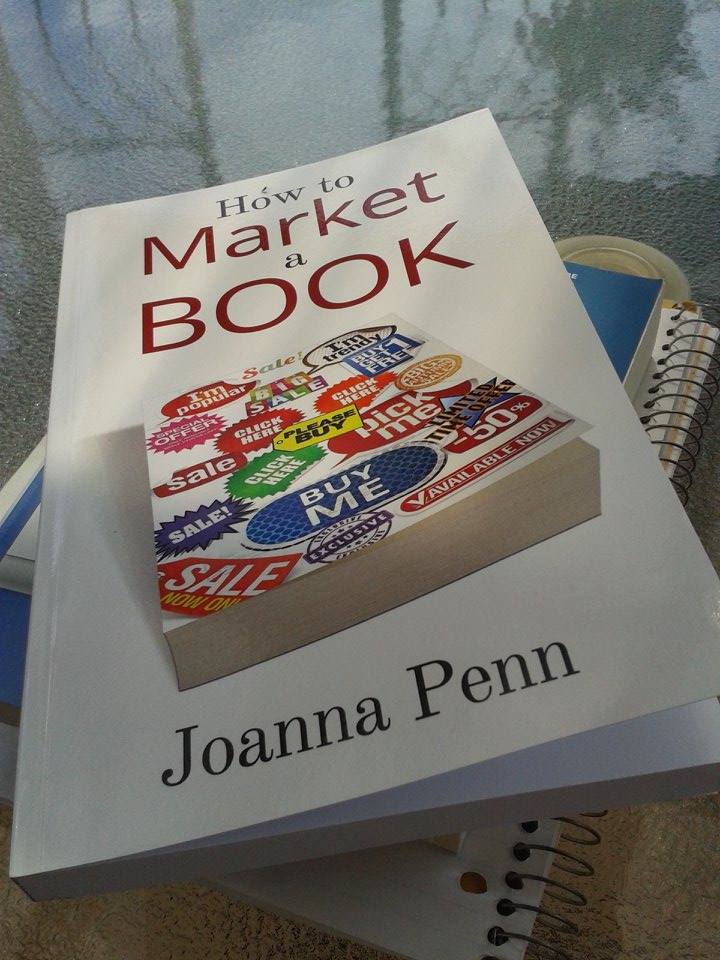
3. Make and execute a kickass marketing campaign. I’m amped and planning a huge campaign for my first novel. Want to collaborate? Contact me! Otherwise, look out for it mid-autumn. I want it to be EPIC.

The best gift I received this year!

The best gift I received this year!

2. Complete a third manuscript. I already have two on the go, you say? Welp, I just can’t help myself. It’s already started.

1. Be able to live off of my writing. This is my NUMBER ONE goal. For me, writing is not about the money. I’m not looking to be famous or buy a humongous house, but I want to be able to do what I want for a living. I want to be able to make my passion for writing my work. It may not happen tomorrow, but I will stop at nothing to get there. I want to be able to support myself off of what I love.

I'm out of control.

All day, every day. In theory.

Got any goals?